
Paragliding holidays: flight areas, weather and accommodation
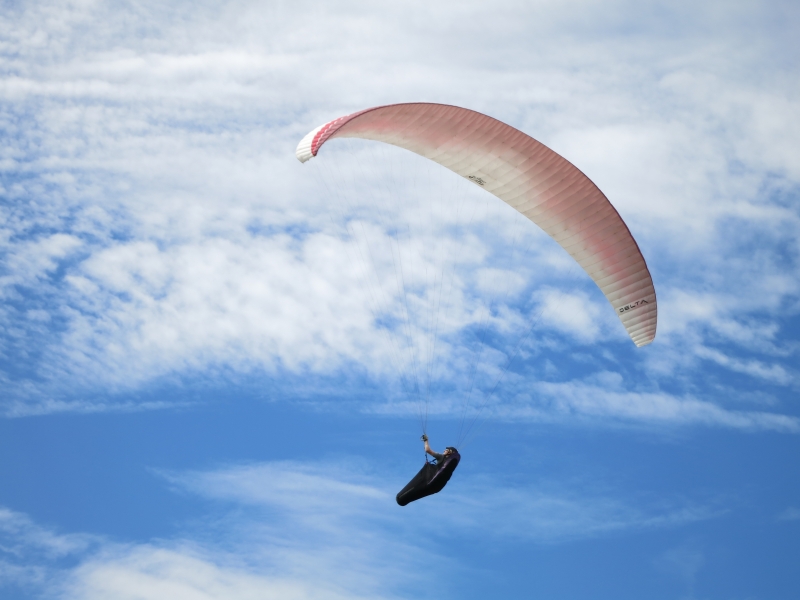 Paragliders under a partly cloudy sky above a mountain landscape.
Paragliding holidays may involve a tandem flight, a training course or independent flying with your own equipment. These options have different requirements for experience, weather decisions, meeting points, transfers and accommodation.
Brief facts about paragliding holidays
- Tandem guests, trainees and experienced pilots need different arrangements.
- Take-off, landing, wind and the route between them should be checked locally.
- Flight schools and local rules are more reliable than a general destination label.
- Paragliders, helmets and outdoor clothing need dry, secure storage.
- Hiking, excursions or a rest day are sensible alternatives when flying is not possible.
Tandem flight, training or independent flying?
Beginners often look for a reputable tandem provider, a clear meeting point and a flexible weather policy. Trainees need a school, suitable practice sites and enough time for instruction. Experienced pilots should check take-off permissions, landing arrangements, insurance, local regulations and the transport needed for their equipment.
The accommodation does not have to be directly beside the take-off site. Parking, a mountain railway, a shuttle or a reliable road connection may make the daily routine easier. The landing site can be in a different place, so compare the whole transfer rather than the view from the property.
Choose practical accommodation
Dry storage, level access and a secure place for equipment are important for pilots. Tandem guests may value proximity to the flight school, parking and everyday facilities more highly. Families and companions should also have shops, restaurants and excursions within reasonable reach.
A holiday home with a kitchen, parking and a flexible daily routine can work better than an isolated property at a launch site. Confirm where equipment may be stored and whether the access is suitable for early starts.
Allow for weather and transfers
Wind, visibility, thunderstorms and a lack of suitable lift can cancel a flight at short notice. The provider or flight school decides whether conditions are safe. Build flexibility into the itinerary instead of treating a flight as guaranteed.
Take-off site, landing site, meeting point and accommodation may all be separate. When planning your arrival, include the mountain transfer, parking, key collection and the return journey. A plan with walking, wellness or excursions keeps the holiday useful when the weather changes.
Frequently asked questions
Is paragliding suitable for beginners?
A tandem flight can be a suitable introduction when the provider and weather are right. Independent flying requires appropriate training, equipment and proof of competence.
How important is accommodation near the take-off site?
Short distances help, but the landing site, meeting point, parking and return transport may be more important. Check the complete daily route.
What happens in bad weather?
The flight may be postponed or cancelled. Hiking, excursions and rest days are sensible alternatives and should be part of the plan.
Do I need my own equipment?
Usually not for a tandem flight. Pilots need suitable own or hired equipment and must follow local requirements.
Photo: Markus Lenk
