
Mountain-bike holidays: trails, skills and bike-friendly accommodation
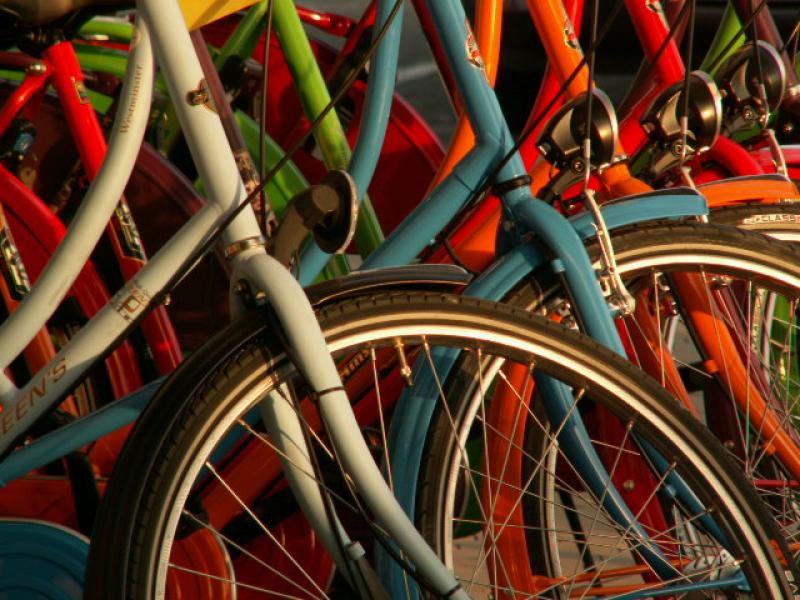 Several bicycles stand close together in a colored row.
A mountain-bike holiday should match the riders' experience, the trail difficulty, the gradients and the conditions expected during the stay. The accommodation does not need to be beside the best-known trail, but it should provide practical access to several suitable routes.
Brief facts about mountain biking
- Select trails by terrain, length, gradient, technical features and current conditions.
- A bike park is different from a freely accessible network of paths and roads.
- Rain can make forest trails slippery or temporarily impassable, so local information matters.
- A dry, lockable bike room, cleaning point and drying space protect bikes and equipment.
- Beginners and families usually benefit more from practice areas and easier circuits than from a high number of metres climbed.
Match trails to ability
Beginners should look for clear signage, manageable gradients and routes with straightforward escape options. Experienced riders may prefer technical sections, longer climbs and descents. Use reliable regional maps and current local information rather than judging a route only by its promotional name.
Before booking, compare the difficulty, elevation profile and daily transfer. A path from the property to the trail may be steep, unpaved or unsuitable for a bike trailer. Families should look for practice areas, easy loops and alternatives for people who are not riding.
A location with several trail types is often more useful for a mixed group than a property advertised as being close to one demanding bike park. Check access to a workshop, hire service, shuttle and a realistic route back in wet weather.
Bike care and storage
After a muddy ride, a dry, lockable room, a cleaning point and space to dry clothing are particularly useful. Level access and enough room for several bikes may matter more than the final few kilometres to the trail. Confirm whether cleaning, maintenance and charging are allowed at the property.
A property with a practical garage can be better than an apparently trail-side apartment with no secure storage or parking. Check access, stairs and the approach in bad weather before booking.
Transport and changing conditions
A car is useful in many mountain regions, but it is not always essential. If you travel by train or bus, check the last section to the property and the transport available to the trailhead. Bike carriers, spare parts and wet clothing need secure space.
Late spring to autumn is often suitable, depending on altitude and surface conditions. Snow, frost, storms and heavy rain can change trails quickly. At a bike park, check opening times and operating status before travelling.
For rest days, combine riding with walking, wellness or a quiet local excursion. Cycling holidays, canoeing or a ski holiday may suit the same region at different times of year.
Frequently asked questions
Do I need accommodation directly beside a trail?
No. Short, safe access to several routes can be more useful than a property beside one difficult trail.
Is mountain biking suitable for beginners?
Yes, when easy trails, practice areas and suitable guidance are available. Check the difficulty and surface using reliable regional information.
What equipment should the accommodation provide?
A lockable dry room, level access, cleaning facilities and space to dry clothes are particularly useful. Confirm the details before booking.
Can mountain biking be combined with hiking?
Yes. Many low mountain and Alpine areas offer both, but the group should check whether the property also works for rest days and non-riding activities.
Photo: Voyagemedia - RRinnau
