
Dacha Settlements: Gardens, Neighbourhoods and Local History
Find accommodation
Key facts
A dacha settlement is best understood as a local community of houses and plots rather than as a single kind of building. Some settlements grew around gardens and seasonal use; others became associated with literature, rural life or affluent suburban development. The name alone does not establish public access or a bookable accommodation offer.
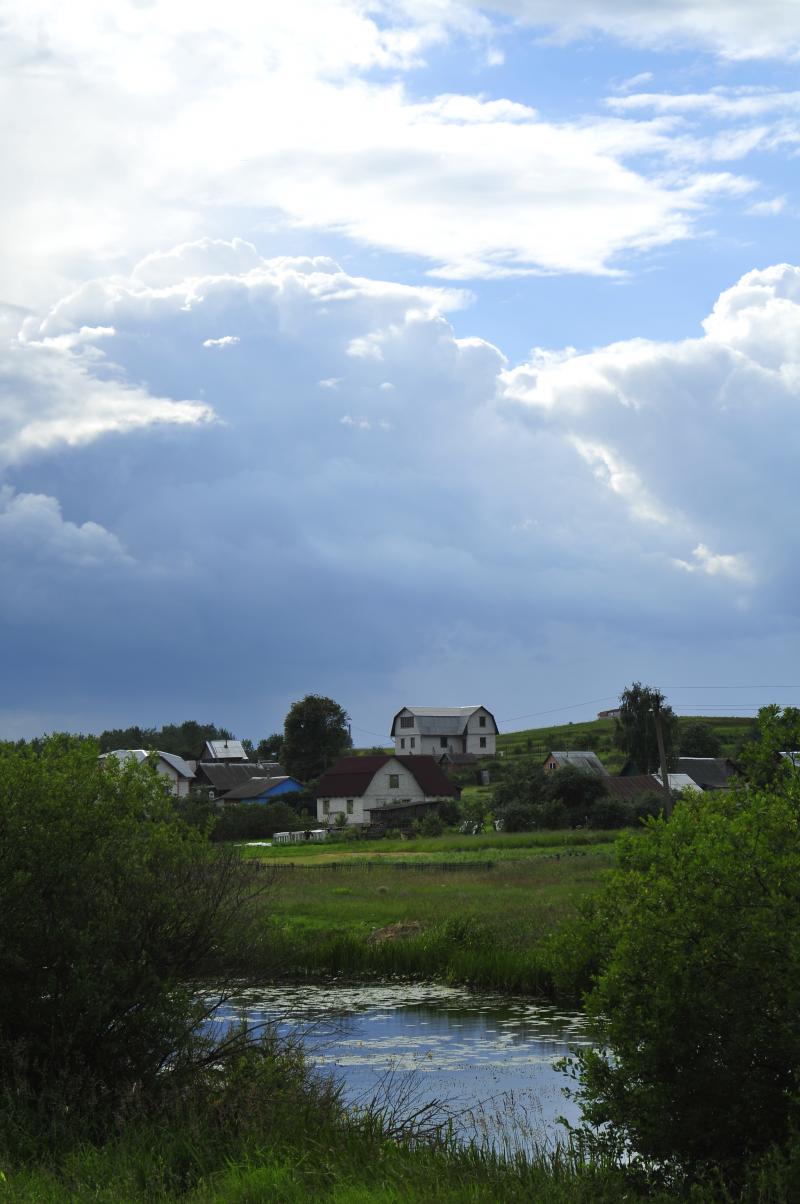 Rural settlement with houses, pond and green slopes as an example of the landscape of a dacha settlement.
Photo: Alesia Belaya
Rural settlement with houses, pond and green slopes as an example of the landscape of a dacha settlement.
Photo: Alesia Belaya
- A dacha settlement is a neighbourhood of houses, plots, paths and local arrangements.
- It is not a uniform architectural type or automatically a holiday resort.
- Gardening, privacy, shared routines and access roads may shape everyday life.
- Peredelkino, Praleski and Rublyovka represent different historical and social contexts.
- Private homes and gardens are not automatically open to visitors.
- Addresses, transport, museums and opening hours need current confirmation.
Houses, gardens and shared space
A settlement may contain simple wooden houses, renovated country homes and larger private properties. Gardens can support food growing, relaxation or both. Paths, fences, water, electricity, waste collection and winter access may be organised differently from one place to another. These practical details matter more than the label when you are considering a stay.
Three different local stories
Peredelkino is associated with Russian writers and literary history. That connection does not make private houses public, although a museum or official visitor facility may provide a defined place to visit. Praleski is described in older accounts as a greener, more rural setting near Minsk; its current route and services require local confirmation.
Rublyovka represents a very different affluent suburban landscape west of Moscow. Private villas, security arrangements and normal residential life should be kept separate from sightseeing assumptions. Comparing these places with the broader dacha helps explain why one word can cover very different settings.
Plan a respectful visit
Before travelling, confirm the exact address, permitted route, transport, return connection and any museum or operator opening hours. Do not rely on an old travel account for today's railway timetable, road, walking route or access rule. Do not enter private land, use unapproved tracks or photograph residents without permission.
Do not confuse a settlement with a holiday resort
A holiday resort normally offers bookable units and defined services. A dacha settlement may have no reception, public toilets, tourist signage or accommodation for visitors. If a house is advertised, confirm the contract partner, exact address, heating, bathroom, kitchen, sleeping arrangements, road access, cancellation terms and emergency contact.
Further context
The history of the dacha explains how estates, allotments and suburban homes acquired different meanings. The dacha house types focus on buildings and equipment, while VIP dachas cover more protected or representative properties. Use each topic for the question it can answer, and verify present-day facts separately.
Questions before a visit
Is a dacha settlement a tourist attraction?
Not automatically. It may be a private residential area with no public facilities.
Can I walk through private paths?
Only where local rules clearly allow it. Private land and access roads must be respected.
Are old travel directions reliable?
Not without current confirmation. Routes, services, transport and access rules can change.
Can I book a house in the settlement?
Only if a current provider offers it with a clear address, contract and usable facilities.
