
Beach holidays by bicycle
Find accommodation
Quick facts for planning
A cycling beach holiday connects the coast, harbour, villages and holiday home without searching for a parking space every day. It works best when the route is chosen for the whole group, including luggage, wind, surface, weather and a realistic alternative if somebody is tired.
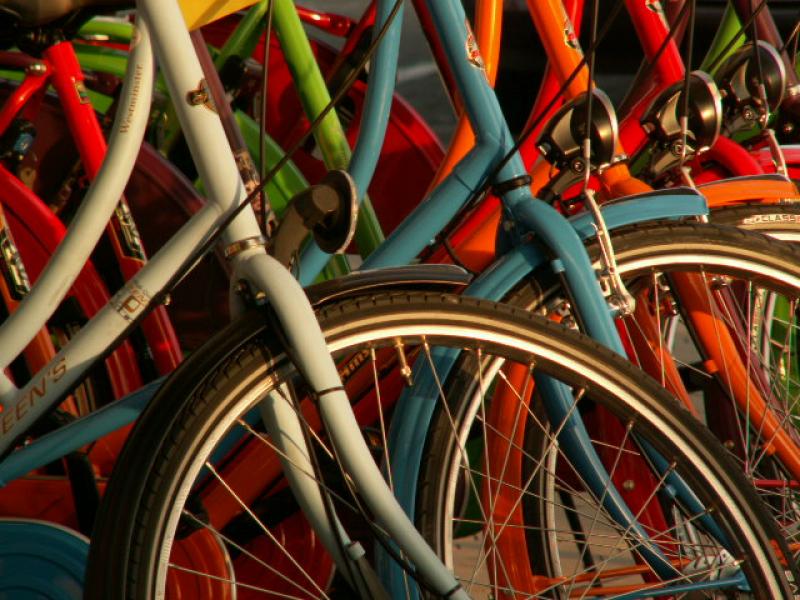 Several bicycles are close together; neutral image for bicycle holidays on the coast.
Photo: Voyagemedia - RRinnau
- A coastal route may include wind, sand, hills, traffic, crossings and shared paths.
- The shortest line on a map is not always the safest or most enjoyable route.
- Families and mixed-ability groups need stages, breaks and a practical return option.
- A lockable bicycle room, drying space, tools and e-bike charging should be confirmed.
- Train, ferry and bus operators have different rules for carrying bicycles.
- Dunes, promenades, dikes and nature reserves may have local cycling restrictions.
Compare route character
The Baltic Sea offers resort promenades, Bodden paths and varied surfaces. The North Sea has long dike sections where wind can determine the effort. The Dutch and Danish coasts often offer extensive cycle networks, while parts of Brittany, southern Europe and the Adriatic can include more gradients or road traffic. Check the actual route, crossings, surface, places to stop and the way back.
Set stages by wind and ability
Plan a shorter first day and leave room for a headwind, puncture or longer break. A harbour, café or station as a turning point is easier to adapt than a fixed round trip. Children need safe crossings, toilets and frequent pauses. E-bikes extend range but add charging, weight and security requirements. Keep a public-transport or shortened-route option for rain or fatigue.
Choose a bicycle-friendly holiday home
Ask whether all bicycles fit in a lockable, dry space and whether e-bike batteries may be charged safely. A pump, basic tools, washing machine and a place for wet clothing are practical. Shopping nearby reduces luggage rides. Confirm the property address and the first route to the beach before paying.
Plan arrival and transport
For trains, check reservations and bicycle spaces. Ferries and buses may require advance booking or limit bicycle numbers. By car, confirm the carrier, overnight security and parking. Pack lights, rain protection and a repair kit where they are easy to reach. Arrival and departure guidance helps organise key collection and the first ride.
Cycle responsibly along the coast
Use signed paths and respect pedestrian zones, dunes, nesting areas, dikes and access restrictions. Adjust speed on shared paths and in busy resort centres. Strong crosswinds can affect children, trailers and high loads. The best route is permitted, visible and comfortable for the group, even if it is a little longer.
Compare total effort and cost
Alongside accommodation, compare bicycle hire, transport tickets, parking, charging, cleaning and storage fees. A property closer to shops may reduce logistics, while a quieter house may provide more space. Beach holidays in a holiday home helps compare cycling with short daily walks and direct beach access.
Questions before booking
Which coast is best for cycling?
Choose a section with safe paths, suitable surfaces, rest stops and stages that match the group.
Do I need an e-bike?
That depends on wind, gradients, luggage and fitness. Confirm charging and secure storage.
What should the holiday home provide?
Secure storage, drying space, tools, washing facilities and realistic access to shops are useful.
What if the weather changes?
Shorten the stage, use public transport where possible or plan a local indoor activity.
