
Discover Uganda
Accommodation in Uganda
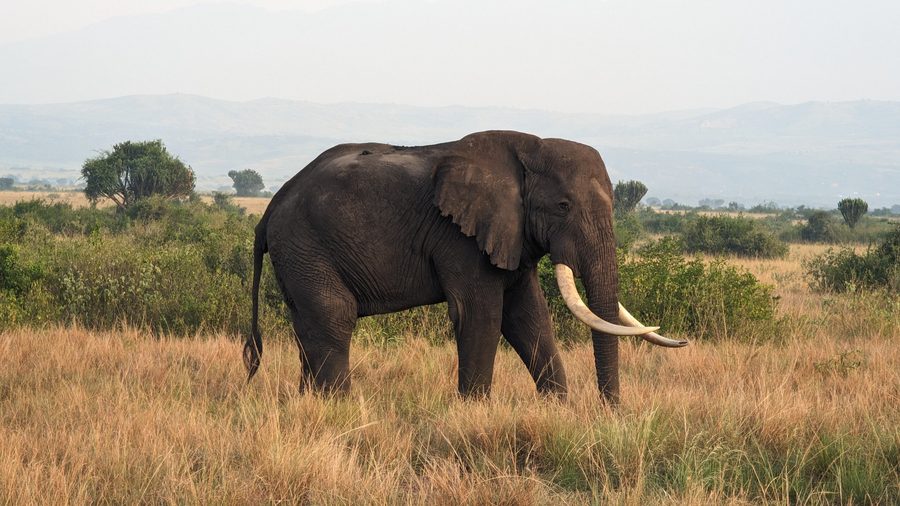 Ein Elefant im Queen-Elizabeth-Nationalpark – die Savannenlandschaft gehört zu den prägenden Naturerlebnissen Ugandas.
Photo: Kateregga1 via Wikimedia Commons, CC BY-SA 4.0
Ein Elefant im Queen-Elizabeth-Nationalpark – die Savannenlandschaft gehört zu den prägenden Naturerlebnissen Ugandas.
Photo: Kateregga1 via Wikimedia Commons, CC BY-SA 4.0
Uganda combines wide savannas, rainforests, mountains, and lakes in an unusual way with the lively city life of Kampala. Add to that the source of the White Nile at Jinja, impressive nature experiences in national parks, and a cuisine that reveals itself very directly through shared tasting. For your travel planning, it is therefore worth not choosing just one destination, but thinking of nature, water, city, and culture as different stages of the trip.
Quick and good
- Uganda’s landscape ranges from savannas and lakes to rainforests and mountains.
- In Queen Elizabeth National Park, boat trips, game drives, and chimpanzee watching come together to create different nature experiences.
- At Jinja, the White Nile flows out of Lake Victoria; among the activities mentioned there are rafting as well as boat and horse safaris.
- Semliki National Park is a special destination for birdwatching: one source mentions 40 bird species there that are found nowhere else in Uganda.
- Traditional kingdoms such as Buganda, Bunyoro, and Toro remain part of Uganda’s cultural identity.
- Rolex, matoke, katogo, and luwombo provide a trip with concrete culinary discoveries.
Between safari, the Nile, and quiet nature observation
Uganda is especially suitable for travelers who want to combine different types of experiences. In Queen Elizabeth National Park, boat trips stand alongside game drives and the chance to observe chimpanzees. That means an active day can be followed by a calmer ride on the water. Sightings in the wild cannot be guaranteed, but it is precisely the open experience of the landscape that makes such stages so appealing.
Jinja sets a different tone. Where the White Nile leaves Lake Victoria, water-based activities take center stage. Rafting as well as boat and horse safaris are mentioned as options. Anyone trying to balance different preferences within a family can combine such an active focus with quieter nature days or a city stay instead of making the entire trip revolve around only one type of experience.
Kampala, kingdoms, and Ugandan cuisine
Kampala is described as a modern, vibrant metropolis with gardens and parks. This gives the capital a very different travel profile from a national park stage: city life, walks, and cultural impressions can be combined here with getting to know local eating habits.
The culinary side becomes especially vivid in street food. In Uganda, the name Rolex also refers to a popular dish. Matoke, katogo, and luwombo are among the other examples mentioned; luwombo is cooked in banana leaves and can contain meat or fish. Such dishes make everyday life in the country tangible and add a shared moment at the table to wildlife and landscape experiences.
The traditional kingdoms of Buganda, Bunyoro, and Toro are also part of Uganda’s cultural identity. They show that Uganda can be discovered not only through its natural scenery, but also through history, regional ways of life, and culinary traditions.
Which base suits your trip?
The experiences mentioned are spread far apart thematically: Jinja stands for water and activity, Kampala for a city stay, Queen Elizabeth National Park for several forms of nature observation, and Semliki for a special focus on birds. A journey with several experience-oriented stages can reflect these differences better than a single accommodation base for the whole country.
For a city component, a location close to the city is worth considering, while for nature programs proximity to the specific experience you want matters more. For longer stays, accommodation with space for preparing your own meals can also be practical; you should always check specific facilities and current availability directly with the property. The key question first is whether you are planning short city stages, active water days, nature observation, or a varied round trip.
Regions at a glance
If you want to move beyond the country level and look at a single region separately, here are the four direct regional deep dives. The Central Region, the Eastern Region, the Northern Region, and the Western Region each lead to the appropriate regional level. For trip planning, you can then use these pages specifically for the part of Uganda that fits your planned route.
Frequently asked questions about Uganda
What makes Uganda interesting beyond a city stay?
The combination of lakes, the Nile, savannas, rainforests, mountains, and national park experiences creates very different travel impressions. Add to that Kampala, cultural traditions, and local cuisine.
Which nature experiences can be combined in Uganda?
In Queen Elizabeth National Park, boat trips, game drives, and chimpanzee watching are mentioned. Semliki sets a different focus with its special birdlife, while Jinja adds water-based activities.
Why can a trip with several stages make sense?
City life, Nile activities, and different forms of nature observation are in separate experience settings. Several suitable bases therefore help make the trip more varied and let you choose accommodation closer to each planned focus.

