
Holiday apartment in Kairakkum
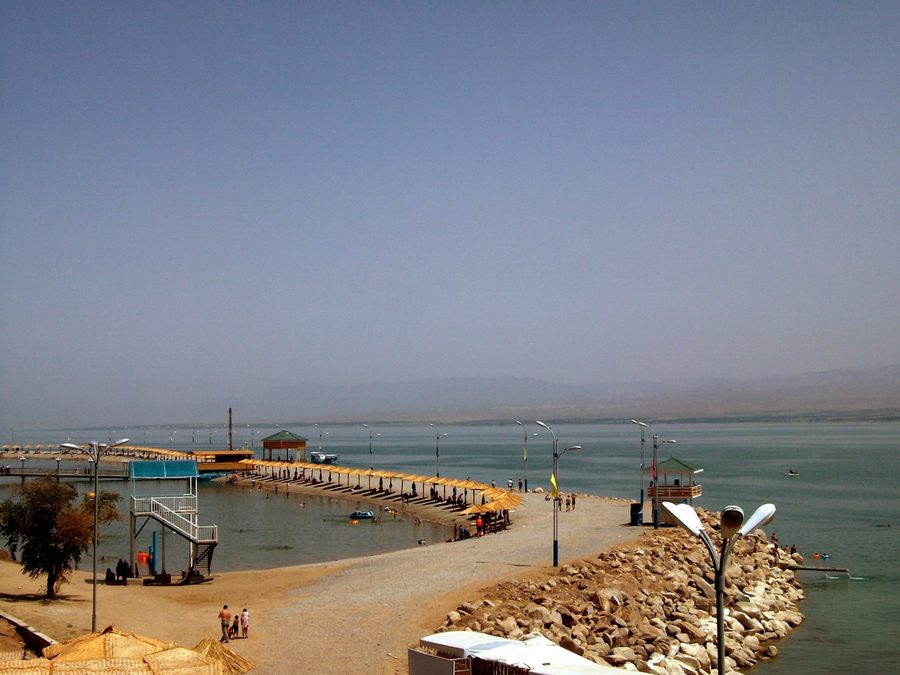 Der Kairakkum-Stausee, auch als Tadschikisches Meer bezeichnet.
Photo: Dogross via Wikimedia Commons, CC BY-SA 4.0
Der Kairakkum-Stausee, auch als Tadschikisches Meer bezeichnet.
Photo: Dogross via Wikimedia Commons, CC BY-SA 4.0
Kairakkum is mainly associated with the Kairakkum Reservoir in Sughd. In travel descriptions, the reservoir is also referred to as the Tajik Sea. The broad waterscape and the surrounding open-air setting give the stay its particular focus.
Quick facts about Kairakkum
- Kairakkum is also known as Kayrakkum.
- The Kairakkum Reservoir lies on the Syr Darya River in Sughd.
- The reservoir is also called the Tajik Sea.
- Fishing is mentioned as a possible activity at the reservoir; more general activities on and around the water are also associated with it.
- The reservoir is described as being near Khujand.
The waterscape of the Tajik Sea
The Kairakkum Reservoir was created in the 1950s in connection with hydropower and river regulation. For your travel planning, the landscape itself is therefore the main focus: a holiday apartment in Kairakkum suits a stay in which the reservoir, open spaces, and time outdoors play an important role.
Fishing is mentioned as a possible pastime at the reservoir. Travel descriptions also generally link the Tajik Sea with activities on and around the water. Which access points, providers, or equipment are available on site depends on the individual offer and the current situation. For a trip with children of different ages, flexible day planning can be useful so that the stay can be adapted to the family’s needs.
Reservoir area or Khujand as a base?
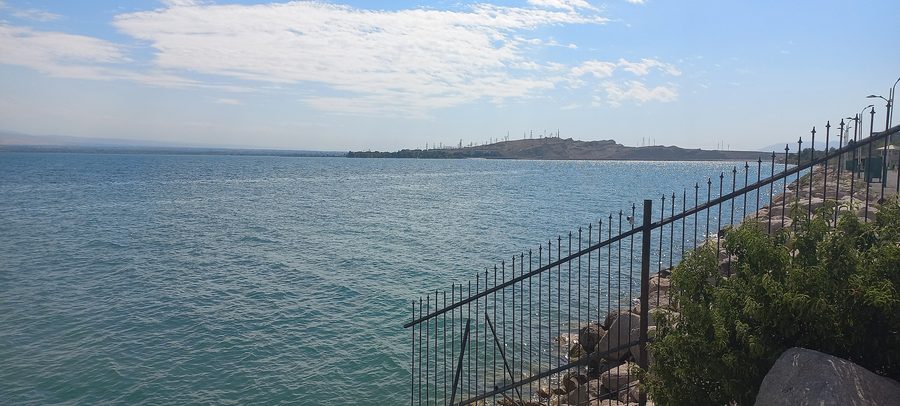
An important decision concerns the geographical focus of your trip. In the Kairakkum area, the waterscape takes center stage. A holiday apartment there is especially suitable if the reservoir and its surroundings are meant to form the core of your stay. Direct lake access, views, amenities, or self-catering facilities are not automatically included and should be checked with the individual listing.
The reservoir is described as being near Khujand. A regional travel source names Khujand as a starting point for local transport or taxis to the reservoir. You can therefore compare a stay focused on the landscape directly in the Kairakkum area with a plan that uses Khujand as an arrival and transfer point in Sughd. Exact distances, travel times, schedules, and prices cannot be inferred from this.
For a comparison with other destinations in the region, the Sughd page offers the appropriate higher-level entry point. Kairakkum remains the specific choice for a stay around the reservoir; the regional page helps place this focus within a broader travel plan.
Climate as a rough guide
The reservoir region is described as having hot, dry summers and colder, wetter winters. This is a broad seasonal frame and not a weather guarantee for your travel dates. If your trip depends on outdoor activities, you should take the flexibility of your plans and the actual weather conditions before departure into account.
Frequently asked questions about Kairakkum
What is Kairakkum especially known for?
Kairakkum is mainly associated with the large Kairakkum, or Kayrakkum, Reservoir, which is also referred to in travel descriptions as the Tajik Sea. The waterscape is the main reason to consider this place as a travel destination in Sughd.
What experiences can be combined with the reservoir?
Fishing is mentioned as a possible activity. In addition, general activities on and around the water are associated with the reservoir. No specific providers, facilities, equipment, or programs are promised by this.
Is Kairakkum more interesting as a standalone stay or together with Khujand?
Since the reservoir is described as being near Khujand and Khujand is named as a starting point for local onward travel, you can compare a stay at the reservoir with a regional plan based on Khujand. Which option is the better fit depends on the desired balance between waterscape and regional connections.


