
Holiday apartment in Cheyenne
Accommodation in Cheyenne
Cheyenne is more than a practical stopover: Wyoming’s capital combines Western culture, railroad history, museums, and the exploration of downtown. For families and other travelers, the city can therefore be either an independent cultural stop or a building block of a larger Wyoming trip.
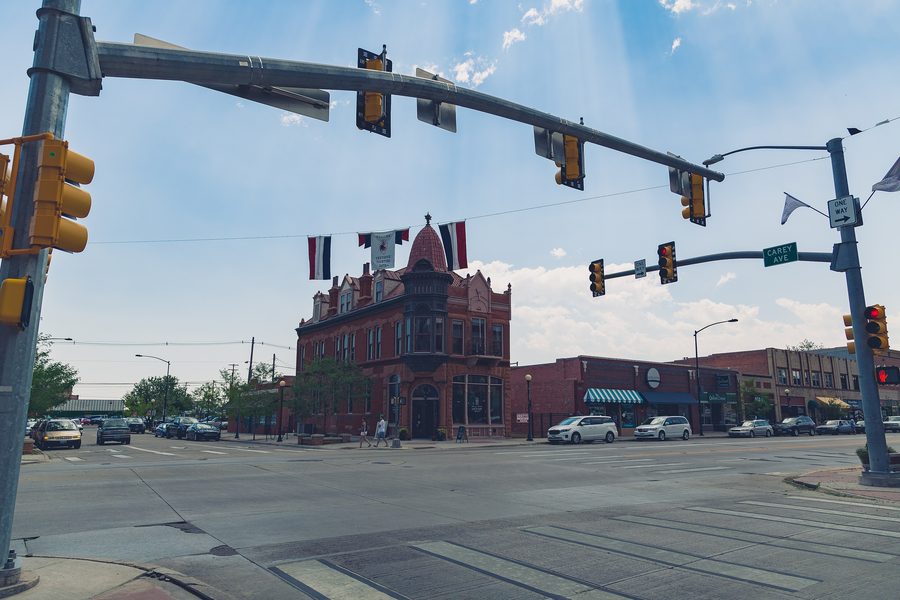 Downtown Cheyenne, Wyoming, with the historic Tivoli Building at center.
Photo: Tony Webster from Minneapolis, Minnesota via Wikimedia Commons, CC BY-SA 2.0
Downtown Cheyenne, Wyoming, with the historic Tivoli Building at center.
Photo: Tony Webster from Minneapolis, Minnesota via Wikimedia Commons, CC BY-SA 2.0
Quick facts about Cheyenne
- Character: Capital of Wyoming and county seat of Laramie County.
- Historical note: Cheyenne developed from a Union Pacific Railroad junction established in 1867.
- Visitor themes: Western heritage, rodeo culture, museums, historical references, and public art in downtown.
- Travel style: Culture-oriented city stay or part of a broader Wyoming route.
Discover Western heritage and downtown
Cheyenne’s cityscape and tourism focus visibly draw on its Western heritage. Rodeo culture is just as much part of the visitor perspective as historical themes. This focus becomes especially apparent during the Frontier Days period associated with Cheyenne; you should check the current event dates and programs.
In downtown Cheyenne, public art, museums, and historical urban themes come together. Murals and bronzes complement a museum visit and give a city exploration different perspectives. This is especially suitable for a flexible day plan that combines indoor spaces and outdoor exploration without assuming specific opening hours or continuous walkability.
Railroad history as a reason to visit in its own right
Cheyenne’s history is closely tied to its development from a railroad junction in 1867. This is not a complete account of local history, but it offers a clear introduction to the city’s origins and its role in the American West.
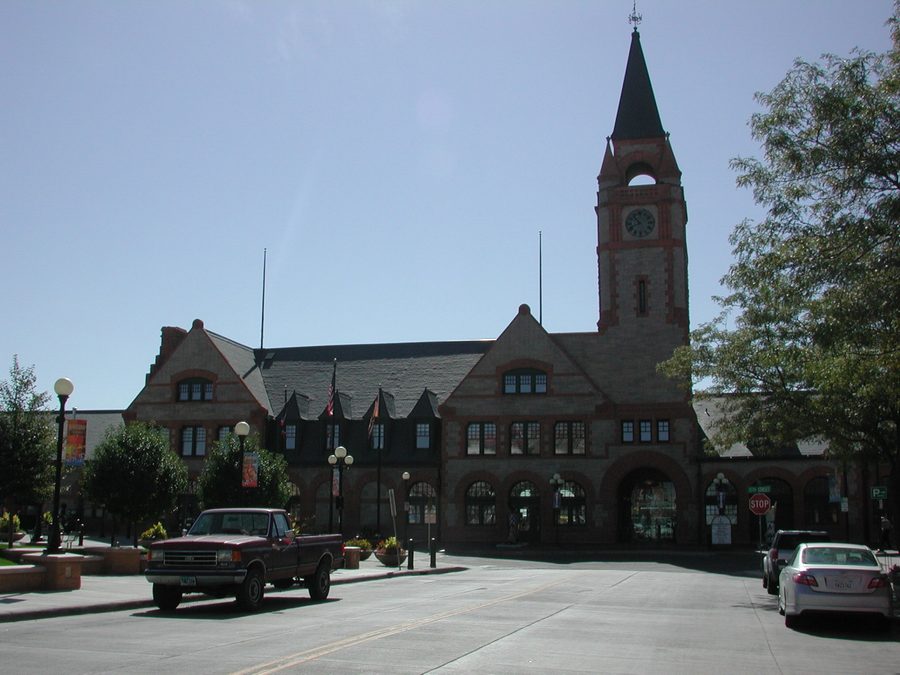
The Cheyenne Depot Museum is a concrete point of reference for this historical orientation. Together with other museums and the themes of downtown, this creates a city program that can also be shaped differently under changing conditions. Current opening hours, programs, and admission information should be checked directly before your visit.
City break or broader Wyoming trip?
Cheyenne is the capital of Wyoming and the county seat of Laramie County. For travel planning, the combination of urban identity and Western heritage is especially interesting: you can view Cheyenne as a culture-oriented stay or as an urban section within a broader Wyoming trip.
If museums, historical themes, and downtown exploration are the focus, that speaks for a deliberately city-based stay. The visitor focus also includes highland landscapes and broader outdoor possibilities. These are not automatically located within Cheyenne; specific distances, travel times, and seasonal availability are not defined here for the purpose of this overview.
For a holiday apartment, this means: choose Cheyenne as your accommodation base if access to the city’s heritage and museum themes is to be an essential part of your trip. For a larger Wyoming route, the city should rather be understood as a city and cultural stop, not as a universally best base for every regional excursion plan. Which location and accommodation base make sense therefore depends on the rest of your route.
Travel time and planning the day
The available information does not suggest a general recommendation for a specific season. Rather, Cheyenne can be planned so that museum and heritage experiences can be combined with time downtown and, where conditions are suitable, outdoor activities. Around Frontier Days, the rodeo and Western focus becomes especially prominent; current dates and the respective program should be checked separately.
This keeps the city interesting for different travel plans: as a culturally shaped stopover, as an independent part of a Wyoming trip, or as the starting point for a route whose further destinations you define independently of Cheyenne.
Frequently asked questions about Cheyenne
What makes Cheyenne more than a practical overnight stop?
The Western heritage, rodeo culture, museums, and public art in downtown give the stay concrete cultural content.
Is Cheyenne more suitable for culture or for outdoor travel?
The city can be experienced in a culture-oriented way with museums and historical themes. In addition, there is a broader highland and outdoor orientation; certain excursion destinations are not automatically within the city.
When does Cheyenne fit into a larger Wyoming trip?
Cheyenne is especially suitable when your route includes a capital-city and Western-culture stop. Detailed route and season comparisons should be planned based on your other travel destinations.
For further orientation about the surrounding area, you can find the broader regional context under Laramie.

.jpg)

.jpg)