
Holiday apartment in Tete
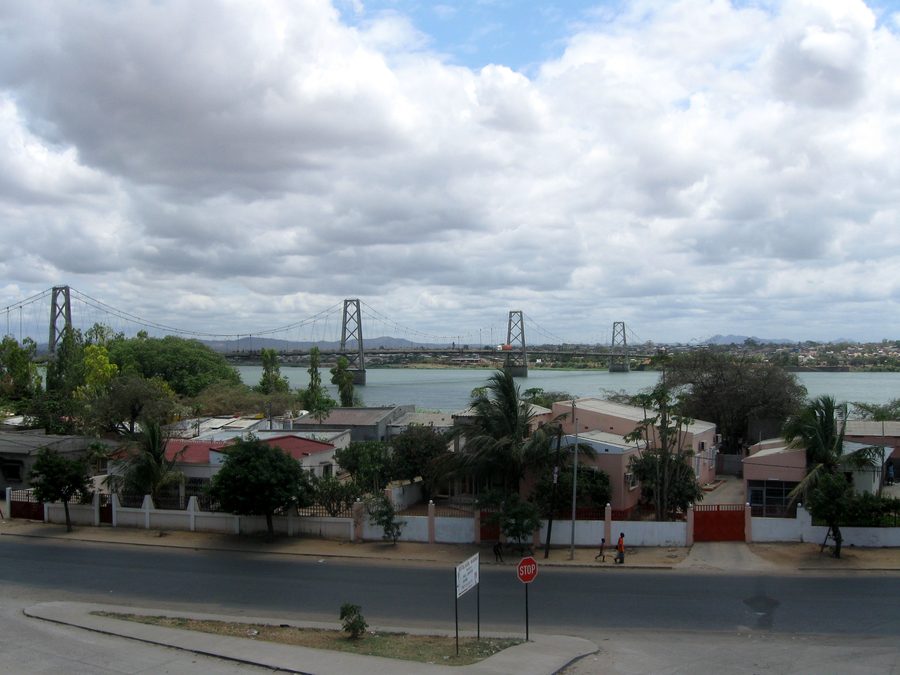 Die Samora-Machel-Brücke über den Sambesi in Tete.
Photo: Erik Cleves Kristensen via Wikimedia Commons, CC BY 2.0
Die Samora-Machel-Brücke über den Sambesi in Tete.
Photo: Erik Cleves Kristensen via Wikimedia Commons, CC BY 2.0
Tete lies on the Zambezi and is the capital of Mozambique’s Tete Province. The cityscape includes two of Mozambique’s four bridges over the river. It also has a documented history as a Swahili trading center and as a Portuguese settlement and trading post on the Zambezi. Tete is therefore best understood as a city with a clearly recognizable river connection and historical context.
Quick facts about Tete
Location: Tete lies on the Zambezi in Mozambique and is the capital of Tete Province.
Cityscape: Two of the four Mozambican bridges over the Zambezi are part of Tete’s cityscape.
Historical context: Tete is described as a former Swahili trading center as well as a Portuguese settlement and trading post on the Zambezi.
Between the Zambezi and the city’s history
The Zambezi is more than just a geographical reference for Tete’s identity. The city is explicitly linked to two bridges over the river and thereby has a distinctive urban profile. Anyone choosing accommodation in Tete is therefore opting for a city base with a confirmed river connection — without this automatically implying specific activities on the water or short distances to particular viewpoints.
The city’s past also gives Tete a clear historical setting: historical accounts first describe it as an important Swahili trading center and later as a Portuguese settlement and a place of trade and exchange within regional river and long-distance commerce. This places a stay in a cultural context without assuming the existence of museums, monuments, or open historical sites today.
Tete or the wider province?
For trip planning, it is important to distinguish between Tete and Tete Province. Tete is the city and provincial capital; the province also covers a large region. The Cahora Bassa Dam is in Tete Province as well, not automatically in the city. If you are considering a holiday apartment in Tete as a base for more than a city stay, you should plan distances, transport connections, and travel time for regional destinations separately.
This makes the accommodation decision clearer: a booking in Tete suits a stay focused on the confirmed Zambezi connection and the city’s historical setting. For a broader province trip, however, you should not assume a convenient connection or an easy excursion simply because the destinations share the same regional name. When looking for a holiday apartment in Tete, the radius of your actual planned stay should therefore be the deciding factor.
A suitable base for your travel planning
If you are traveling with children of different ages, you can first assess Tete by whether the accommodation fits your specific city stay. The safe planning decision here is not based on a claimed list of family facilities, but on whether the amenities and location of the individual holiday apartment suit your daily routine. General advantages of particular neighborhoods or exceptional proximity to sights are not broadly established for Tete.
Before booking, also check whether your actual travel plan is limited to the city of Tete or includes destinations in the wider province. This determines the practical requirements for daily planning and mobility. The accommodation should therefore match your real travel radius, not an unsubstantiated assumption about nearby regional attractions.
Frequently asked questions about Tete
What makes Tete special as a travel destination?
Tete combines a location on the Zambezi with a documented history as a Swahili trading center and Portuguese settlement. The two bridges also give the city a distinct geographical identity.
Is Tete better suited as a city base or for exploring the wider province?
Tete is a city and at the same time the capital of a large province. Whether destinations outside the city can be sensibly included should be decided on the basis of separately checked connections and distances.
What is Tete’s historical significance?
Tete is described as an early Swahili trading center and later as a Portuguese trading and meeting point on the Zambezi. This provides a historical context for a stay there without assuming the presence of specific monuments that are accessible today.

