
Discover Vaxholm: Holiday Apartments Among the Fortress, Nature and Archipelago
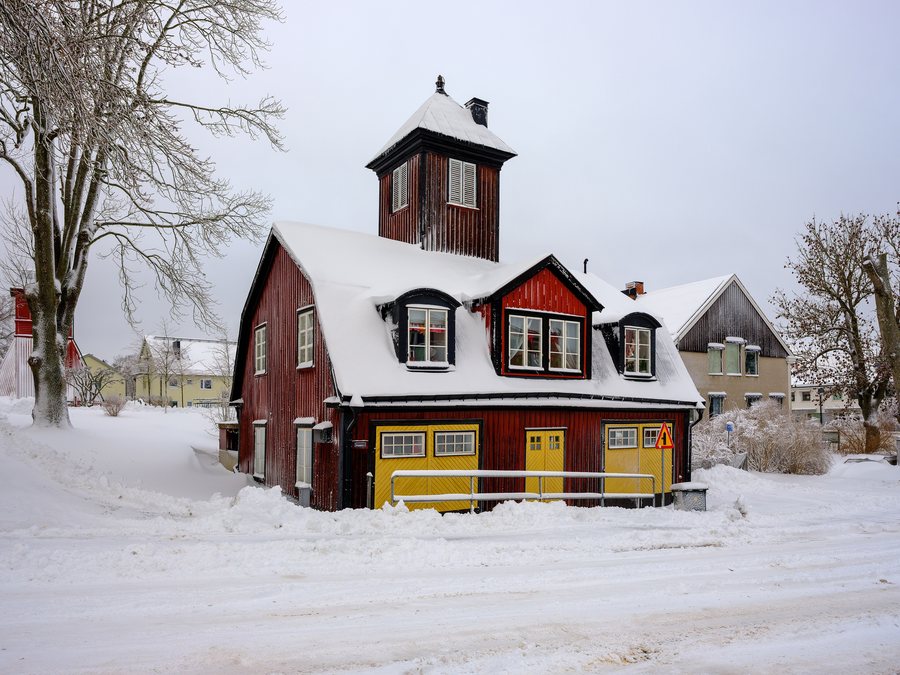 File:Gamla brandstationen Vaxholm January 2026 02.jpg
Photo: ArildV via Wikimedia Commons, CC BY-SA 4.0
File:Gamla brandstationen Vaxholm January 2026 02.jpg
Photo: ArildV via Wikimedia Commons, CC BY-SA 4.0
Vaxholm combines impressive fortress history with nature reserves, historic houses, paths through the landscape and experiences in the archipelago. Between Vaxholm Fortress, Bogesundslandet and the shores of the town are numerous places where history, nature and local culture meet directly.
Culture and History by the Water
At Vaxholm Fortress, the Vaxholm Fortress Museum presents the history of Sweden’s coastal defence and the role of the fortress over a period of 500 years. The main exhibition combines immersive displays with original artefacts from different eras. Information brochures in English and German, among other languages, are available at the museum ticket office. Another exhibition is dedicated to the Ytterby mine, where no fewer than nine chemical elements were discovered over the years. The basement exhibition shows what life was like for the fortress’s civilian residents in the 1890s.
The Vaxholm waterfront promenade also passes through areas shaped by cultural history: The walk runs through Österhamnen and Västerhamnen, and at selected points QR codes provide additional cultural and historical information. One of the town’s distinctive buildings is Vaxholm’s water tower. It was designed by Cyrillus Johansson, built in 1923 and is considered one of the town’s most important landmarks.
The town’s history is also reflected in its inn and residential culture. Herring fishing was historically of central importance to Vaxholm; herring remains part of Vaxholm’s food culture and is served in the town’s inns. As early as the 17th century, archipelago inns near Stegesund were part of the historic inn culture, while in the 19th century the town had seven official inns. The Wirströmska gårdarna are an important part of Vaxholm’s history: most of the houses were built before 1820, and the entire Tullbomen block is protected for its cultural and historical significance. Vaxholms Biografteater was built in 1918, carefully renovated several times and modernised technologically; film premieres are shown there as matinees and evening screenings.
Fortresses, Castle and Ytterby
Oscar-Fredriksborg Fortress is a listed state-owned historic building. Rindö Redoubt was built between 1859 and 1864. Bogesund Castle was built in the 1640s. A limited number of rooms are open to the public. In several rooms, visitors can trace the building’s history through the 17th, 18th and 19th centuries.
The Ytterby mine can be explored independently at the open pit itself. Information boards and films accessible via QR codes cover the history of the site, scientific discoveries and the Cold War. The mine was designated a historic landmark by ASM International in 1989 and by the European Association for Chemical and Molecular Sciences in 2019.
Nature Reserves and Landscape
Bogesundslandet has been a nature reserve within Vaxholm Municipality since 2015 and covers approximately half of the town’s land area. The landscape combines moss-covered spruce forests, pine forests on rocky ground, wetlands, lakes, arable land and pasture meadows. Bogesundslandet is known for its old oaks, which provide important habitats for many species. The wetlands around Dammstakärret belong to the European Natura 2000 network.
This natural area has marked hiking and riding trails, designated mountain-biking routes, bathing areas and rest areas with fire pits and wind shelters. Kullö Nature Reserve has a different landscape character: It occupies the western part of Kullön and was established as Vaxholm Municipality’s first nature reserve to serve local recreation. Kullö Nature Reserve protects valuable habitats created by the historic cultivated landscape and includes a 300-metre-wide shoreline protection strip.
Hiking and Cycling
The Blå leden hiking trail runs 12 kilometres within Vaxholm, from Söderhamnen on Vaxön to Kulla vägskäl, and then continues into Österåker Municipality. Vaxön is also home to the Strömmingsrundan, with a yellow route marked year-round covering 5 kilometres and a green route covering 10 kilometres. The yellow route is also suitable for bicycles, wheelchairs and pushchairs.
For cycling, Vaxholm has marked bicycle routes and cycle paths suitable for both road cycling and mountain biking. This provides a range of route types side by side: the longer Blå leden, the two colour-coded Strömmingsrundan routes and designated routes for different forms of cycling.
Archipelago and Useful Information
Skärgårdens Kanotcenter rents kayaks for exploring the archipelago independently or on guided excursions. The canoe centre also offers winter tours and has a hot sauna for relaxing after the trip.
Vaxholm Tourist Information provides information about sights, events, activities, restaurants and accommodation, and supplies maps of walking and cycling routes in the municipality. Museum hosts are available to provide guidance at Vaxholm Local Heritage Museum; written guides are also available in several languages. Further information about the town can be found under Vaxholm.
For the broader travel overview: Stockholm.
Check prices, availability and amenities for your travel dates directly on Booking.com.
View Accommodation and OffersAdvertisement · Affiliate link to Booking.comMore Destinations
More places within the same destination:

