
Landskrona: Holiday Apartments between Nature, Culture and Ven
Landskrona combines landscapes along the Öresund with cultural history. In the Hilleshögs Dalar nature reserve, gently rolling hills and high, sandy slopes descend towards the Öresund; from there, views extend across the sound to the island of Ven. The Sandbergen loop leads for 3.2 kilometres through grazed sand hills and green valleys. The geology also tells of a turbulent past: the valley includes a dead-ice depression that probably formed during the Ice Age, while other parts were presumably shaped by solifluction after the ice retreated.
Nature and Trails
Those looking for longer routes will find a 13-kilometre hike on the Skåneleden, leading from Landskrona through Hilleshögs Dalar and Glumslövs backar onwards to Rydebäck. In Lundåkrabukten, the birdwatching tower offers opportunities for birdwatching all year round. The gently flowing Saxån at Lundåkrabukten is rich in fish; species found there include, among others, perch, pike, ide and trout.
Saxtorpsskogen also combines trails of various lengths with nature experiences. Its network of paths includes routes between 0.5 and 5 kilometres long. Stage 9 of the Skåneleden SL5 Öresund passes through the forest and by a shelter suitable for a break or overnight stay. There are also two short circular trails specifically designed for children, combining play with nature experiences. The Sydkustleden runs through the centre of Landskrona.
The northern part of Gråen has been a nature reserve since 1952. Grey herons and cormorants are among the species living in its ponds and ditches. To protect the birdlife, entering the Gråen nature reserve is prohibited from 15 March to 1 August. Gråen is also an artificial island off Landskrona, created at the end of the 18th century to protect the harbour from military attacks. Today, only the powder tower from the early 19th century remains there.
Culture and History
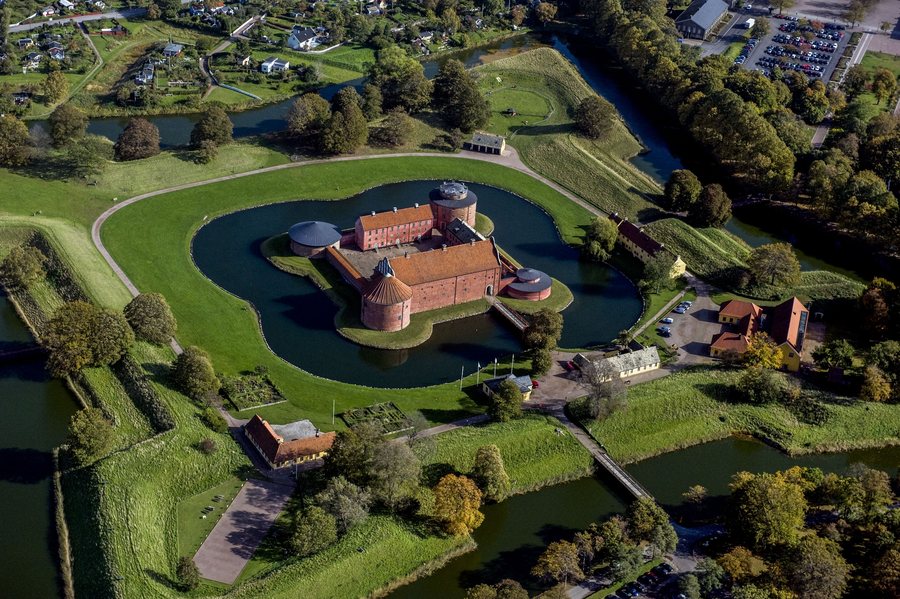
The history of fortifications and gardens shapes several places in Landskrona. The Citadel was built between 1549 and 1559 by Christian III of Denmark. It is considered the best-preserved 16th-century castle in the Nordic region and Sweden’s only surviving earthwork fortification. The Citadel allotment gardens form a unique cultural landscape reflecting Sweden’s defence history and the development of the allotment-garden movement. Visitors can experience historic cottages, green gardens and paths such as Lavendelstigen and Kärleksstigen.
The history of the allotments also includes Rothoffska kolonin. It comprises a house built in 1903, one of the oldest surviving cottages in the area, furnished as it was at the beginning of the 20th century. A small exhibition is dedicated to the history of the allotment and the Rothoff family. Borstahusen has a different historic character: in its picturesque harbour districts, the old fishing village features houses from the late 18th century that can be explored on foot.
Museums and Island Culture
Landskrona Museum combines urban history with activities for different age groups. From Landskrona railway station, bus 3 travels free of charge to the town centre upon presentation of a valid ticket; from the Rådhustorget stop, it is only a short walk to Landskrona Museum. The “Människor som vi” exhibition uses finds from excavations at the Tågerup settlement to present people who lived on Sweden’s Skåne coast 8,000 years ago. The “1413” exhibition uses archaeological finds, maps, music and an animated film to tell how Landskrona came into being and what life in the town may have been like in the 15th century.
For younger children, Trädgårdslandet at Landskrona Museum offers interactive play features for children aged 0 to 5. At Ateljé Nell, materials are available for children and families to engage in creative work independently. Another cultural site is located on the island of Ven: the Tycho Brahe Museum stands on the site of Tycho Brahe’s research centre from the late 16th century, with its castle and underground observatory. The museum offers a guided tour of Uraniborg, Stjärneborg and the surrounding castle garden, featuring replicas of instruments and original objects. The reconstructed Renaissance garden contains 200 known garden plants from the 16th century.
Art
Landskrona Konsthall has a Japanese garden in its atrium courtyard, created by Ulla Mohlin in 1989. The sculpture park near Landskrona Konsthall contains 20 works by 19 artists. In Kaptensgårdens sculpture park, visitors can stroll among the sculptures in the green area of Slottsparken; a printed map and a digital map show the locations and names of all the artworks.
Holiday Apartment in Landskrona
Also make sure to check which services are included, how the price is made up and which booking or cancellation conditions apply. Reviewing these points keeps the decision focused on the specific details of the individual offer. The displayed offers can then be compared directly with one another.
More Places
You can find more local pages here: Landskrona, Härslöv, Glumslöv, Sankt Ibb, Kyrkbacken, Annelöv, Häljarp and Vellinge.
For the overarching travel overview: Skåne.
Check prices, availability and amenities for your travel dates directly on Booking.com.
View Accommodation and OffersAdvertisement · Affiliate link to Booking.com
