
Holiday apartment in Kronoberg: Åsnen, glass and cultural history
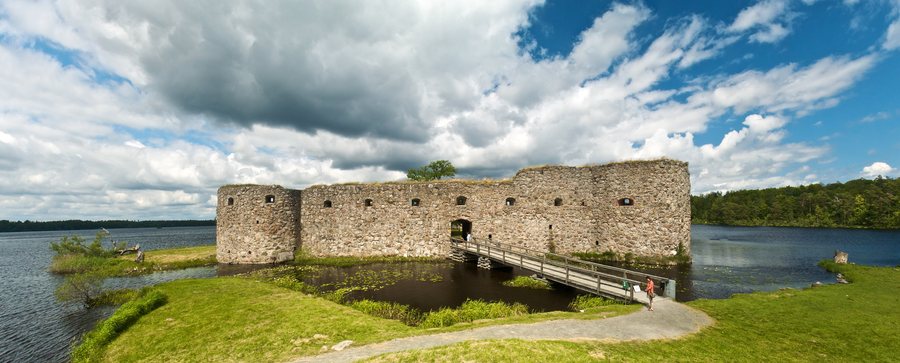
Kronoberg combines distinctive natural and cultural attractions: museums, glass art, historic crafts businesses and the storytelling tradition of Sagobygden reveal different sides of the region. Between waterscapes, living history and signposted cycle routes, there are numerous specific places to visit for a varied range of discoveries.
Nature
Åsnen National Park encompasses valuable broadleaf forests, mixed and swamp forests, moorland, the Husebyåsen gravel ridge, glistening waters, sandy beaches and bays filled with water lilies. Hiking, cycling and paddling are possible activities in the national park. At the same time, it is home to more than 100 plant and animal species that are protected, red-listed or endangered in Sweden.
Åsnen Runt offers a special combination of landscape and cycling. The scenic, signposted cycle route is approximately 140 kilometres long and connects the unspoilt nature of the Åsnen area and Åsnen National Park with urban amenities. Alvesta is a convenient starting point for Åsnen Runt and can be easily reached by train. Växjö is the northernmost point of Sydostleden. Urshult lies at the southernmost point of Åsnen; Åsnen is the largest lake in Kronoberg.
Culture
Smålands museum is Sweden’s oldest regional museum. Its permanent and temporary exhibitions present the cultural history of Kronoberg in the past, present and future. Sveriges glasmuseum traces the development of Swedish glass from the earliest times to contemporary Swedish studio glass. In Växjö, it also presents a unique combination of Swedish glass, glass art, history and culture.
Huseby Bruk comprises a manor house in a historic industrial setting, a park, a garden and a restaurant; the entire site is protected as a listed historic monument. Huseby Bruk offers guided tours, exhibitions and educational activities. Its season ends with the Nordic region’s largest Christmas fair, which lasts nine days in November.
Linné’s Råshult is a cultural conservation area in Småland and the birthplace of Carl von Linné, who was born there in 1707. At Linné’s Råshult, visitors can follow paths through pastures and meadows, experience historic cultivation methods and traditional plants, and visit a museum and guided tours. The site also includes a garden café with a vegetarian buffet prepared mainly from organic ingredients.
History and crafts
Lessebo handpappersbruk was granted the right to manufacture paper as early as 1719. Today, paper is still produced there using rags as a raw material in a beautiful stone building dating from 1897. Visitors to Lessebo handpappersbruk can often watch the paper-making process and buy paper in the shop.
The exhibitions at The House of Emigrants recount the great wave of emigration to America in the 19th and 20th centuries. In Sagobygden, Sagomuseet is the heart of the region: stories and legends about trolls, Näcken and the forest woman are brought to life there. These stories can be explored independently or with a storytelling guide. Sagobygden’s music and storytelling festival is an annual event that began in 1990.
The region’s older history can also be experienced at specific sites. At Kånna högar, visitors can explore 240 burial mounds, a cairn, 17 stone settings, two stone circles, an Iron Age dolmen and 30 standing stones.
Other places
For further regional discoveries: Ljungby, Växjö, Alvesta, Älmhult, Uppvidinge, Hamneda, Lessebo, Kalvsvik, Tingsryd, Markaryd, Ryd and Knoxhult.
For the general travel overview: Sweden.
Check prices, availability and amenities for your travel dates directly on Booking.com.
View accommodation and offersAdvertisement · Affiliate link to Booking.com
