
Holiday apartment in Kopčany: Great Moravian history and cycle paths
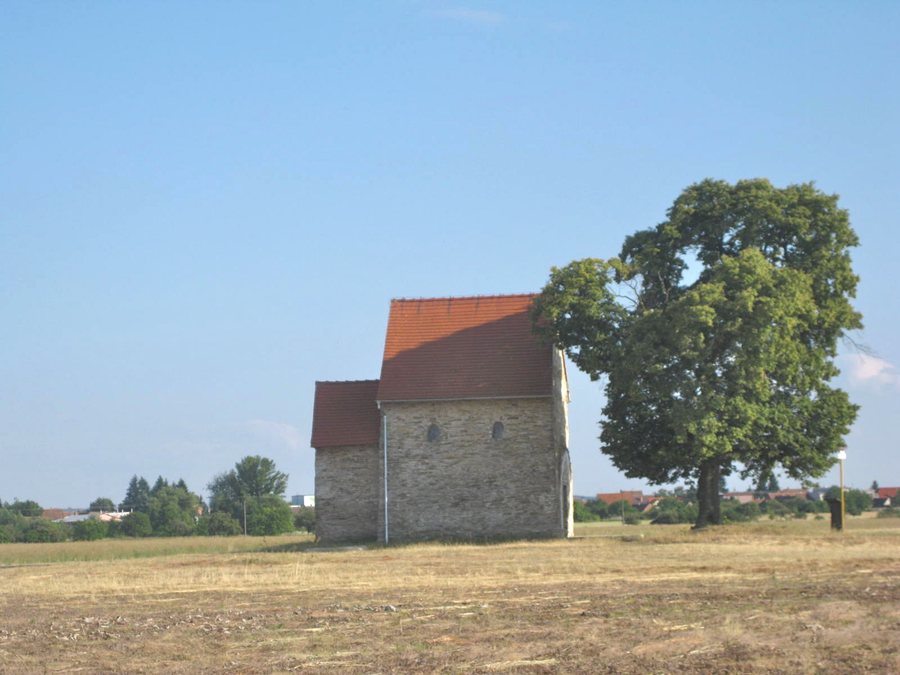 File:Church of St Margaret of Antioch, Kopčany 01.JPG
Photo: Tyssil via Wikimedia Commons, CC BY-SA 3.0
File:Church of St Margaret of Antioch, Kopčany 01.JPG
Photo: Tyssil via Wikimedia Commons, CC BY-SA 3.0
In Kopčany, the visitor attractions range from a historic stud farm with several museum facilities to Great Moravian sacred and settlement remains. The heritage zone preserves a significant group of archaeological sites dating from the 9th to the 10th century. In the context of 8th- to 10th-century East-Central Europe, the Mikulčice–Kopčany agglomeration is an area of exceptional and unique value.
Culture and history
The Church of Saint Margaret of Antioch is the only surviving sacred building from the Great Moravian period in Central Europe. It is dated to the 9th century and is located in the “Za jazerom pri svätej Margite” area in the cadastral territory of Kopčany. The area around the church belongs to the cross-border Mikulčice–Kopčany Archaeological Park. The Kopčany Archaeological Park also includes a winding section of the Great Moravian Road.
The museum in Kopčany is housed on the ground floor of the stud farm building, in a former renovated chapel. It focuses on the results of archaeological research in the municipality, particularly the latest research at the Church of Saint Margaret of Antioch. Museum visits must be arranged in advance. Guided tours of the Kopčany heritage zone are offered from September to June by prior arrangement.
Kačenáreň is also one of the town’s historic sites. The building is a reconstructed farm building associated with F. Š. Lotrinský; the reconstruction was completed in 2022. Originally, Kačenáreň was part of an agricultural complex for catching wild waterfowl, created by the Dutch specialist Jacob Bodes.
Stud farm and tours
The Kopčany stud farm was first mentioned in written documents in 1660. At that time, Adam Czobor had a large stud farm built, on whose foundations the present complex was established. Today, it houses an ethnographic museum exhibition, a museum of the old stable, a visitor centre and an information centre.
During the summer tourism season, the Kopčany stud farm is open to visitors and tourists; guided tours are also available. Two themed tours connect several sites and different historical layers. The guided tour “Monuments of Great Moravia” includes the ethnographic museum on the history and finds of Kopčany, Kačenáreň, the Church of Saint Margaret of Antioch, the settlement of the guards, the ruler’s court, the Great Moravia Bridge and the Slavic hillfort centre in Mikulčice.
The guided tour “Experience the Baroque Landscape” includes a tour of the stud farm and its architecture, a chapel with the current exhibition “Odievanie v premenách času”, a multimedia presentation of the functional Baroque landscape and the representative part of the chateau. The Kopčany riding hall is also part of the complex. It can be rented by individuals and is also used for riding courses and competitions.
Getting around
The Church of Saint Margaret of Antioch is easily accessible to pedestrians and cyclists from the Slavic hillfort site in Mikulčice via the Great Moravia Bridge. The bridge was built over the border river Morava and opened in 2019. High-quality cycle paths run through the Kopčany heritage zone, connecting Skalica with Mikulčice via Holíč and the Great Moravia Bridge.
A cycle loop listed by TIK Skalica runs from Skalica via Holíč and Kopčany back to Skalica and is 25 kilometres long.
Landscape
The landscape of the Mikulčice–Kopčany Archaeological Park has two viewpoints.
Events
The local events calendar includes the traditional Hubertova jazda, which offers an extensive themed programme.
For more town pages in the same destination: Skalica, Lopašov, Kátov, Vrádište, Holíč.
Check prices, availability and amenities for your travel dates directly on Booking.com.
View accommodation and offersAdvertisement · Affiliate link to Booking.comTo the higher-level travel overview: Skalica.

