
Holiday Apartment in Kvetoslavov – Chapels and Manor Houses
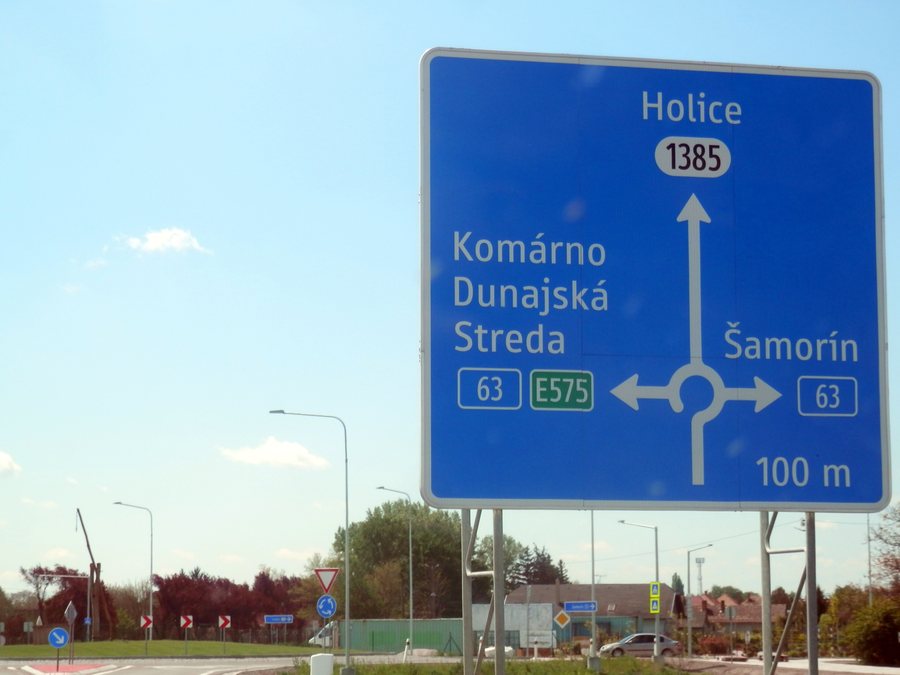 File:Rýchlostná cesta R7, úsek Kvetoslavov - Holice 21 Slovakia 22.jpg
Photo: Ing.Mgr.Jozef Kotulič via Wikimedia Commons, CC BY-SA 4.0
File:Rýchlostná cesta R7, úsek Kvetoslavov - Holice 21 Slovakia 22.jpg
Photo: Ing.Mgr.Jozef Kotulič via Wikimedia Commons, CC BY-SA 4.0
The Roman Catholic Chapel of the Assumption of the Virgin Mary in the Uzor district was built in 1883 in the Neo-Romanesque style with Gothic Revival elements. This single-nave building has a polygonal apse, a small built-in turret and a bronze bell. Its furnishings include a Baroque painting of Our Lady of the Rosary from the late 18th century.
Culture
At the end of the Fakov district, in the direction of Uzor, stands a Neo-Baroque manor house commissioned by Fridrich Pongrácz in the late 19th century. After its restoration, the building retained its original form. Only the wooden veranda was replaced with an iron one.
In the southeastern part of Uzor stands an early Baroque summer manor house from the early 18th century. The two-storey building has an L-shaped floor plan. To this day, the heirs of Ľudovít Reicher own this manor house.
The two manor houses belong to different periods of construction and styles. Together with the chapel, they show how different historical layers remain legible in individual buildings in the Uzor and Fakov districts. The sacred building, representative manor house and summer manor house thus form a clearly defined cultural theme.
At the bend of the side road to Šamorín stands the wayside shrine “Božia muka”. It dates from the second half of the 19th century and contains a Pietà in its semicircular niche. A war memorial was erected in 1925 in the park on the square in the Uzor district; it was later supplemented with a plaque bearing the names of the victims of the Second World War.
History
The oldest evidence of human presence in Kvetoslavov is a small stone wedge from the Neolithic period. A Roman-period barbarian settlement was also discovered in the cadastral area of Kvetoslavov. The two types of finds differ significantly: the individual stone wedge is contrasted with an archaeological settlement site.
The railway station is also part of the history of the village. Kvetoslavov railway station was built in 1895 and is located on the Bratislava–Dunajská Streda railway line. This line was completed to Komárno in 1896.
The archaeological finds and the railway represent two very different historical perspectives. The stone wedge points to the earliest documented human presence, while the settlement represents a broader archaeological context. The station and the completed railway line also add a structure that forms part of the village’s transport history.
Local Traces
In 1949, a vegetable seed breeding station was established in Kvetoslavov. The name of the village also appears in the designation of the blue kohlrabi variety “Kvetoslavovský”, which is named after Kvetoslavov. The seed production and the variety name therefore provide another specific link between the village and its agricultural history.
The seed-growing tradition adds an agricultural aspect to the architectural and transport history. It is connected not only with an institution established in 1949, but also with a kohlrabi variety named specifically after Kvetoslavov. In this way, alongside the visible buildings and archaeological traces, the history of the village gains another particularly concrete local designation.
Other Places
Other place pages in the same area: Veľké Blahovo, Horné Mýto, Kútniky, Kyselica, Kostolné Kračany, Trhová Hradská, Štvrtok Na Ostrove, Oľdza.
For the broader travel overview: Dunajská Streda District.
Check prices, availability and amenities for your travel dates directly on Booking.com.
View Accommodation and OffersAdvertisement · Affiliate link to Booking.com
