
Holiday Apartment in Horný Bar – Nature, the Danube and Culture
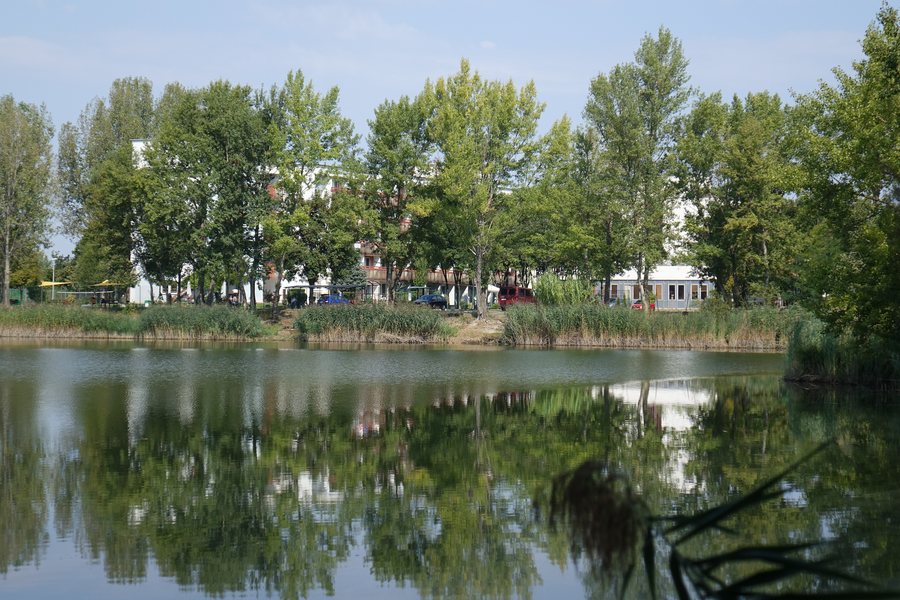
Horný Bar lies on the left bank of the Danube on the island of Žitný ostrov. The island is surrounded by the Great and Small Danube branches. Horný Bar lies entirely within the protected Žitný ostrov water management area. Between river branches, canals, agriculturally shaped areas and historic buildings, a diverse picture of this Slovak municipality emerges.
Geographical location
The location on the left bank of the Danube is one of Horný Bar’s defining geographical features. The feeder canal of the Gabčíkovo waterworks runs through the municipality. Drainage canals run along its embankments, complementing the landscape shaped by canals and water management.
Nature
The present-day landscape also tells the story of how it has changed. Former river branches, swamps and reed beds in the Horný Bar area were drained; fertile arable land was created in their place. At the same time, former river branches, meanders and sand dunes have been preserved in the surrounding area. Particularly interesting botanical wetland areas developed around these landscape features. Well-known plant species can be found around wet meadows and water basins.
The wildlife around Horný Bar and on Žitný ostrov includes, in particular, waterbirds. They shape the island’s natural character just as much as its waterways and wetland areas. The interplay between cultivated land and remaining wetlands makes the structure of the surrounding area easy to discern.
Cycle route and connections
The International Danube Cycle Route runs through the Horný Bar area along two branches. The route along the feeder canal near Horný Bar is part of the EuroVelo 6 corridor. Near Horný Bar, a newly built bridge leads from the International Danube Cycle Route across the drainage canal into the municipality. The connection between the long-distance cycle route, the feeder canal and the drainage canals is therefore closely linked to the local landscape.
Several regional bus routes offer direct connections from Horný Bar to Bratislava, Šamorín, Dunajská Streda and Gabčíkovo, as well as to the surrounding municipalities. Alongside the cycle route, this bus network is one of the explicitly available connections in the municipality.
Culture
Horný Bar is home to the parish church of Saint Stephen of Hungary. Dedicated to Saint Stephen the King, the church was built in 1778 in the Baroque-Classical style on the site of, and partly using elements from, an earlier Gothic church. Two stone tombstones dating from 1584 and 1606 are set into its walls.
The Church of Saint Anne stands in the Šuľany district. It was built at the beginning of the 14th century in the Gothic style, remodelled in the 15th and 17th centuries, and given a Baroque design in the 18th century. Its single-nave interior ends at the sacristy in a polygonal apse. An original keyhole-shaped loophole has been preserved on the north side of its tower.
History
The former manor buildings are also part of the history of Horný Bar and Šuľany. The former Šuľany manor house was a two-storey late-Renaissance building with a square floor plan, probably constructed in the 17th century. It was later converted into a monastery and, in the 20th century, repurposed as a granary. Today, only the walls of the original building remain.
Horný Bar was also once home to the Amadé family castle, which had four towers. According to some sources, Mátyás Bél wrote his historical works there.
Other places
Other places to explore: Okoč, Mad, Kútniky, Michal Na Ostrove, Pataš, Kyselica, Veľký Meder, Medveďov.
For the broader travel overview: Dunajská Streda District.
Check prices, availability and amenities for your travel dates directly on Booking.com.
View accommodations and offersAdvertisement · Affiliate link to Booking.com
