
Holiday apartment in Trebišov: Castle, Local History Museum and Tokaj viticulture
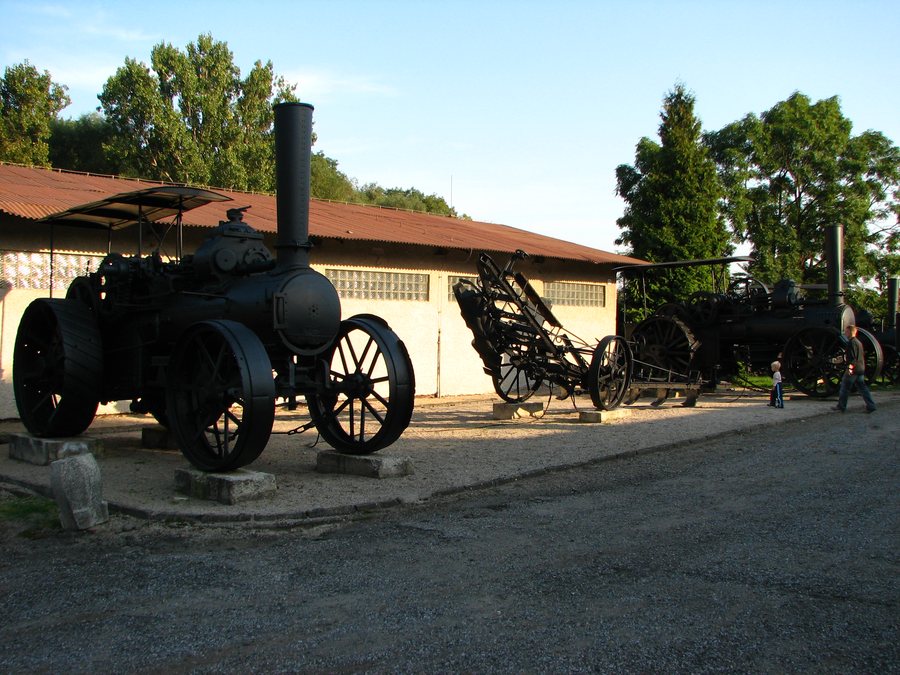 File:Trebišov museum - agricultural machines 2.jpg
Photo: Photo: This image is a work by Mercy . When reusing, please credit me as: Mercy from Wikimedia Commons . I would appreciate being notified if you use my work outside Wikimedia. Do not copy this image illegally by ignoring the terms of the license below, a
File:Trebišov museum - agricultural machines 2.jpg
Photo: Photo: This image is a work by Mercy . When reusing, please credit me as: Mercy from Wikimedia Commons . I would appreciate being notified if you use my work outside Wikimedia. Do not copy this image illegally by ignoring the terms of the license below, a
The late Baroque castle in Trebišov, later remodelled in the Classicist style, was built in 1786 by Count Imrich Csáky. Today, it houses the local history museum, whose exhibitions also extend to the adjacent listed buildings.
Culture
The museum’s three tours focus on different subjects. The first tour covers the Andrássy family and Trebišov Castle, including Tokaj viticulture. The second is devoted to the archaeology of southern Zemplín and the treasury of the Štefan Dobó family. The third tour includes an exhibition on hunting and wildlife protection, as well as folk woodcarving, crafts and agricultural machinery.
The permanent exhibitions include Tokaj viticulture and winemaking, with an archive of Tokaj wines; the history of agriculture in eastern Slovakia; the traditional clothing of Zemplín; and traditional Zemplín crafts. They are complemented by historic tractors and internal combustion engines, steam ploughs and cable ploughs, the development of threshing in eastern Slovakia, and archaeological monuments of the Trebišov District. The Trebišov Museum also offers Tokaj wine tastings.
The Greek Catholic Church of the Dormition of the Mother of God was built between 1818 and 1825 and consecrated on 28 August 1825, on the Feast of the Dormition of the Mother of God. The interior restoration was completed in 1886. During this work, a carved iconostasis and pulpit by the woodcarver Peter Kovaliczky were installed; the dominant icon depicts the death of the Virgin Mary.
History
The mausoleum of Count Július Andrássy was built in 1893 in the Neo-Gothic style, based on a design by the German architect Arthur Meining. The sarcophagus, a work by the Budapest sculptor Juraj Zala, was created between 1893 and 1895. Count Július Andrássy has been buried there since 1894.
The Roman Catholic Church of the Visitation of the Virgin Mary in Trebišov dates back to an original building constructed before 1404. This Gothic monument features a 63-field net vault. Inside are eight compositions depicting scenes from the life of the Virgin Mary, twelve paintings from the legendary life of Saint Paul of Thebes, and two monumental Rococo paintings from 1777.
The two-storey Pauline monastery in Trebišov was built in 1502 at the instigation of Palatine Imrich of the Perényi family. The water castle of Parič also reflects several periods: its first construction phase dates to the 12th or 13th century, while the polygonal stone fortification was built at the beginning of the 14th century. The complex included an early Gothic palace, an entrance tower and a stone-lined well in the castle courtyard. Polish groschen and Hungarian silver coins found at Parič attest to transit or through-trade with Poland between the 15th and 17th centuries.
Landscape
The landscaping of Trebišov’s historic city park began in the last third of the 18th century in connection with the construction of the castle. The historic park developed from an original floodplain forest and covers 62 hectares. It contains historic and naturally occurring coniferous and deciduous trees, shrubs and other plants.
The Bučov les health and recreation area in Trebišov’s forest park serves residents and visitors as part of cycle tourism.
Other places: Čierna Nad Tisou, Veľký Kamenec, Veľaty, Dobrá, Sečovce, Biel, Viničky, Veľká Tŕňa.
For the higher-level travel overview: Trebišov District.
Check prices, availability and amenities for your travel dates directly on Booking.com.
View accommodation and offersAdvertisement · Affiliate link to Booking.com