
Dołuje: Village Layout and Lapidarium
Accommodation in Dołuje
Dołuje combines a well-preserved oval village layout with a history that can be seen firsthand at a former cemetery. A lapidarium was established there in 2020. Two scales meet here: the history of a cemetery and the form of the village as a whole. If you are interested in historic townscapes and places of remembrance, Dołuje offers two different ways to explore local history.
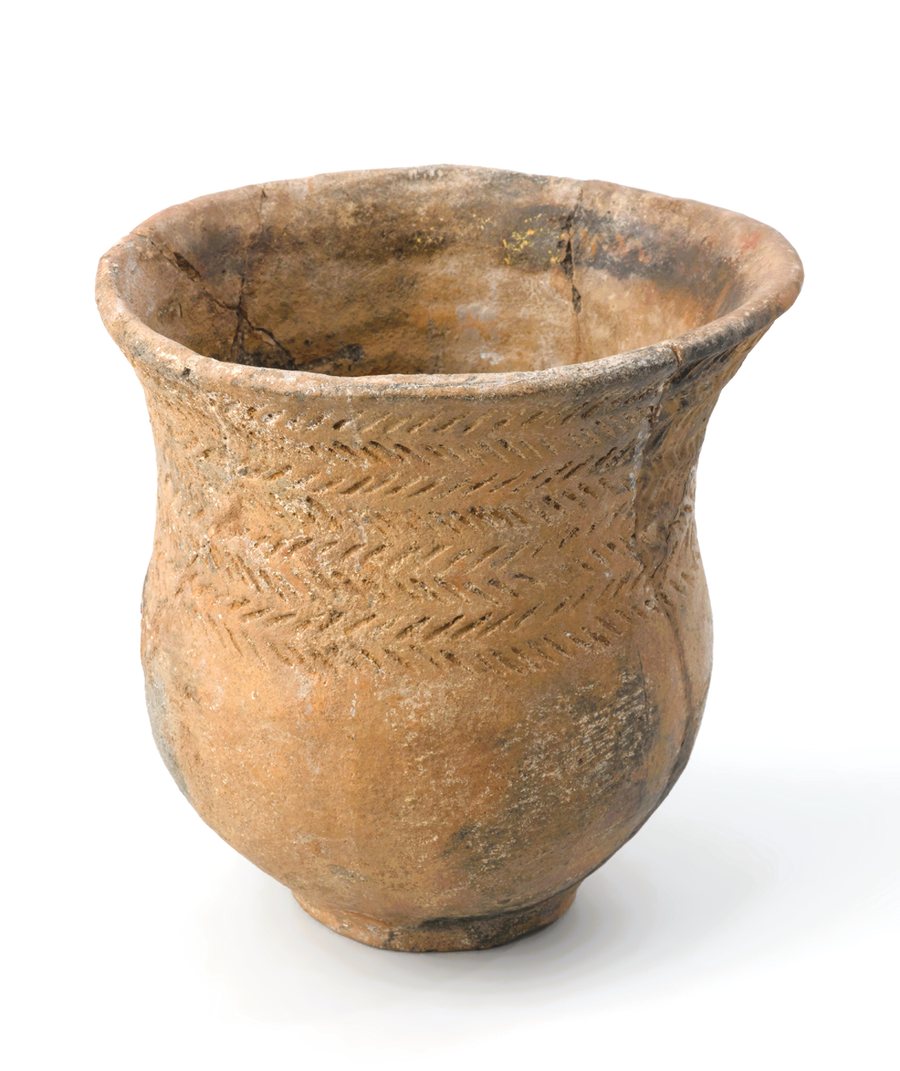 File:02023 Clay goblet of the Corded Ware culture found in Dołuje.jpg
Photo: unknown via Wikimedia Commons, CC0
File:02023 Clay goblet of the Corded Ware culture found in Dołuje.jpg
Photo: unknown via Wikimedia Commons, CC0
A Lapidarium with a Cemetery’s History
The Protestant cemetery dates from the 19th century. It had been unused for more than 60 years, visited only sporadically and no longer maintained before it was transformed in 2020 into a historic monument inviting visitors to stroll. The lapidarium was also established there in 2020. The surviving graves of the old cemetery remain in their original locations. More than 170 gravestones have been restored; the lapidarium also includes a renovated fieldstone wall, paths and stone benches. Several aspects thus come together: the surviving graves in their original location, restored stones and renovated features. The timeline spans the 19th-century cemetery, more than six decades of disuse and its transformation in 2020. The history of the site therefore connects a long period without maintenance with its later development as a historic monument.
Place Name, Municipal Role and Village Layout
Until 1945, Dołuje was called Neuenkirchen, and from 1945 to 1954 it was the seat of Dołuje municipality. These dates mark different periods: the former name ended in 1945, while the municipal role continued until 1954. The village also has a well-preserved oval layout. It describes the shape of the entire settlement and adds a spatial perspective to the historical timeline. The name and former administrative role place Dołuje within a clear sequence; the oval layout draws attention to the form of the settlement. Together with the 19th-century cemetery, these present local history, the village layout and the cemetery’s history as distinct themes. Those interested in history can move between these different scales rather than reducing the place to a single date or monument.
These differences appeal to different interests. The cemetery is about surviving graves, restored gravestones and its transformation in 2020; the oval layout is about the village’s form as a whole. If you find both individual historical traces and the shape of a place compelling, these themes come together in Dołuje. If you are planning a trip with others, you can discuss which perspective interests you most. This makes choosing the destination a matter of a specific question: which aspect of Dołuje’s history would you like to focus on?
Dołuje as a Destination for Your Stay
When looking for a holiday apartment, you can take this character of the place into account as part of your choice of destination. Ask yourself whether you are especially interested in the cemetery’s history or the well-preserved village layout; if both appeal to you, there are two different historical perspectives to explore. This lets you first decide whether Dołuje matches your travel interests, then choose accommodation to suit your own requirements. If you are travelling with others, the distinction between the cemetery and the village layout offers a concrete starting point for discussing where to spend your holiday.
Discover more destinations: Kurów, Dobra, Brzózki, Nowe Warpno, Pilchowo, Kołbaskowo, Police, Trzebież.
For the overarching travel overview: Pölitz.

