
Barnówko and its historic palace park
Accommodation in Barnówko
Barnówko combines a large palace park with a surprisingly rich variety of historical traces. The park lies south of the village on the Myśla River and was laid out in the second half of the 18th century. It covers 44 hectares, of which 36 hectares are fishponds. If you choose a holiday destination based on its landscape and local history, this is a tangible starting point for exploring both.
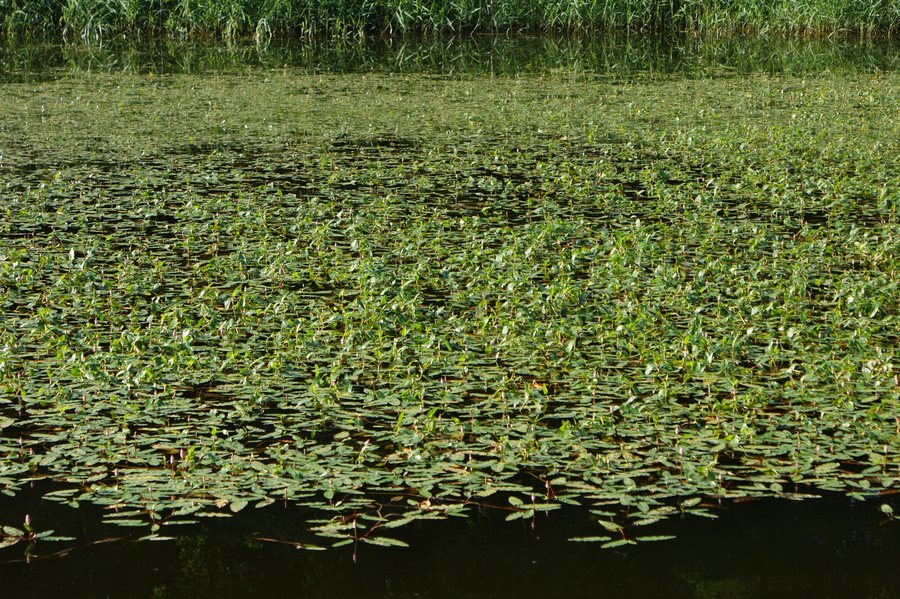 Persicaria amphibia, community in a pond near Barnówko by Myślibórz (NW Poland)
Photo: Krzysztof Ziarnek, Kenraiz via Wikimedia Commons, CC BY-SA 3.0
Persicaria amphibia, community in a pond near Barnówko by Myślibórz (NW Poland)
Photo: Krzysztof Ziarnek, Kenraiz via Wikimedia Commons, CC BY-SA 3.0
Water features and ancient trees
The fishponds in the park were created in 1781. This gives the ponds a precise date, while the park itself is generally dated to the second half of the 18th century. The two details describe different parts of the site. Together with the total area, they give Barnówko’s park a clear landscape and historical context, without implying any particular route through the grounds.
Some of the park’s valuable old trees have been preserved. They include two oaks named “Guślarze.” These named trees are a distinctive detail of local history: alongside the park’s size and ponds, they are specific, individually identified features. For families who enjoy having places and their names to talk about while travelling, they add an easy-to-remember point of interest to the broader historical themes.
Palace ruins and other traces of history
The park complex contains the ruins of a palace that was burned down during the war. There is also a monument in the park to a German soldier from the First World War. The grounds also include the site of the former airfield of the 1st Fighter Regiment “Warszawa.” The palace ruins, monument and airfield site are distinct historical points of interest; their shared location within the park complex makes Barnówko especially interesting to travellers who are interested in history as well as landscape.
These details refer to different periods and subjects without combining them into a single story: the palace, the First World War and the “Warszawa” Fighter Regiment. If you are travelling with children, these specific names and connections can help bring your family’s interests together and decide what aspects of a destination appeal to you most. Barnówko’s character comes from the places mentioned and their historical context.
Routes and choosing a holiday destination
The red Templar and Hospitaller Route passes through Barnówko; the village is at kilometre 28 of the route. In the wider region, there is also the red “Wokół Dębna” hiking trail, which is about 25 kilometres long. These are two separate route connections: the Templar and Hospitaller Route passes through Barnówko, while “Wokół Dębna” is described as a trail in the surrounding area. The approximate length of the second trail is a separate detail and should not be confused with the kilometre marker on the first route.
If you are choosing a holiday apartment or holiday home based on your travel group’s interests, Barnówko may be worth considering, particularly if parks, water features and historical traces matter to you. For hiking enthusiasts, the Templar and Hospitaller Route is another specific feature of the village. This lets you base your accommodation search on whether Barnówko’s park and local history suit your travel plans, rather than focusing only on a general landscape theme.
Discover more places
If you would like to explore other places at the same level: Mysliborz, Dabrowa, Rózansko, Rów, Karsko, Dębno, Nowogródek Pomorski and Zydowo.
For the higher-level travel overview: Soldin.

