
Śliwin: Village Character and Architectural History
Accommodation in Śliwin
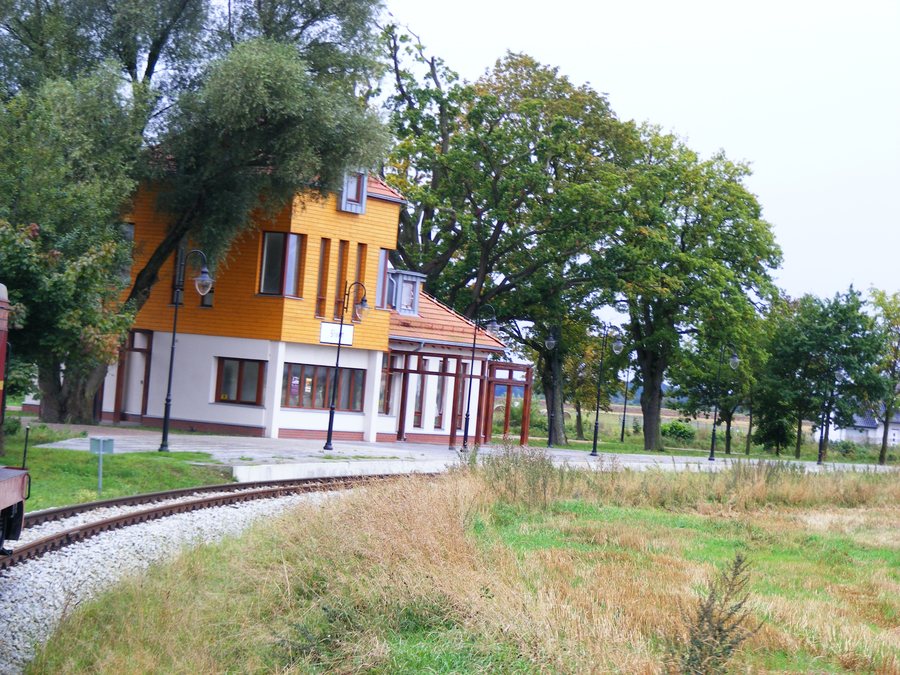
Śliwin has preserved the character of a traditional Pomeranian village. Aleja Lipowa is the village’s main street and provides a clear point of reference. Surviving U-shaped buildings and former agricultural farmsteads ground the village’s history in specific architectural forms. A yellow-marked circular route also passes through Śliwin. What makes the village distinctive is the combination: its architecture, local production and marked circular route each appeal to different interests.
Farmsteads and Architectural History
In many surviving buildings, a residential house forms the base of the U-shape, with outbuildings along the sides. The term therefore describes the layout of a farmstead, not merely the shape of an individual building. This makes the distinction tangible when exploring historic village architecture: the building form results from the relationship between the residential house and the outbuildings. An abstract floor plan thus becomes a concrete way of understanding the local farmstead layout. The arrangement of the farmstead is therefore also a distinct way of approaching the village’s history, independent of when the farmsteads were built.
The history of the building material adds another dimension to the architectural form. The bricks used for these buildings were made at a brickworks that operated in Śliwin until the 1930s. Local brick production thus adds another layer to the story of the farmsteads: the U-shape describes the layout of the buildings, while the brickworks tells the story of how they were made. Those interested in architectural history can consider both together without conflating building form with the history of the materials.
Śliwin is also home to former German agricultural farmsteads dating from around the turn of the 20th century. Their approximate historical dating adds to the history of the architectural form, while the brickworks provides a separate point of reference, having operated until the 1930s. The dates therefore refer to different things: one places the farmsteads in time, the other dates the operation of a local brickworks. This makes it easier to understand the built heritage and local production as related, but separate, aspects of the village’s history.
Circular Route and Getting Your Bearings
The Rewalska Kraina Słońca circular route is marked in yellow and is about 10 km long. In Śliwin, it runs along ulica Spacerowa and Aleja Lipowa. Since Aleja Lipowa is also the village’s main street, this section connects finding your way around the village with the route description. The distance refers to the entire circuit, while the two street names specify its route through Śliwin.
When looking for a holiday apartment, you can choose a location based on these different interests. If you enjoy historic village layouts, the U-shaped farmstead layout offers a different focus from the marked circular route. You can then decide whether Śliwin suits your preferences primarily for its architectural history or for the specific walking route.
Discover More Destinations
Discover more destinations: Trzebiatów, Wicimice, Kielpino, Czaplin Mały, Mrzezyno Gryfickie, Paprotno, Gryfice, Trzebusz.
For the main travel overview: Greifenberg.

