
Kajny: Chapels, Technology and Cycling Routes
Accommodation in Kajny
Kajny combines specific local history with two cycling routes that pass through the village. A wooden house dating from 1856, two chapels described in different ways, and a hydraulic ram add historical and technological highlights. The cycling routes offer another way to plan your trip: they differ both in length and in the places they pass through.
Local History in Buildings and Technology
After the First World War, Polish libraries were established in Godki, Kajny and Mątki. This historical detail adds a cultural perspective on the postwar period to the architectural history, and includes Godki and Mątki as well as Kajny.
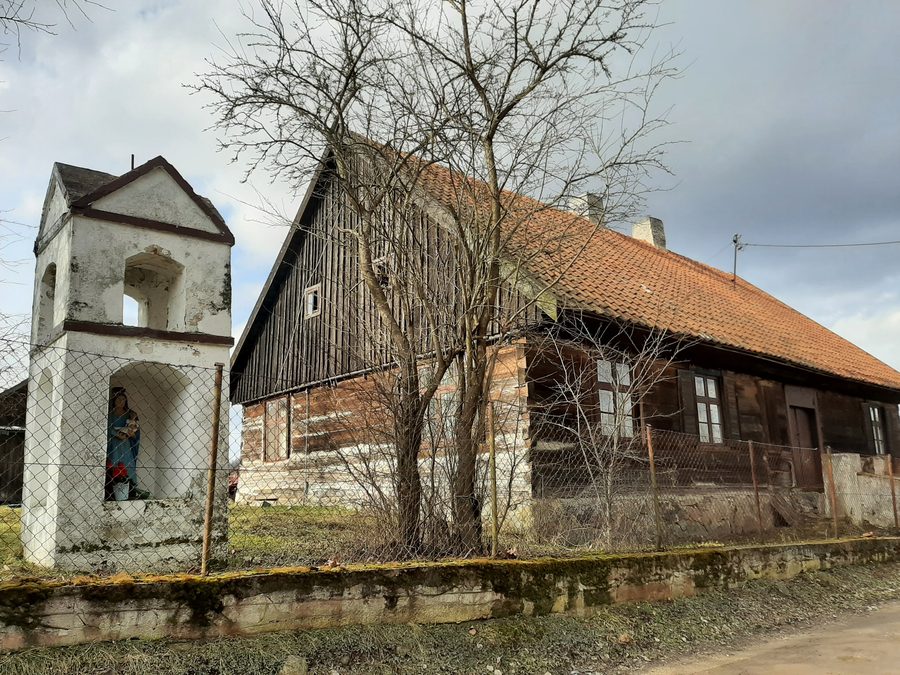
Kajny is home to the historic wooden house of the Rautenberg family, dating from 1856. Its specific construction year gives the house a clear historical context, while the family name records its connection to the Rautenberg family. The chapels also have distinctive features: the larger one has a bell and its architecture echoes the design of a nearby building. The lower, plastered chapel stands next to the water tower and the wooden house of village head Jerzy Rautenberg. The comparison sets the bell and architectural reference of one chapel against the described features and neighboring buildings of the other.
Another technological point of interest is the hydraulic ram in Kajny. It was designed by Joseph Michael Montgolfier (1740–1810) and carries water to the buildings through seven pipes. An information board with a diagram explaining how it works stands next to the ram. The site is fenced off and not open to visitors. The village head may, at his discretion, lend keys to interested visitors. If you are planning a visit, check in advance on site whether it may be possible to borrow a key.
An educational trail with information boards has been set up near the forester’s lodge in the spring area. This adds another focus, in the form of an educational trail, to the individual buildings and the technical installation.
Two Cycling Routes Through Kajny
For planning your rides, you can distinguish between the two cycling routes described by their length, route sequence, and starting and return points. The 21.9-kilometer yellow cycling route runs from Dywity through Redykajni, Gutkowo, Wilimowo, Kajny, Barkweda, Brąswałd and Ługwałd, returning to Dywity. The route therefore connects Kajny with several other named places and ends back where it started.
The second cycling route is 40 kilometers long and runs from Olsztyn through Redykajny, Brąswałd, Barkweda, Kajny, Gutkowo and Łupstych, returning to Olsztyn. Both routes pass through Kajny, but differ in length and route sequence. The shorter route starts and ends in Dywity, while the longer one starts and ends in Olsztyn. These details can help you choose a route based on its total length and the places it passes through.
Assessing Kajny as a Holiday Destination
When choosing accommodation, you can assess whether Kajny’s features suit your travel plans: the village offers historic buildings and a technological highlight, and two cycling routes of different lengths pass through it. If you are planning to ride one of the routes in particular, its length and sequence of places provide a concrete basis for comparison. If you have a specific visit to the hydraulic ram in mind, take into account the possibility of borrowing a key. This allows you to weigh up local history, cycling and the conditions for this particular activity separately when planning your vacation.
Discover more destinations: Olsztyn, Barczewo, Łajsy, Wilimy, Ramsowo, Lipowo Kurkowskie, Biskupiec, Jaroty
Go to the main travel overview: Olsztyn.

