
Discover Reszel: Castle, church tower and town park
Accommodation in Reszel
Reszel showcases its history through a wide variety of buildings: the bishop’s castle, Gothic bridges, churches and sections of the town walls each offer a different perspective on the town. There is also a town park with walking paths and a view from the church tower that extends beyond the town. You can shape your stay around whether you mainly want to explore historic architecture or also set aside time in green surroundings.
Castle and church tower: two panoramas
The bishop’s castle was built between 1350 and 1401. Its tower offers a panorama of the old town. The more than 50-metre-high tower of the parish church of St Peter and Paul offers a different view. You can climb it. On the way up, you can see the clock mechanism and the bells, which hang 32 metres above the ground. From the top, the panorama extends across the town and its surroundings.
The two towers offer different perspectives: the castle looks out over the old town, while the parish church also takes in the surrounding area. Visitors interested in buildings and views will find two distinct vantage points from which to see Reszel. The church tower also offers the clock mechanism and bells as part of the experience—details that make the climb about more than just the view from the top.
Bridges, walls and churches
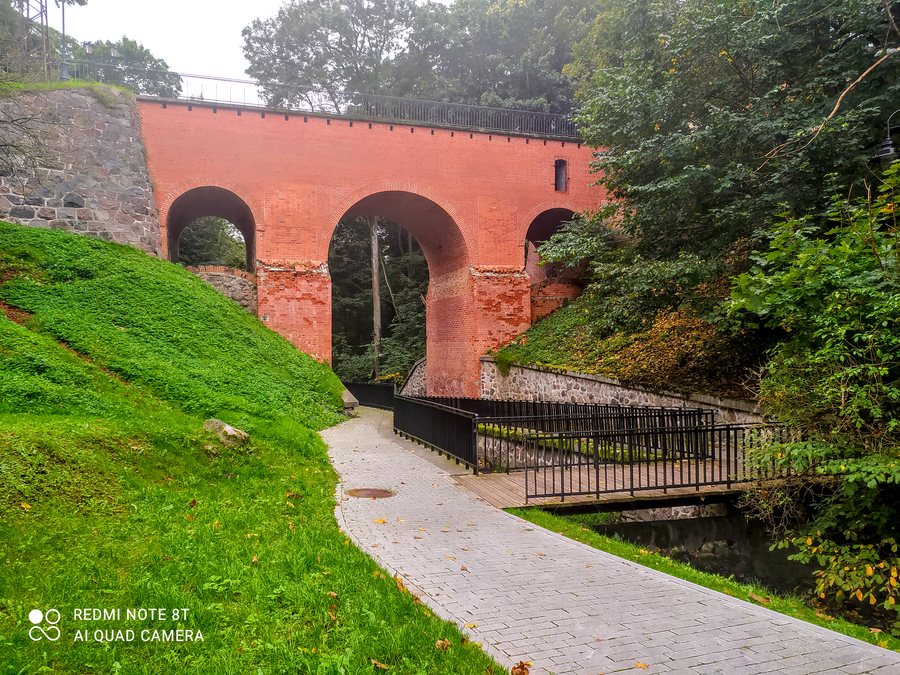
One of Reszel’s two Gothic bridges crosses the Sajna in the north-east of the town. Remnants of the fortifications can also still be seen: sections of the town walls, built between 1360 and 1370, remain in the east and north. These two structures reveal different aspects of the town’s history—the crossing over the river and the former fortifications.
The former Jesuit college complex adjoins the north side of the castle and includes the Church of St John the Baptist. The late Baroque church was built in 1799–1800 on the site of a Gothic church and is now a Greek Catholic church dedicated to the Transfiguration of the Lord. Visitors interested in different architectural styles can explore the history of the complex and the church’s present-day dedication.
Granaries and parish church details
Reszel’s historic granaries date from around the turn of the 18th and 19th centuries. Their half-timbered construction, with plastered brick infill, combines visible timber framing with plastered brick panels. The Old Rectory, the residence of the Warmian prebendaries, was probably built in 1444 and is considered the town’s oldest residential building. The different purposes of these buildings—granary and dwelling—invite visitors to pay attention to their construction and history of use as they explore.
The interior of the parish church of St Peter and Paul has three naves, and its furnishings date from the mid-19th century. The organ has a specific date of its own: it was built in 1829 by Jan Roth of Orneta. For travellers who enjoy taking their time over historic interiors and craft details, features like these add to the views of the castle, walls and bridges.
Walking paths and outdoor areas
Reszel’s town park has walking paths, a pond and an amphitheatre. It offers a distinct outdoor option alongside the town’s buildings. At the park exit onto Ulica Podmiejska, there is a playground and an outdoor fitness area. The paths, pond and amphitheatre make the park more than just a single green space; the playground and fitness area are specifically located at this park exit.
If you are travelling with others, you can weigh up your interests: views and architecture on one hand, walking paths and outdoor areas on the other. When choosing a holiday apartment in Reszel, consider which mix matters most for your stay.
An annual performance
The Municipal Cultural Centre stages an annual performance about the trial and execution of a woman. It adds a distinct historical note alongside the buildings and viewpoints. If this event is important to your travel plans, check the specific date in advance.
Discover more destinations: Czerniki, Grabno, Leśny Rów, Swieta Lipka, Karolewo, Kętrzyn, Jezewo, Barciany
Return to the higher-level travel overview: Kętrzyński.

