
Discover Wilczeta: Church, Local History and Nature
Accommodation in Wilczeta
Wilczeta brings together a rural settlement layout shaped by history, a long local history and distinctive examples of sacred art. It also has small bodies of water and a park ensemble with numerous tree species. If you value both culture and nature in your holiday destination, Wilczeta offers a range of themes to explore as you plan your trip.
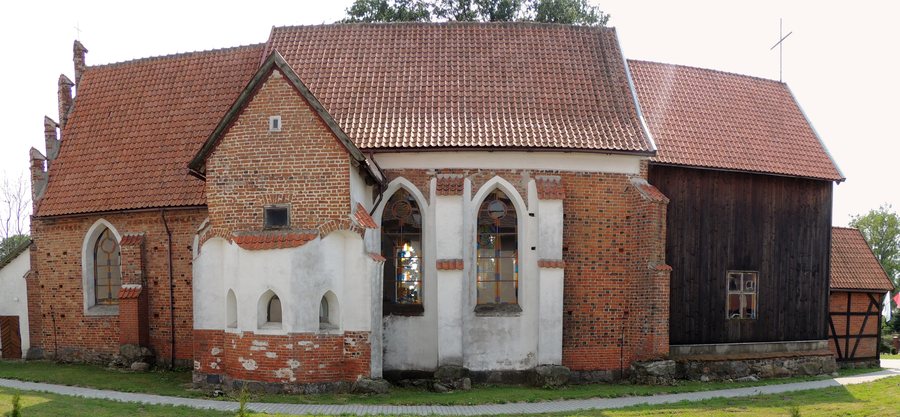 File:Wilczęta kościół par. p.w. św. Katarzyny.JPG
Photo: Jacek Bogdan via Wikimedia Commons, CC BY-SA 3.0 pl
File:Wilczęta kościół par. p.w. św. Katarzyny.JPG
Photo: Jacek Bogdan via Wikimedia Commons, CC BY-SA 3.0 pl
Rural Local History and Historic Buildings
Wilczeta was founded between 1304 and 1312 by colonists from the area of present-day Germany. The historic rural settlement layout has been preserved in the village and gives Wilczeta a distinctive character that has evolved over centuries. The historic school building is also among the surviving structures: it was built in 1872. Together with the church, it tells the story of different periods in the village’s history, without reducing Wilczeta to a single era.
The Parish Church of St Catherine is a defining part of the historic heritage. It was built between 1330 and 1340 as a Gothic structure of stone and brick. It has been listed as a monument under number 597/69 since 12 March 1968; the entry gives the date 1330 and notes building phases from the 16th to the 18th centuries. The churchyard is included in the same monument listing. The historic significance of the ensemble therefore extends beyond the church building itself.
Details Inside the Church and in the Village
The church furnishings include a pulpit and an altar dating from 1681. The pulpit was made by carpenter Richter and sculptor Johan Christoph Dobel. The altar sculpture has been preserved in black, white and gold. These details draw attention to specific features of craftsmanship and design: alongside its Gothic architectural history, the church’s character is also shaped by works from the 17th century.
The church tower was built in 1655. After wartime damage, its spire was later replaced with a flat roof. The largest bell is among the oldest surviving Gothic bells in Wilczeta; it was cast in the Netherlands and bears the coat of arms of the Dohna family. Another place of remembrance is the obelisk in front of the Church of the Transfiguration of the Lord. It commemorates the residents of Wilczeta who fell in the First World War.
Bodies of Water and Park Ensemble
Wilczeta has numerous small bodies of water. They help retain water and also enhance the village’s aesthetic value. This is a distinctive aspect of the rural landscape: water shapes the surroundings and also serves a water-retention function. A park ensemble with numerous tree species adds to these natural features. It is considered the village’s most valuable area in terms of natural history.
In Wilczeta, church architecture, places of remembrance and natural features come together. When choosing a holiday apartment, you may therefore want to consider whether you would like to focus during your stay primarily on historic village landscapes, sacred art, or the green and water-rich aspects of the area. If you enjoy comparing historic details, the traces range from the Gothic church building and its 1681 furnishings to the schoolhouse built in 1872.
Festivals and Getting There
The parish’s religious feast days are listed as 6 August and 3 May, Mary, Queen of Poland. These dates add a connection to the church calendar to the village’s historical and religious character. Wilczeta’s main road connection is via Voivodeship Road 509. If you are considering Wilczeta as a holiday destination, you can take this road connection into account when planning your route.
Discover More Places
Other destinations include Nowica, Rodowo, Maciejewo, Mikolajewo, Frombork, Stegna, Pieniężno and Braniewo.
For the full travel overview: Braunsberg.

