
Pieniężno: Wałsza, nature trail and town history
Accommodation in Pieniężno
Pieniężno combines the river landscape of the Wałsza with a nature trail and a history of architecture and missionary work. The town lies along the middle course of the Wałsza, which has the character of a mountain river here. The “Dolina Rzeki Wałszy” nature reserve runs along the riverbank. Nature and cultural history offer distinct points of focus when planning a stay. If you are looking for a holiday apartment, first consider whether the landscape or the town’s historical themes better suit your travel plans.
The Wałsza and the nature trail
The area’s distinctive natural features and geomorphology prompted the creation of a seven-kilometre nature trail. It has six stops highlighting characteristic natural features of the “Dolina Rzeki Wałszy” reserve. Its length gives the excursion a clear scope, while the stops draw attention to the protected area’s features. You can plan the trail as a focus of your stay and take your interest in nature into account when choosing your destination.
Museum and cultural themes
The Missionary and Ethnographic Museum is located in Pieniężno in the building housing the monastery and mission seminary of the Divine Word Missionaries. The ethnographic and natural history exhibits, arranged by theme, come from China, Japan, New Guinea, Africa, Indonesia, India and South America. The exhibition “Być misjonarzem” explores the history and guiding principles of the Society of the Divine Word. “Tacy sami w świecie różnorodności kulturowej” presents objects from different continents and cultures. The collections from many regions of the world are thus presented alongside themes relating to missionary history and cultural diversity. If these subjects interest you, the exhibitions offer a distinct focus for the cultural side of your trip.
Architectural history and places of remembrance
The town hall in the old town of Mehlsack/Pieniężno dates from the second half of the 14th century. Reconstruction of the old town and town hall began in the 1980s. The present-day Neo-Gothic Church of Saints Peter and Paul was consecrated in 1897 by Bishop Andrzej Thiel. Neo-Gothic refers to the later revival of Gothic architectural forms and identifies the church’s architectural style. The town hall, the church’s consecration and the start of reconstruction bring distinct stages of the town’s history to life.
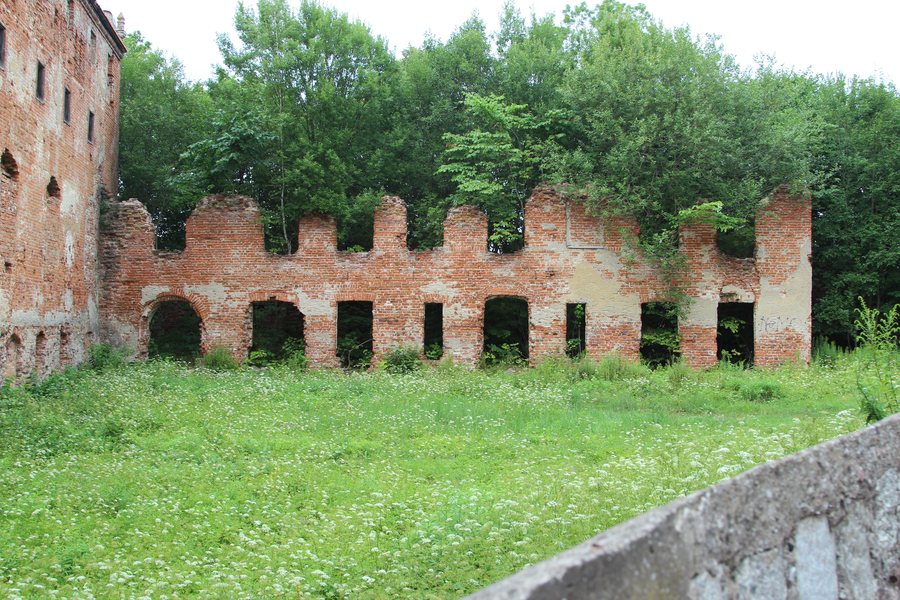
The ruins of the former Protestant church in Pieniężno have been developed as an open-air place of remembrance and historical learning. The outline of the foundations has been made visible and forms part of the site’s engagement with its history. A former hospital church in central Pieniężno is currently used by a Greek Catholic community. If you are considering a visit, please check in advance whether visits are possible.
Nature or culture as the focus of your trip
There are different options for planning your trip: the seven-kilometre nature trail offers a nature walk with six stops, while the museum and historic buildings place cultural and architectural history at the centre. When looking for a holiday apartment in Pieniężno, consider which of these themes you would like to shape your stay most. This will help you choose the destination based on whether you primarily want to explore the river landscape and natural features or the exhibitions and historic sites.
Discover more destinations: Rodowo, Bogdany, Stegna, Wilczeta, Nowica, Zagaje, Mikolajewo, Braniewo.
Return to the main travel overview: Braunsberg.

