
Discover Konskie: Castle History, Churches and Memorial Sites
Accommodation in Konskie
In Końskie, castle history, church art and memorial sites come together with a practical cultural offering. The castle and park complex reflects several phases of construction, churches preserve distinctive details from different centuries, and a walking route leads to two memorial sites with different focuses. SOWA adds a permanent exhibition, a hands-on workshop and workshops to these themes. When planning, you can decide whether architecture, history, remembrance or hands-on discovery should shape your stay.
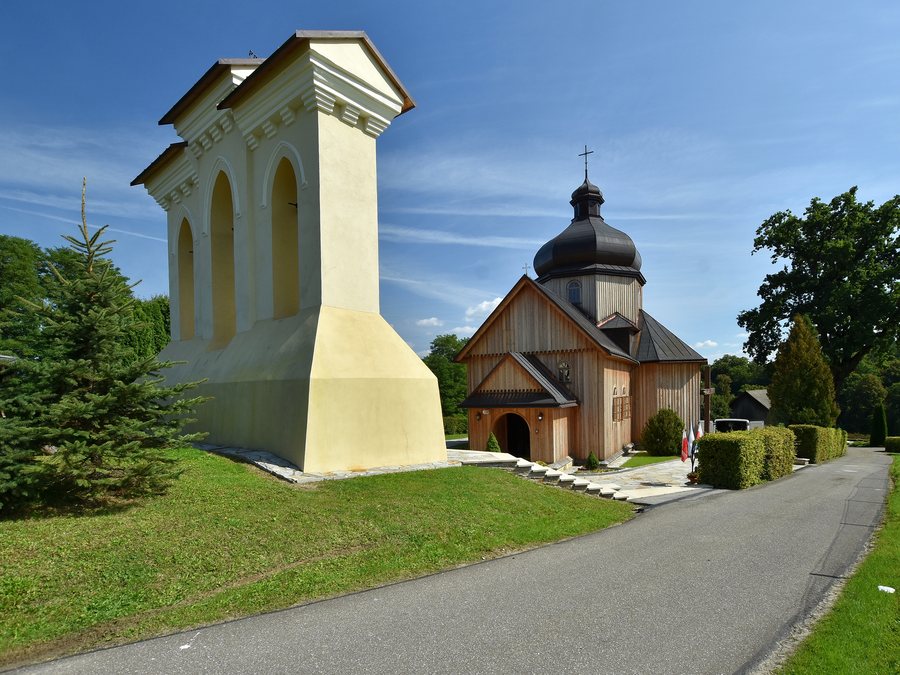 Końskie, Cerkiew Przemienienia Pańskiego
Photo: Henryk Bielamowicz via Wikimedia Commons, CC BY-SA 4.0
Końskie, Cerkiew Przemienienia Pańskiego
Photo: Henryk Bielamowicz via Wikimedia Commons, CC BY-SA 4.0
Castle History and Architectural Styles
Around 1748, Jan Małachowski began building the castle and park complex in Końskie. This took place as he was seeking town rights for the settlement, which he obtained from King Augustus III. In the first half of the 19th century, Stanisław Małachowski brought the architect Franciszek Maria Lanci to Końskie. Lanci designed the Egyptian Orangery, a Neo-Gothic chapel and the park wall with towers.
These architectural forms create different focal points: the Orangery, as its name suggests, points to a distinct architectural tradition, while the chapel was designed in the Neo-Gothic style. The park wall and its towers add another distinctive feature to the complex. For travelers interested in architectural history, the two Małachowski phases provide a clear timeframe: from the beginnings around 1748 to the designs of the 19th century. This lets you include different historical periods when choosing what interests you on your trip, without having to focus on just one building.
Churches with Dated Details
A sundial dating from 1621 is located on the southern buttress wall of the presbytery at the Collegiate Church of St. Nicholas and St. Adalbert. In the same church, the stone Late Baroque high altar dates from 1749. It features a crucifix beneath a canopy supported by columns. The sundial and altar offer different points of reference when looking at the building: one is a precisely dated detail on the exterior wall, the other a described furnishing with a crucifix and columns. The canopy is the element supported by columns and positioned above the crucifix.
The Church of St. John the Baptist and St. Anne tells another story of construction. It was built in 1770 by Jan Faygel on behalf of the Małachowski family. Old frescoes were uncovered and restored there during restoration work in 2010. The construction and restoration belong to different chapters in the building’s history; together, they draw attention both to its origins and to later work on the church. For a trip focused on historic buildings and their details, these examples complement each other through their different dates and features.
A Walking Route to Memorial Sites
The “Szlakiem zabytków i miejsc pamięci” (Trail of Monuments and Memorial Sites) walking route leads to Katyń Alley in Końskie. Oak trees and plaques commemorate the victims murdered in 1940. Another stop along the route is on Warsztatowa Street: an obelisk commemorates the violent death of Captain Jan Stoiński, the first commander of the Końskie ZWZ-AK district. The two stops focus on different aspects of remembrance. Katyń Alley commemorates the victims, while the obelisk commemorates a named individual and his role. Anyone interested in the history of memorial sites will find two specific themes along the same walking route.
Exhibitions and Planning Your Trip
SOWA in Końskie offers a permanent exhibition, a hands-on workshop and workshops. It complements the historic buildings and memorial sites with an offering where trying things out for yourself is part of the visit. Check current opening information and the workshop program before visiting.
If you are planning a family trip, it may help to choose a focus together before searching for a vacation rental: architectural history and church art, memorial sites or what SOWA has to offer. This can help you find accommodation that suits the themes that matter to you during your stay. Whether you want to combine several of these interests or focus on just one is a practical decision for planning your trip; the places and offerings mentioned here provide concrete starting points.
Discover more destinations: Fałków, Strzeboszow, Ruda Maleniecka, Stąporków, Tama, Sielpia Wielka.
Return to the main travel guide: Końskie.

.jpg)