
Discover Tokarnia: Culture and History at the Open-Air Museum
Accommodation in Tokarnia
At the Ethnographic Park in Tokarnia, you can explore reconstructed domestic interiors and historic buildings, as well as crafts, wedding customs and sculpture. According to its own description, it is Poland’s largest open-air museum and showcases the cultural diversity of the Świętokrzyskie region. This offers different ways to plan your visit: you can focus on architectural history, everyday life or individual exhibitions.
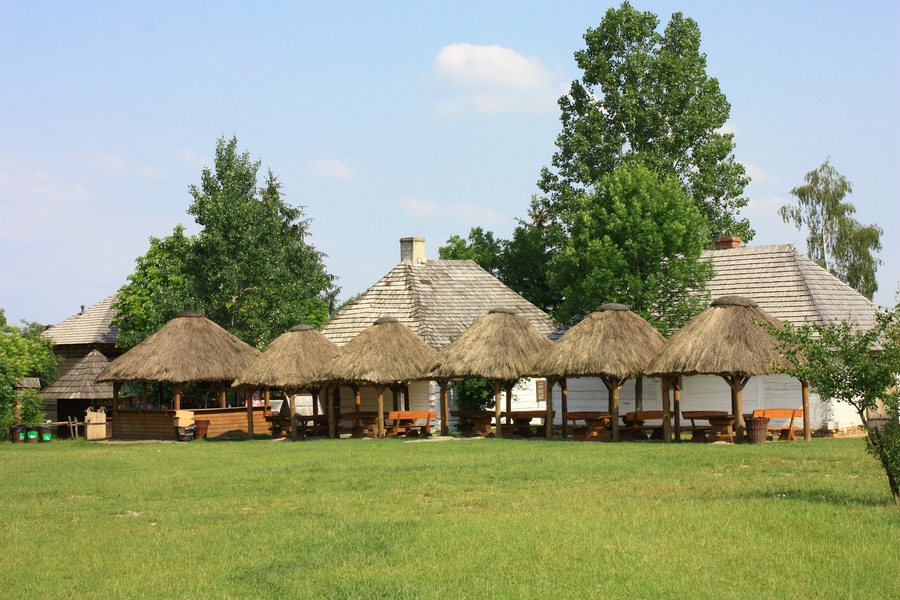 File:642849 Tokarnia Muzeum Wsi Kieleckiej 07.JPG
Photo: Dawid Galus via Wikimedia Commons, CC BY-SA 3.0 pl
File:642849 Tokarnia Muzeum Wsi Kieleckiej 07.JPG
Photo: Dawid Galus via Wikimedia Commons, CC BY-SA 3.0 pl
Historic Buildings and Regional Ways of Life
The park was founded in 1976 and opened in 1977. Its collection includes more than 80 historic structures, including farmhouses, barns, windmills, churches and manor houses. Reconstructed interiors and historical exhibits illustrate life in different regions. The result is a range of buildings and ways of life side by side, rather than a visit focused on just one type of architecture.
Among the buildings is the historic Baroque Church of Matki Bożej Pocieszenia, dating from 1763. A barn in the park also tells a story of its origins: it was moved here from the Bernardine Sisters’ monastery in Chęciny. At the park entrance, the historic monastery barn from Chęciny houses the ticket office, tourist information centre and a publications shop. Check the current availability of these visitor services before you travel.
A tall oak cross comes from the area around Włoszczowa. According to oral tradition, it was donated in 1918 by the Maupa couple; the donors’ intention is unknown. With this object, you can distinguish between its stated place of origin and the story of its donation, which has been passed down but whose purpose remains unclear.
Crafts, Customs and Art
The smithy from Radoska displays original sets of tools, including pliers, hammers, punches and taps. During the tourist season, demonstrations and museum lessons introduce visitors to the work of a rural blacksmith. If you would like to see these demonstrations, bear in mind that they are seasonal and check for suitable dates.
An exhibition in a cottage in the loess section presents part of a wedding ceremony centred on oczepiny, the ceremonial removal of the bride’s crown. Another perspective is offered by the exhibition “Ocalić od zapomnienia. Jan Bernasiewicz, twórca Ogrodu Rzeźb” (“Save from Oblivion: Jan Bernasiewicz, Creator of the Sculpture Garden”), established in 1991. It includes more than 600 sculptures, numerous photographs of Jan Bernasiewicz and personal memorabilia. The park also has an exhibition of horse-drawn vehicles. If you are travelling with children, the tools, vehicles, wedding custom and sculptures can prompt different conversations, depending on the topics that spark their curiosity.
Getting There and Choosing Accommodation
The Ethnographic Park is on the Kielce–Kraków route, 8 km beyond Chęciny in the direction of Kraków. If you take a bus from Kielce or Jędrzejów to Tokarnia, note that the PKS bus stop is a considerable distance from the park. Check the transport operator’s current information before travelling.
When choosing a holiday apartment in Tokarnia, you can start by considering how important the open-air museum is to your stay. The blacksmith demonstrations add a seasonal dimension, while historic buildings, customs and sculpture offer other areas of interest.
Discover More Destinations
Discover more destinations: Piekoszów, Bęczków, Borków, Jaworznia, Święta Katarzyna, Micigózd, Brynica, Chrusty.
For the broader travel overview: Kielce.

