
Babica between the Wisłok Valley, Trails and Culture
Accommodation in Babica
The Wisłok, marked trails and special places of remembrance shape the landscape of Babica. The village stretches along the slopes of hills and across both banks of the river. It also features a historic manor and park complex, chapels and monuments. Anyone looking to combine nature experiences with culture on a trip will find a range of ideas for their time here.
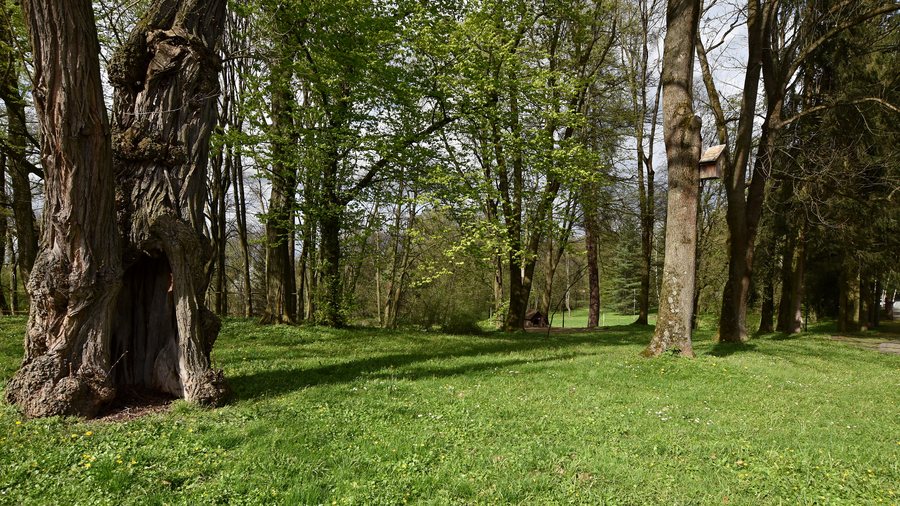
The Wisłok Valley and trails through the landscape
The river is more than just part of the landscape: a kayaking trip on the Wisłok offers a close-up view of nature and Babica. Babica also has a small private kayak landing, where trips towards Rzeszów can begin.
Two color-marked trails also start in Babica: Dębowa is marked red and starts near the Galicja inn; Bukowa is marked yellow and begins next to Galicja. Dębowa offers views of the Wisłok Valley, Lubenia and Rzeszów. If you place particular importance on views when choosing a route, you can take these named vantage points into consideration.
Bukowa later passes through a forest; the ruins of a medieval castle lie to the right. After a climb through the forest along a gravel road, the first rest area is located at the summit. From its starting point in Babica, the yellow trail also crosses a bridge over the Wisłok towards the hamlet of Wyżne-Przylasek, where there is a ski lift. The routes therefore offer different points of interest: views of named places along Dębowa, and forest, castle ruins and a rest area along Bukowa.
Manor, park and places of remembrance
The manor and park complex in Babica includes remains of 17th-century earthworks and water fortifications. There is also a landscape park dating from around the turn of the 18th and 19th centuries. A statue of the Virgin Mary stands on an island in a small pond. The fortification remains, park and pond give the complex a range of historical and landscape features that can each be explored individually during a visit.
Other places tell stories of religious devotion and local history. One of the oldest chapels in Babica is a column chapel built in 1862. A brick chapel dating from 1786 stands next to house number 166; the village also has numerous roadside chapels, regarded as expressions of religious devotion. The Grunwald Monument dates from 1910 and takes the form of a mound crowned with a cross.
The Church of the Good Shepherd is a more recent part of the village’s history: its construction began in 1971. Two years later, Karol Wojtyła celebrated his first Mass there; at the time, he was Archbishop of Kraków and later became known as Pope John Paul II. The Malta Cross Monument commemorates the German killings of 1943. It was erected in 1961 at the site where the victims’ remains were exhumed. A stone railway viaduct over a watercourse, dated to 1888–1890, adds to Babica’s historic structures.
Choosing a stay in Babica
When choosing a holiday apartment or holiday home, it may be helpful to consider which aspect of the village interests you most on your trip: the landscape along the Wisłok, the marked trails, or the history of the park, chapels and monuments. Dębowa and Bukowa each have their own distinctive features, while a kayaking trip offers a perspective from the water. Babica is therefore a suitable destination for a trip that gives equal importance to nature and local history. The trail features and sights described here give you specific points of reference for planning your holiday according to your interests.
For the broader travel overview: Nowa Wieś.

.jpg)