
Zagórz: Monastery Ruins, Railway History and Hiking Trails
Accommodation in Zagórz
Zagórz brings together monastery ruins above the Osława Valley, sacred buildings, railway history and a green hiking trail. The monumental remains of the Carmelite monastery give the town a striking connection to its landscape; there is also a virtual tour of the ruins and a memorial to the railway junction of 1918. Cultural history and outdoor activity thus stand side by side as different themes to consider when planning your trip. First, consider which of them you would like to shape your holiday.
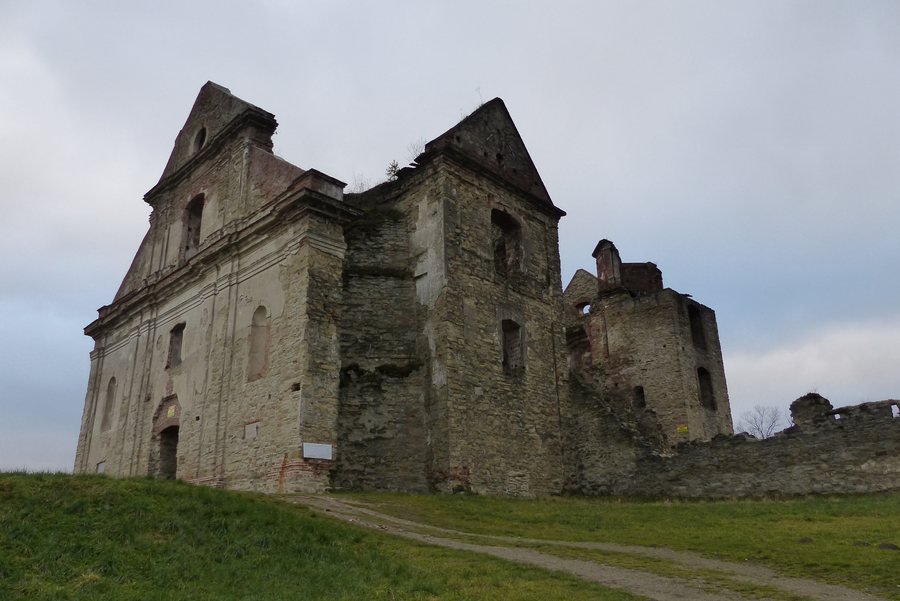
Monastery history on Mariemont Hill
On Mariemont Hill above the Osława Valley stand the monumental ruins of an 18th-century monastery of the Discalced Carmelites. Their location sets the architectural history in a distinct landscape: the hill, valley and historic ruins form this place’s striking motif. The history of the monastery in Zagórz dates back to 1700. This brings two time periods together: a monastic history dating back to 1700 and ruins from the 18th century.
At the Foresterium Cultural Centre, visitors can take a virtual tour of the monastery ruins. Before your trip, check whether the virtual tour is currently available; guided tours are only possible by prior reservation. The centre has an elevator and toilets adapted for people with disabilities.
Sacred buildings and railway heritage
Two church buildings add further historical points of interest. The Parish Church of the Assumption of the Blessed Virgin Mary in Zagórz is a late Baroque architectural monument dating from the second quarter of the 18th century. The wooden Orthodox Church of St Michael the Archangel was built in 1836. A late Baroque sacred building and a 19th-century wooden Orthodox church thus stand side by side as distinct architectural and historical themes.
Railway history also has its own memorial site: the Railway Mini Open-Air Museum in Zagórz commemorates the defenders of the Zagórz railway junction in 1918. Its main attraction is a thoroughly restored TKt48 steam locomotive. The connection to the history of the junction and the specific locomotive offer different points of interest: this is both a place of remembrance and a celebration of railway technology.
Hiking trail and ski jumps as separate attractions
The green Zagórz–Guszka–Lesko hiking trail passes through the southern part of Zagórz. If you plan to include it in your itinerary, check locally for any route changes. The ski jumping complex in Zagórz is associated with three jumps, in the K40, K20 and K10 classes, for amateurs and competitive athletes. The trail and the ski jumps therefore offer two different kinds of activity: a named route through the southern part of town and a facility with three ski-jump classes.
Choosing accommodation to suit your travel interests
When choosing a holiday apartment, you can first decide what you would like to focus on during your holiday. Are you mainly interested in Zagórz’s monastery history, sacred buildings or railway heritage, or would you like to include the hiking trail in your daily plans? The Foresterium complements the monastery ruins with the option of a virtual tour; guided tours there require advance booking. Then compare the locations of specific accommodation options with your own daily plans. This way, you can tailor your search for a holiday apartment to the aspects of Zagórz that interest you most.
Discover more destinations: Komańcza, Dębna, Czaszyn, Bukowsko, Tyrawa Solna, Wysoczany, Rzepedź, Długie.
For the wider travel overview: Sanok.

