
Discover Sieniawa: palace complex, garden and history
Accommodation in Sieniawa
Sieniawa brings together a historic palace and park complex, a green Nordic walking circuit and places whose history spans several centuries. Its attractions range from a former Czartoryski residence and ecclesiastical history to a Jewish cemetery. There is also a garden with mature trees and sightlines, as well as an opportunity to get active outdoors. If you are looking for a holiday apartment, consider whether you want your stay to focus on exercise, architectural and cultural history, or a combination of these.
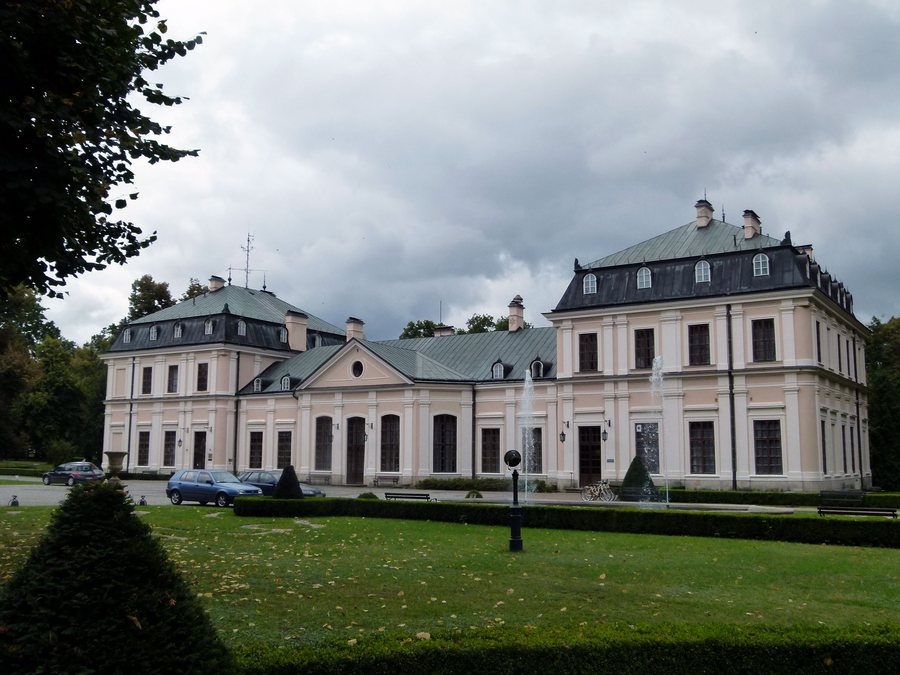
Palace and park complex: architectural history and former residence
Sieniawa’s palace and park complex includes a masonry palace built between 1720 and 1726 and a romantic park. The complex was once a residence of the Czartoryski family. The palace represents a clearly defined period of construction, while its former role as a residence adds a connection to the family to its architectural history. The romantic park adds a designed landscape alongside the building. The complex therefore offers several historical perspectives: the masonry palace and its construction period, its former role as a residence, and the park as part of the grounds. Those interested in cultural history will find a tangible point of reference here for the history of Sieniawa.
Garden design and sightlines
The garden in Sieniawa is distinguished by its striking design, mature trees and numerous sightlines. These features draw attention to the spatial layout rather than just individual historical dates. Mature trees lend the design a well-established character, while sightlines guide the eye through the garden. This gives the garden a different focus from the palace’s architectural history: here, design and visual connections take centre stage. Those interested in garden design will find a distinct way to explore Sieniawa.
A specific route for exercise
The green Nordic walking route no. 19 in Sieniawa is a 5.8-kilometre circuit that starts at the Zespół Szkół school. Its length, route number and starting point give the idea of getting active a concrete framework. Rather than an unspecified walk, you can choose a named circuit with a fixed starting point. Compared with the historic sites, it is a clearly defined option for exercise and can therefore provide a distinct focus when planning your trip. The distance helps you assess whether the route suits your plans for your stay. Check the local trail signs if needed.
Parish, crypt and Jewish cemetery
The Dominican Observant monastery complex in Sieniawa was built between 1719 and 1751. It was destroyed during the First World War and rebuilt between 1918 and 1923; today, the complex serves as a Roman Catholic parish. This chronology covers its construction, the disruption caused by the war, its reconstruction and its present-day role as a parish. The remains of 22 members of the princely Czartoryski family rest in the crypt in the southern part of the parish church. Together with the former residence in the palace and park complex, this provides another historical connection to the family in Sieniawa.
The Jewish cemetery was established in the second half of the 17th century. About 700 tombstones with Hebrew inscriptions have been preserved on the 0.9-hectare site. The inscriptions give this place its own linguistic and cultural dimension. For planning your visit, please note that the cemetery is not always accessible, and a resident of Sieniawa holds the keys to the gates. Arrange access before your visit.
Discover more destinations: Zarzecze, Kańczuga, Gać, Przeworsk.
View the broader travel overview: Powiat Przeworski.

