
Terka: Churches, History and Trails
Accommodation in Terka
Terka brings together historical information about its churches and two clearly distinct route options: one route starts in the village and leads to Zatwarnica, while another is marked green and runs via Bukowiec to Wołkowyja. The churches also tell stories of different periods and architectural styles. You can plan your stay around whether you are mainly interested in local architectural history, would like to include one of the routes mentioned in your plans, or want to combine both themes.
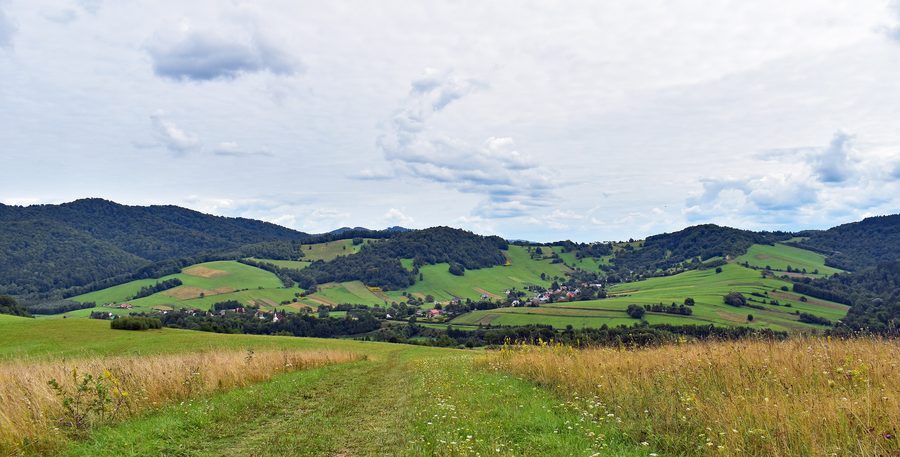 Blick auf das Dorf Terka im Powiat Lesko, Woiwodschaft Karpatenvorland
Photo: Zygmunt Put via Wikimedia Commons, CC BY-SA 4.0
Blick auf das Dorf Terka im Powiat Lesko, Woiwodschaft Karpatenvorland
Photo: Zygmunt Put via Wikimedia Commons, CC BY-SA 4.0
Churches and Historic Traces
A local information board reports that a parish church dedicated to Saint Ilia was built in Terka in 1756. It also mentions a brick church built in Terka in 1911, which burned down three years later. The foundations, churchyard and a parawan bell tower dating from the late 19th century remain from the former brick church. This information links specific dates with traces that remain part of Terka’s church history to this day.
One of the former church bells hangs in the bell tower of a church in Terka. This single bell is another historic detail of the village: it is associated with an earlier church and is now housed in a bell tower in Terka.
The Church of Our Lady of the Scapular in Terka was built in the Neo-Gothic style. Beside the cemetery stands a small brick church dedicated to Our Lady of the Scapular. Neo-Gothic refers to the architectural style, while “brick” describes the construction method; the terms highlight different aspects. Style, construction method, dedication and surviving remains offer different perspectives on local church history. For families who enjoy discovering things together, these topics prompt questions: When was a church built, to whom was it dedicated, and what is the difference between architectural style and construction method? This makes it possible to include historical, religious and architectural aspects in your travel plans.
Two Routes, Different Ways to Navigate
When choosing a route, you can compare its destination and markings. An unmarked route to Zatwarnica starts in Terka. The green-marked route runs from Terka via Bukowiec to Wołkowyja. The routes therefore differ both in destination and in markings; the second route also names an intermediate place. If you include one of these options in your plans, you can first consider which destination interests you, then take the relevant route markings into account.
The themes also offer different points of focus: the churches and their history appeal to travellers interested in culture, while the destinations named for the two routes can help with excursion planning. You can explore Terka through specific interests without limiting your trip to just one aspect. Architectural history, dedications and route destinations offer different starting points for deciding what you would like to explore during your stay.
Terka as a Place to Plan Your Holiday
When choosing a holiday destination, start by asking whether Terka itself is to be a focus of your trip. If you would like to include its churches and historic traces in your plans, or consider one of the routes that starts in Terka, the village may be an option for your accommodation. A holiday apartment in Terka is therefore a suitable search option if staying in this location fits your plans. Also consider which other destinations you would like to visit during your holiday. This way, your decision can be guided by what interests you in Terka: its architectural history, Zatwarnica as the destination of the unmarked route, or the green-marked route via Bukowiec to Wołkowyja.
Discover more destinations: Zawóz, Wołkowyja, Łobozew Dolny, Berezka, Łukawica, Polańczyk, Mchawa, Uherce Mineralne.
For the overview of the wider area: Leski.

