
Węglówka: Oil History and Nature Trail
Accommodation in Węglówka
Discover Węglówka through its local history and long-standing oil tradition. Another highlight is the “Do Sztolni” nature and educational trail, which leads from Węglówka towards the summit of Królewska Góra. The stories passed down over time range from the town’s former name and church life to the use of oil springs. The trail offers a different focus: its stations highlight nature and historic mine adits.
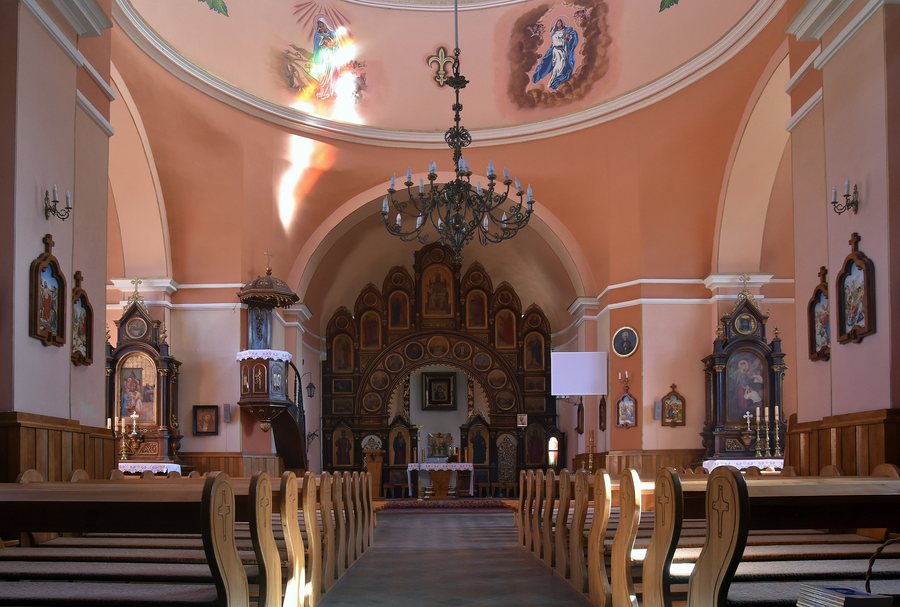 File:Węglówka, cerkiew Narodzenia Najświętszej Maryi Panny (HB8).jpg
Photo: Henryk Bielamowicz via Wikimedia Commons, CC BY-SA 4.0
File:Węglówka, cerkiew Narodzenia Najświętszej Maryi Panny (HB8).jpg
Photo: Henryk Bielamowicz via Wikimedia Commons, CC BY-SA 4.0
Local History Between Church and Oil
Węglówka was formerly known in Ruthenian as Waniwka. The town’s church history is also one of its defining themes: Węglówka was the seat of a Greek Catholic priest. The former Orthodox Church of the Nativity of the Blessed Virgin Mary was built around 1600. Together, the former name, church connections and the age of the church reveal different aspects of the town’s history. The date of around 1600 gives the story a specific historical reference point without pre-empting the town’s later history.
Another historical trace leads to oil. Węglówka has long been known for its oil springs. In the 18th century, Balthazar Hacquet reported several springs in a swampy garden. Farmers obtained lubricant for wagon axles from them. This account brings their use to life: it is not just about the presence of oil, but also its practical purpose at the time. The Kopalnia Węglówka is generally considered to have been founded in 1888. This places its commonly accepted founding year after Hacquet’s account from the 18th century.
The town’s history also includes several old gravestones preserved in the cemetery near the church. They are associated with the Ruthenian origins of the village’s first inhabitants, the so-called Zamieszańcy. This means that, alongside the oil springs and church history, visitors can also learn about the village’s earliest residents. For a trip with children, these different traces can offer concrete starting points for discussion: What does a former place name reveal, and what was the lubricant from the springs used for?
The “Do Sztolni” Nature and Educational Trail
Created by the Zespół Karpackich Parków Krajobrazowych, the “Do Sztolni” trail leads from Węglówka towards the summit of Królewska Góra. At its four stations, visitors can see, among other things, amphibian habitats and sandstone mine adits dating from the turn of the 20th century. The topics covered at the stations offer a different way to explore the area than its local history: they bring together glimpses of habitats and built heritage from a later historical period. The trail’s name refers to the mine adits, while its stations also cover nature-related topics.
When planning your visit, you can choose between two main areas of interest. If you are particularly interested in Węglówka’s history, you can explore the former name, the church, Hacquet’s account and the oil tradition in chronological order. If you would like to combine nature with industrial heritage, the “Do Sztolni” trail offers four stations with specific themes to observe and explore. With children, the variety of questions along the way can make the visit more engaging: one moment you might be talking about the origins of the village’s first inhabitants, the next about amphibian habitats or the dating of the sandstone mine adits.
If you are looking for a holiday apartment in Węglówka, choose a location based on whether the town’s history and nature and educational trail fit your travel plans. These themes offer a clear starting point for deciding in advance whether you would like to focus your stay on history, nature or a mix of both.
Discover More Destinations
Discover more destinations: Królik Polski, Bóbrka, Jedlicze, Iwonicz-Zdrój, Wrocanka, Moderówka, Krosno, Tylawa.
Go to the regional travel overview: Krośnieński.

.jpg)