
Pruchnik: Wooden Architecture and Historic Routes
Accommodation in Pruchnik
Pruchnik combines a medieval townscape with wooden architecture and trails that require different amounts of time. Individual historic details also give the town its distinctive character, from the arcades of its houses to faceted obelisks. When planning your stay, you can weigh up exploring the townscape against taking a longer hike from Pruchnik.
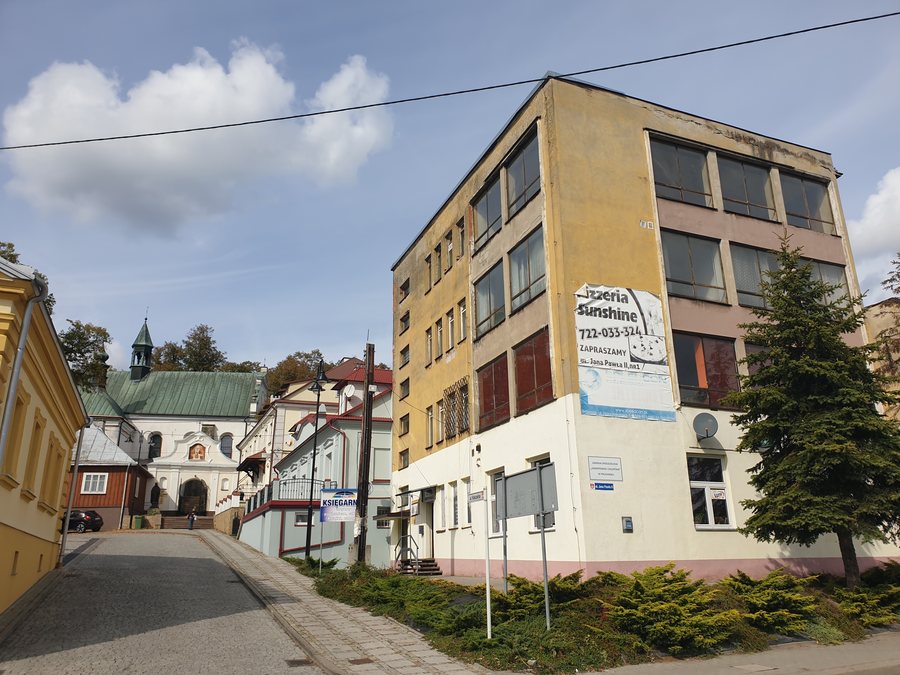
A Medieval Townscape of Wood and Arcades
Pruchnik’s town layout follows a medieval checkerboard pattern dating back to the town’s founding. Wooden houses with arcades and tall, steep, shingle-covered roofs line the market square and all the streets. The town’s structure and architecture are closely connected: the regular pattern defines the layout, while the wood, roof shape and open arcades characterize the houses.
The arcades originally served a practical purpose on market days: goods were displayed there. This historic detail makes an architectural feature a clue to how the houses were once used. In Pruchnik, visitors interested in architecture can therefore explore not only the forms but also their former role. The 300-year-old building “Galeria pod Gontem” adds another specific example to this architectural heritage.
Other historic traces include faceted pillar obelisks dating from the Tatar raids. They served as warning signals. Their shape and original function give them a different significance from the houses and arcades: rather than living or trade, their role was to serve as a historic warning.
Chapel, Church and Notable Lime Trees
A viewpoint sits on a rise at the northwestern edge of the municipal cemetery. A historic chapel stands there, considered a unique example of carpentry. The site thus combines an elevated location with a distinctive wooden structure. A plaque in the church vestibule recounts the eventful history of Pruchnik parish.
The small-leaved lime trees near the church can also be distinguished by their measurements. One lime tree is recorded as having a trunk circumference of 380 centimeters, a height of 25 meters and an age of 250 years. Another has a circumference of 410 centimeters and is also 25 meters tall; its age is estimated at about 250 years. The third has a trunk circumference of 460 centimeters and is 25 meters tall, and is estimated to be about 300 years old. Comparing trunk circumference and age makes the differences in scale particularly clear.
Plan Hikes and Wooden Architecture Routes
The yellow hiking trail runs from Pruchnik via Dubiecko to Dynów. The hike from Pruchnik to Dubiecko is listed as taking four hours, while the hike from Pruchnik to Dynów takes about nine hours. These are very different time frames to factor into your day’s plans. Check local trail conditions before relying on the stated walking times.
Pruchnik also offers a point of reference for those interested in wooden architecture beyond the local area: the 133-kilometer Rzeszów–Jarosław Route VII of the Wooden Architecture Route passes through the town. Pruchnik is also connected to Route II, Sanok–Dynów. These two route listings and the yellow hiking trail offer different ways to plan a stay: a themed connection to wooden architecture, or a hike with specified stages and times.
When choosing a holiday apartment in Pruchnik, it may help to decide first what you want to focus on during your trip: would you like to explore the townscape and architectural history, or include one of the routes in your plans?
Discover more destinations: Chłopice, Boratyn, Tuczempy, Radawa, Jarosław, Munina, Morawsko, Radymno.
Go to the main travel overview: Jarosław.

