
Żdżary: Oak Avenue and Church History
Accommodation in Żdżary
Żdżary can be explored through two very different traces of time: the protected Aleja dębowa and the history of the Church of Our Lady of Perpetual Help. One is designated a natural monument; the other brings together a construction period, precisely dated events and later changes in its ecclesiastical status. Together, nature and history give the town concrete points of interest if you are planning a trip with a range of interests.
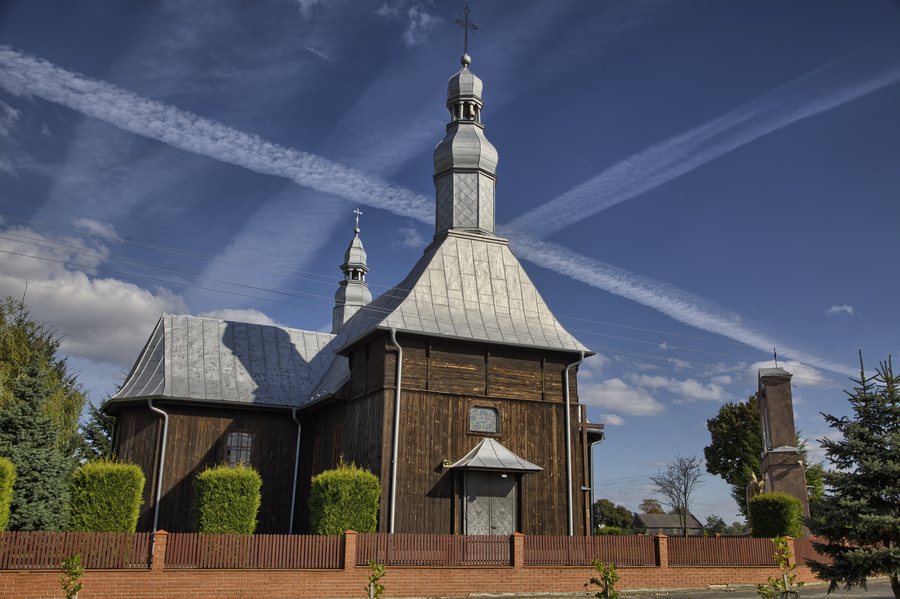 File:Kościół św. Bartłomieja w m. Żdżary.jpg
Photo: Artur Nawojski via Wikimedia Commons, CC BY-SA 3.0 pl
File:Kościół św. Bartłomieja w m. Żdżary.jpg
Photo: Artur Nawojski via Wikimedia Commons, CC BY-SA 3.0 pl
Aleja dębowa and its ancient oak
Aleja dębowa comprises 134 trees. The oak avenue in Żdżary is a natural monument. It includes an oak estimated to be around 600 years old, with a trunk circumference of 680 centimetres. The two figures highlight different things: 134 describes the avenue as a whole, while the age and circumference draw attention to a single tree. The age is explicitly approximate; the circumference provides a precise measurement. This makes the natural setting tangible both through the wider group of trees and through one individual oak.
Church history with clear dates
The Church of Our Lady of Perpetual Help was built between 1986 and 1991. A specific date adds to this period: the foundation stone was laid on 12 May 1991, and the church was consecrated that day by Bishop Józef Życiński. Its history therefore includes both a construction phase lasting several years and a specifically dated event in the same year. These are different milestones in the church’s history, and each can be considered on its own.
The church’s function can also be traced over time. From 1 September 2013, it was a rector’s church; since June 2022, it has been a parish church. This sequence adds two later status details to the construction history. If you are interested in the development of the parish, you can distinguish between the construction period, the precisely dated event and the change in ecclesiastical function, rather than reading all the dates as equivalent milestones.
A place name with its own interpretation
The name Żdżary has a “forest” etymology and refers to a place that originated through slash-and-burn clearing. Slash-and-burn clearing is a way of creating land for use by means of fire; here, the linguistic connection to forests meets an earlier human intervention in the landscape. For travellers, this interpretation adds a linguistic way into the town’s history alongside the specific details about nature and the church.
Nature and history when choosing a destination
The contrast is useful when choosing a destination: the avenue offers a connection with nature, while the church provides a chronological perspective on local history. You can explore the natural setting through the avenue as a whole and one individual tree, and the church’s history through its construction period, a precise date and changes in status. If you are planning a trip with your family, these different perspectives offer topics for conversation about nature and the development of the town, without assuming any particular itinerary. When choosing a holiday apartment, you can consider whether a nature theme, church history or a combination of the two suits your planned stay.
Discover more destinations
Discover more destinations: Parkosz, Łęki Dolne, Pilzno, Brzeźnica, Bielowy, Góra Motyczna, Pustków-Osiedle, Żyraków.
For the broader travel overview: Dębica.

