
Lutowiska: Views and Cultural Heritage
Accommodation in Lutowiska
Lutowiska brings together a viewpoint and striking traces of regional history. The town’s historical origins date back to 1580. Cemeteries, a former church site and a Neo-Gothic parish church offer different ways to explore the past, while views of the High Bieszczady add a scenic highlight. Travellers looking for a destination with more than one theme will find specific points of interest here to help plan their trip.
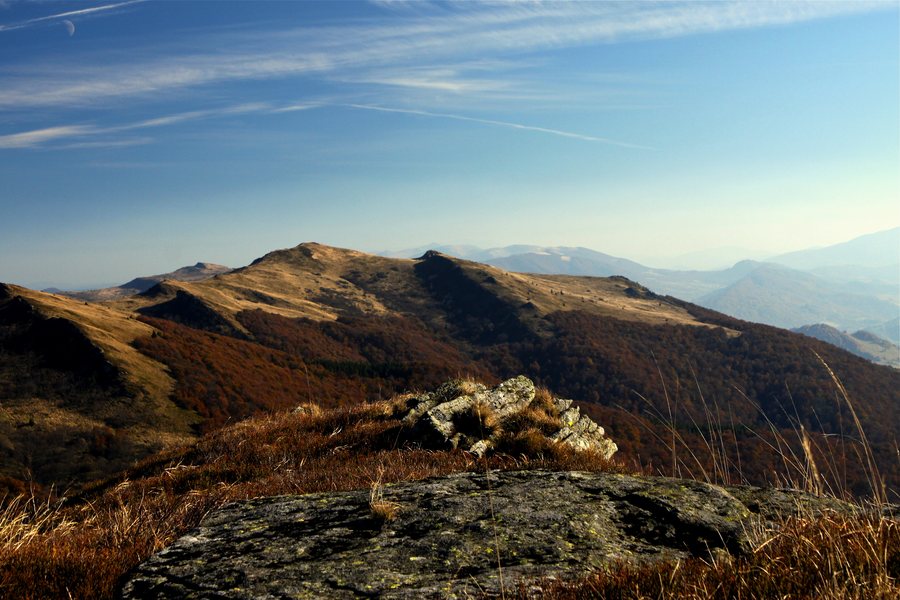 File:Gmina Lutowiska, Poland - panoramio (3).jpg
Photo: Hanc Tomasz via Wikimedia Commons, CC BY-SA 3.0
File:Gmina Lutowiska, Poland - panoramio (3).jpg
Photo: Hanc Tomasz via Wikimedia Commons, CC BY-SA 3.0
Planning trips to the High Bieszczady
The Information and Tourism Education Centre of Bieszczady National Park in Lutowiska is the main organiser and source of information for individual visitors and tour groups travelling to the High Bieszczady. The centre is open year-round; check the current visitor arrangements before your visit. Its role makes it an important reference point for travellers who want to get their bearings before heading to the High Bieszczady. At the same time, Lutowiska and its immediate surroundings have their own cultural and historical attractions. When planning, you can therefore decide whether your interests lie more in the mountains, the history of the town or the stops along the cultural trail.
History in cemeteries and architecture
A Greek Catholic cemetery in Lutowiska was established around the turn of the 18th and 19th centuries. It is next to the site of a former Orthodox church. The town’s parish church is listed in the register of historic monuments and is considered the only example of Neo-Gothic religious architecture in the Polish Bieszczady. The two sites offer different historical points of interest: the cemetery is notable for its period of origin and its proximity to the former church site, while the parish church stands out for its listing and architectural classification.
Another place of remembrance is the Jewish cemetery. After the cemetery in Lesko, it is the second-largest Jewish cemetery in the Bieszczady mountain region. This regional distinction sets it apart from the age of the Greek Catholic cemetery and the architecture of the parish church. Together, these sites offer different reasons to explore Lutowiska’s cultural heritage, while retaining their distinct historical characteristics.
A cultural trail in the surrounding area
In the immediate vicinity of Lutowiska, the 13-kilometre historical and natural heritage trail of the “Trzy Kultury” Ecomuseum leads, among other places, to synagogue ruins, an old Jewish school, a former Orthodox church site, a Greek Catholic cemetery and old Boyko houses known as chyże. The stops range from ruins and a school to traditional homes. The trail broadens the focus beyond the individual cemeteries and the parish church, also covering a variety of cultural and natural history themes along its route.
Views and trip planning
A viewpoint in Lutowiska offers views of the High Bieszczady. This means that a single scenic outlook in town and a route with several stops in the surrounding area appeal to different travel interests. This distinction can help you choose a destination based on the themes that matter to your travel group.
Discover more destinations: Procisne, Arłamów, Muczne, Zatwarnica, Krościenko, Dwernik, Ustrzyki Dolne, Stuposiany
For the broader travel overview: Bieszczady.

.jpg)