
Zawiercie: Springs, Trails and Discoveries
Accommodation in Zawiercie
Zawiercie lies on the Kraków-Częstochowa Upland, on the Warta River. Water and trails shape the character of the town: the Szlak 3 Rzek leads to the sources of the Warta, Czarna Przemsza and Blanówka rivers. Anyone interested in landscapes and river courses will find a specific starting point here for getting to know Zawiercie through its waterways, not just as a name on the map.
Springs and Hiking Routes
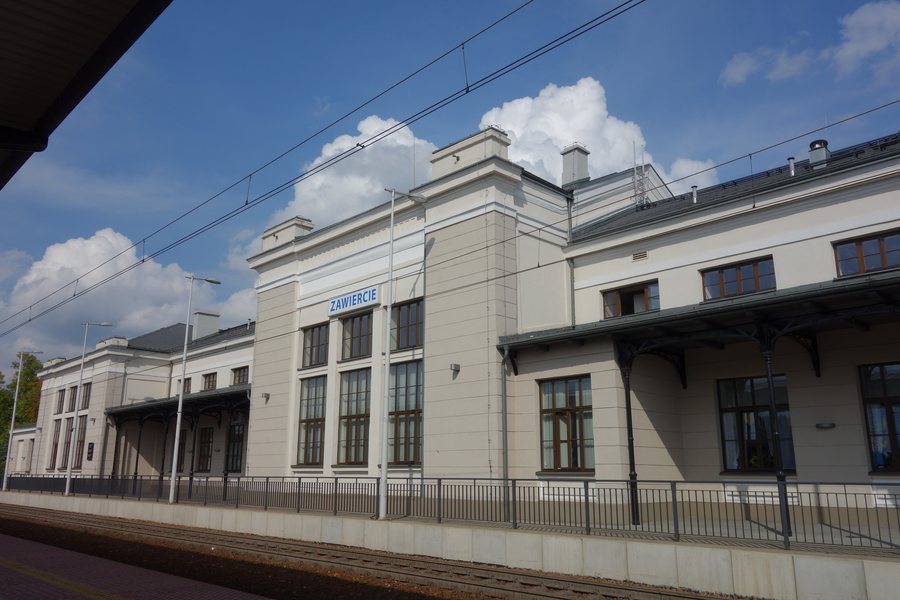
One of the main sources of the Warta in the Kromołów district lies beneath the Chapel of St. John of Nepomuk. The Czarna Przemsza rises in the Bzów district. This means that two of the river sources featured on the Szlak 3 Rzek are in different districts. Variant 1 of the hiking route starts at Zawiercie railway station and passes through Blanowice, Kromołów and Bzów. These stops provide a guide for anyone especially interested in the source locations and districts while hiking.
Hiking and cycling routes also cross in Zawiercie, including the red-marked Szlak Orlich Gniazd and the Szlak Warowni Jurajskich. When planning your trip, you can therefore consider whether you would rather devote your days to the river sources and hiking trails or also to cycling. Another notable feature along these routes is the ruins of Bąkowiec Castle in Skarżyce: they lie next to the red-marked Szlak Orlich Gniazd and the blue-marked Szlak Warowni Jurajskich.
Discover and Experiment
The Małe Centrum Nauki SOWA is located in the railway station building at ul. 3 Maja 4. Visitors can search, discover and experiment on their own. At the research stations, they can trigger phenomena, change parameters, make observations and check results. Touching the exhibits is also permitted. The Majsternia adds construction challenges. The centre focuses on hands-on experimentation rather than simply looking, making it a different experience from a hike for families planning a discovery activity together.
Local History and Exhibition Spaces
The Miejska Izba Muzealna collects, preserves and displays memorabilia from the Zawiercie region. Anyone interested in local history can combine this look at regional memories with visits to other cultural sites. Galeria MOK is a two-storey exhibition space with a white and a black area. Paintings, sculptures, drawings, prints and industrial design have been presented in the rooms of Galeria Stara Łaźnia im. Leszka Dutki.
The TAZ workers’ housing estate is also part of Zawiercie’s history: it is listed in the register of monuments. In addition to multi-family workers’ housing, plans for its construction included public buildings such as a school, a hospital, a doctors’ surgery, a laundry, bathhouses and a bakery. These planned facilities show that the estate’s design extended beyond residential buildings. A medieval market square in Kromołów is also recommended as a point of interest on the local route. Alongside nature and outdoor activities, visitors can therefore choose from different aspects of the town’s and region’s history.
Getting There and Choosing Where to Stay
Zawiercie has direct rail connections to the north, south and east, as well as to Upper and Lower Silesia. The listed connections include Warsaw and Gdynia to the north; Kraków, Zakopane, Prague, Budapest and Vienna to the south; and Ełk and Suwałki to the east. When searching for a holiday apartment, you can therefore first weigh up whether rail connections or your planned activities should determine your stay. If you arrive by train and are considering Variant 1 of the Szlak 3 Rzek, the railway station is also the route’s starting point. The town offers a range of travel themes: river sources and hiking, cycling routes, hands-on experiments and regional culture.
More places: Podleśna, Zawada Pilicka, Irządze, Piaseczno, Morsko, Gulzów, Kroczyce and Witów.
For the higher-level travel overview: Zawiercie.

_Travelarz.jpg)