
Discover Pszczyna: Park, Castle and Culture
Accommodation in Pszczyna
Pszczyna combines an extensive historic park with a history of royal residence and diverse insights into Silesian culture. The Historic Park covers 156 hectares. The Old Town is also worth a closer look: its urban layout dates back to the Middle Ages. You can plan your stay around your particular interests, whether they are green spaces and wildlife watching, historic interiors or the history of the town.
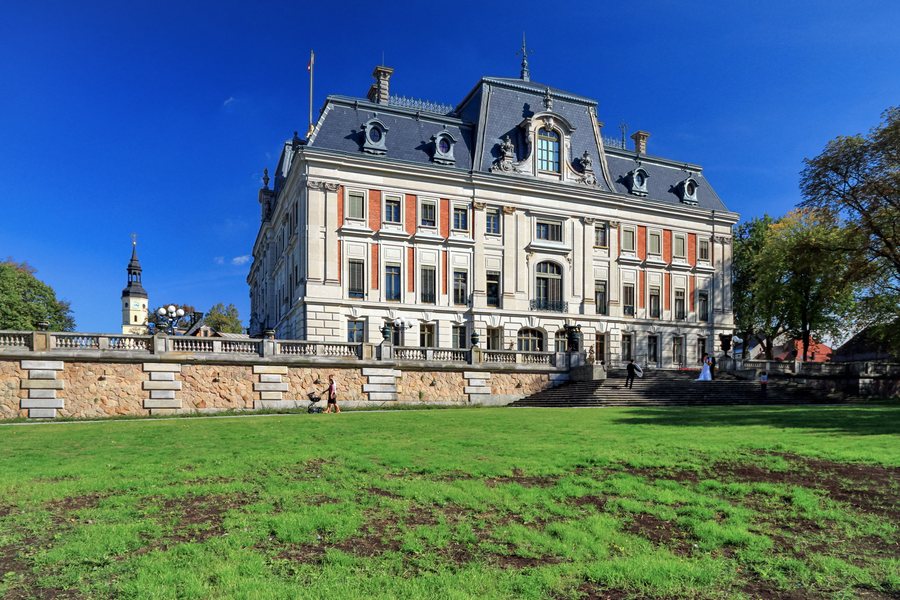 File:2012 Powiat pszczyński, Pszczyna, Pałac (01).jpg
Photo: Marcin Konsek via Wikimedia Commons, CC BY-SA 3.0 PL
File:2012 Powiat pszczyński, Pszczyna, Pałac (01).jpg
Photo: Marcin Konsek via Wikimedia Commons, CC BY-SA 3.0 PL
Parkland and Wildlife Watching
The Historic Park includes the Castle Park, Dworcowy Park and Dziką Promenada. These three areas have different names and features, and you do not need to combine them into a single walk. Dziką Promenada is also home to a well-maintained golf course. If you are interested in golf, this gives you a specific reason to include this part of the park in your travel plans.
The Pokazowa Zagroda Żubrów, a showcase bison reserve, is also located in Dziką Promenada. Its ten hectares contain enclosures and paths from which you can also observe fallow deer, red deer, roe deer and pheasants. This makes a visit an opportunity to see a variety of animal species as well as the parkland. For families with different interests, the change of pace between a walk through the park areas and wildlife watching can be a particularly appealing focus.
Royal Residence History and Museums
The Castle Museum represents a type of royal residence once occupied by European nobility. Its preserved furnishings are particularly striking: around 80 percent of the original furnishings from around the turn of the 20th century have survived. If you are interested in the history of domestic life and representation, you can learn about the castle both as a royal residence and about its surviving furnishings as a distinct aspect of the town.
Other museums offer different points of interest. The Silesian Press Museum’s exhibition covers the history of the Silesian press from its beginnings to 1939; the museum also collects historic printing presses and printing equipment. Izba Telemanna displays historic musical instruments, including an 18th-century positive organ. The cultural offerings therefore range from press history and printing technology to musical instruments.
The Zagroda Wsi Pszczyńskiej open-air museum is part of the Silesian Wooden Architecture Trail’s Pszczyna Loop. The Prince’s Stables complex was taken over by the Castle Museum in June 2013 and regularly hosts exhibitions on a variety of subjects. Since 1979, Baroque concerts known as “Wieczory u Telemanna” have been held in the Castle Museum’s Mirror Room. These concerts connect the venue with a musical tradition; the name and the year they began apply specifically to this concert series.
Townscape and Choosing Where to Stay
Piastowska Street is Pszczyna’s main pedestrian street. Together with the Old Town’s medieval layout, it offers another perspective on the town beyond the park and museum. When looking for a holiday apartment in Pszczyna, you can therefore consider which themes you want to shape your stay: the park and wildlife watching, the history of the royal residence, museums or the historic townscape. This lets you choose a destination based on the experiences that interest you most, without having to make a single attraction the focus of your entire trip.
If you’d like to discover more places, you can find them here: Kobior, Pszczyna, Suszec, Łąka, Bad Gottschalkowitz, Warszowice, Wisła Mała, Studzienice, Piasek, Brzeźce and Pielgrzymowice.
For the broader travel overview: Silesia.

.jpg)