
Rudziniec: Locks and Historic Sites
Accommodation in Rudziniec
Rudziniec offers different ways to explore the town’s history: the lock complex brings the scale of water engineering to life, while the castle park, cemetery and former smelting works complex offer insights into other historical themes. The technical dimensions of the lock, the 19th-century park and the memorials at the cemetery each provide a distinct focus. When choosing your accommodation, you can consider whether you would like to focus on water engineering and machinery or include more park, church and commemorative history in your stay.
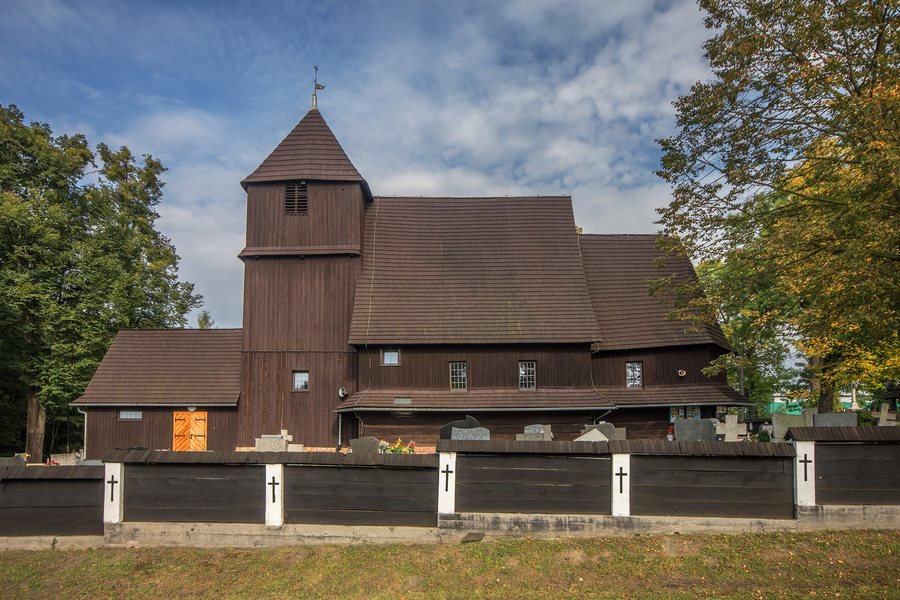 File:SM Rudziniec Kościół Michała Archanioła 2017 (20) full.jpg
Photo: Sławomir Milejski via Wikimedia Commons, CC BY-SA 4.0
File:SM Rudziniec Kościół Michała Archanioła 2017 (20) full.jpg
Photo: Sławomir Milejski via Wikimedia Commons, CC BY-SA 4.0
The Lock Complex on the Gliwice Canal
Rudziniec Lock is located at kilometre 21.5 of the Gliwice Canal. The complex was built between 1936 and 1938; the lock was commissioned along with the canal in 1939. Its components include two lock chambers, upper and lower lock heads, engine houses and a control house. This means the site is not defined by its chambers alone: the technical buildings are also part of its overall character.
The two twin chambers are each 71 metres long and 12 metres wide. The difference in level between the upper and lower water is 6.3 metres. These dimensions illustrate the purpose of lock construction: water is moved between different levels. The lock’s pre-war machinery and equipment are still in operation. If their current operation is important to your visit, please check in advance.
The Gliwice Canal is 40.60 kilometres long and connects the Oder River in Kędzierzyn-Koźle with the port in Gliwice. Six locks overcome the differences in elevation along the canal. The 40.60-kilometre-long Gliwice Canal connects the Oder River in Kędzierzyn-Koźle with the port in Gliwice as a regional waterway; Rudziniec Lock is one specific part of this longer waterway. Comparing the dimensions of the local facility with the scale of the entire canal offers two perspectives on the same technical subject.
Park, Church and Places of Remembrance
An English landscape park, laid out in the second half of the 19th century, surrounds the castle in Rudziniec. Its design history provides a different focus from the lock complex: here, the historical connection between the castle and the park takes centre stage, while the canal site highlights engineering.
An active Roman Catholic cemetery dating from the 17th century surrounds the Church of St Michael the Archangel. Its memorials include a mission cross, a stone cross and monuments to the victims of the First and Second World Wars. The cemetery’s long history of use and its different memorials bring together several historical layers in one place. For a stay that includes architectural and commemorative history, this area offers a distinct focus alongside the park and lock.
Industrial History and Route Descriptions
The former Pielahutte smelting works complex in Rudziniec is also part of the area’s industrial history. It is considered an important example of historic industrial development in the municipality. Together with the lock, it illustrates two different forms of the technical past: a water engineering structure with machinery and a control house on one hand, and a former smelting works complex on the other. This contrast can help you choose the historical focus that interests you most.
The yellow-marked Route 16 passes through Rudziniec, Pławniowice, Taciszów and Rzeczyce within the municipality. Check local information on the route and its condition before using it. Between 2016 and 2022, Route 402 ran from Gliwice railway station to Rudziniec railway station, passing through Bojszów, Rudno and Rudziniec, among other places.
If you would like to discover more destinations: Knurów, Bojszów, Poniszowice, Paczynka, Przyszowice, Niewiesze, Chudów, Sośnicowice.
For the broader travel overview: Gliwice.

_full.jpg)