
Rozlazino: Church, Manor House and Cycle Route
Accommodation in Rozlazino
Rozlazino brings together ecclesiastical architectural history, a manor house ensemble and a cycle route with an unusual trout motif. These themes offer different perspectives on the place: the history of a parish, 19th-century buildings, a sombre reminder of 1945 and a more recent cycle route. If you would like to plan your stay around cultural history or outdoor activities, you can take these highlights into account when searching for a holiday apartment.
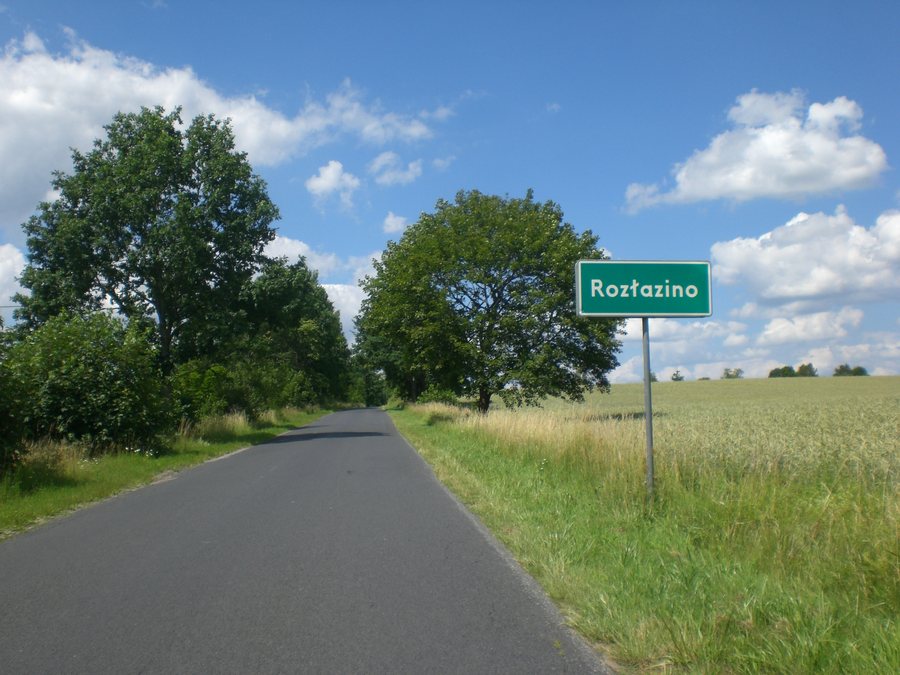
St. Wojciech Church: Architectural History and Remembrance
The present-day St. Wojciech Church was built in 1840–1841. Its building material consisted of glacial erratic boulders collected throughout the parish. Erratics are large stones naturally transported from their original location; their use makes the building material a tangible part of the church’s architectural history. Collecting them from across the parish also draws attention beyond the church building itself.
The parish of Rozlazino was established as early as the second half of the 14th century. Several centuries separate its founding from the construction of the present-day church. The parish’s medieval origins and the 19th-century church building therefore represent two distinct historical periods. On the night of 2–3 February 1945, prisoners from the Stutthof concentration camp stopped at the church during the death march. This episode adds a tragic chapter in local history to the building’s story.
Manor House Ensemble and Cemetery
Another historical feature is the manor house ensemble with its workers’ colony. It includes a farm building dating from the second half of the 19th century. The workers’ colony and farm building turn attention to a different side of local history than the church: life and work around a manor house. In this way, the religious history can be complemented by an economic and social perspective.
Rozlazino also has a Roman Catholic cemetery dating from the mid-19th century. Its date is less precise than the church’s construction period: St. Wojciech was built specifically in 1840–1841, while the cemetery is broadly dated to the middle of the century. This offers an additional perspective on the various historical landmarks in the area, without grouping them together as a single building.
Cycle Route and Fishing Tradition
An active way to explore is also part of the area’s appeal: the “Szlakiem pstrąga tęczowego” cycle route passes through Rozlazino and opened in 2013. Its name refers to the rainbow trout. A 2016 report describes a fishing heritage room established along the route, called “Izba Tradycji Rybactwa związanej z Regionem Kaszubskim”. It was also intended to serve as a rest or community stop and a tourist information point. These functions were planned; check the route in advance when planning a ride.
When searching for a holiday apartment, consider which focus you would like to shape your stay: the religious and economic history or the cycle route.
Discover More Destinations
Discover more destinations: Łężyce, Lewinko, Strzebielino Morskie, Kopalino, Ciekocinko, Nowy Dwor Wejherowski, Sasino, Bieszkowice.
Go to the broader travel overview: Wejherowo.

