
Discover Skorcz: medieval town centre and walking trails
Accommodation in Skorcz
A medieval town layout, a Gothic church and walking trails through forests to lakes give Skorcz a varied character. The town’s history dates back to the mid-14th century, while several walks with different focuses start and end here. When choosing your destination, you can therefore weigh cultural history against longer routes through the landscape.
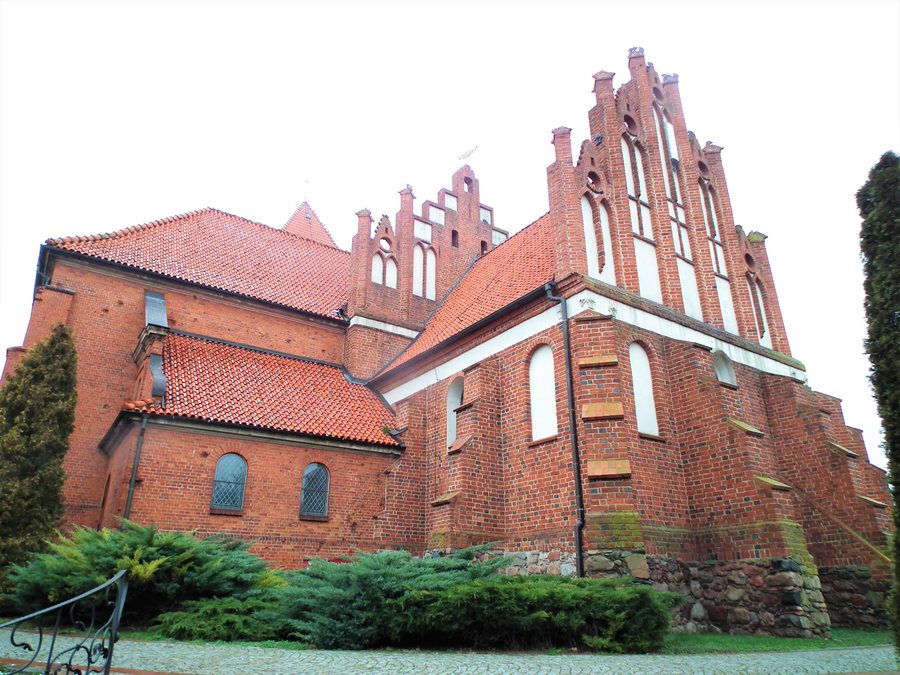
Townscape and architectural history
The medieval urban layout of Skórcz is listed in the register of monuments and has remained unchanged since the mid-14th century. It shapes the historic character of the town. West of the layout lies an area with an early Iron Age settlement, which is under comprehensive archaeological protection. The town’s history thus encompasses not only its medieval townscape, but also a much older settlement history.
A prominent landmark is the Gothic Kościół pw. Wszystkich Świętych, which dates from the 14th century. Its furnishings include Late Gothic and Baroque pieces. The building’s history also spans several periods: the gable between the nave and the chancel was built around 1500. Side aisles were added to the church in 1927; the tower, destroyed in 1945, was rebuilt in 1957. These dates describe different building components and alterations, not a single phase of construction.
Those interested in architecture can explore several different aspects: the church’s Gothic origins, the gable built around 1500, later extensions and the tower’s reconstruction. Together with the protected town layout, these form a cultural and historical focus that is quite distinct from the walking opportunities around Skórcz.
Walking trails with different focuses
The green PTTK walking trail “Wzdłuż Jeziora Czarnego” starts at the former railway station in Skórcz on ul. Dworcowa and runs from Skórcz to Osiek. Within the town, it passes the parish cemetery and Kościół pw. Wszystkich Świętych before continuing along ul. Główna. After leaving Skórcz, it follows forest paths through the Bory Tucholskie around Jezioro Czarne. The route therefore links a starting point in town with a walk through woodland around the lake.
Another suburban walking route, which also starts and ends in Skórcz, is 25 km long. It passes through forests and along numerous large lakes. The route includes the Czarne and Kałębnica foresters’ lodges, the lakes Tuszynek, Słone and Głuche, as well as Skrzynia, Skorzenno and Osiek. If you are looking for a longer walk with several named stops, you can consider this route as a distinct option; the 25 km refers to the route as a whole.
A walking route of around 18 km also starts and ends in Skórcz. It passes through Barłożno, along the Janka River, and through Kościelna Jania, Stara Jania and Mirotki. Its focus is the history of the old settlements of the Jania estates, as well as the life and anti-German Order policies of the knight Jan z Jani. Unlike the 25 km route, this one centres on a historical theme along the way. The stated distance of around 18 km is approximate.
Which travel idea suits you?
If you prefer a culturally focused stay when looking for a holiday apartment, Skorcz is a destination worth considering for its medieval layout and the church’s architectural history. For a trip centred on walking, there are several specific routes to choose from: the green trail towards Osiek, the 25 km route through forests and lake landscapes, or the approximately 18 km route focused on history. The last two routes start and end in Skórcz.
Other places for reference: Starogard Gdański, Wilcze Błota, Kolincz, Koźmin, Czarna Woda, Kokoszkowy, Skorzenno and Godziszewo.
For the broader travel overview: Preußisch Stargard.

.jpg)