
Żuławki between the Szkarpawa and arcaded houses
Accommodation in Żuławki
Żuławki combines a riverside landscape with historic village character. The Szkarpawa, the village’s former Mennonite heritage and its preserved arcaded houses give the place several points of interest. You may be interested in the waterways, architectural history or a walk through the rural village layout. When planning your holiday, it is worth weighing up these different highlights.
The Szkarpawa as a geographical reference point
Żuławki and Drewnica are former Mennonite villages separated by the Szkarpawa. Near Żuławki, the Gdańska Głowa lock connects the Vistula with the Szkarpawa, which flows into the Vistula Lagoon. Two different connections meet here: the river separates the two villages, while the lock connects the rivers. This contrast puts the area’s relationship to the waterways into context without treating Żuławki and Drewnica as a single village.
Those travelling along the Szkarpawa are advised to moor at Marina Żuławki and explore the surroundings. The village also has a grocery shop and a sailing marina. The waterways and everyday village life thus offer two different starting points for your discoveries in the area.
Arcaded houses and historic village culture
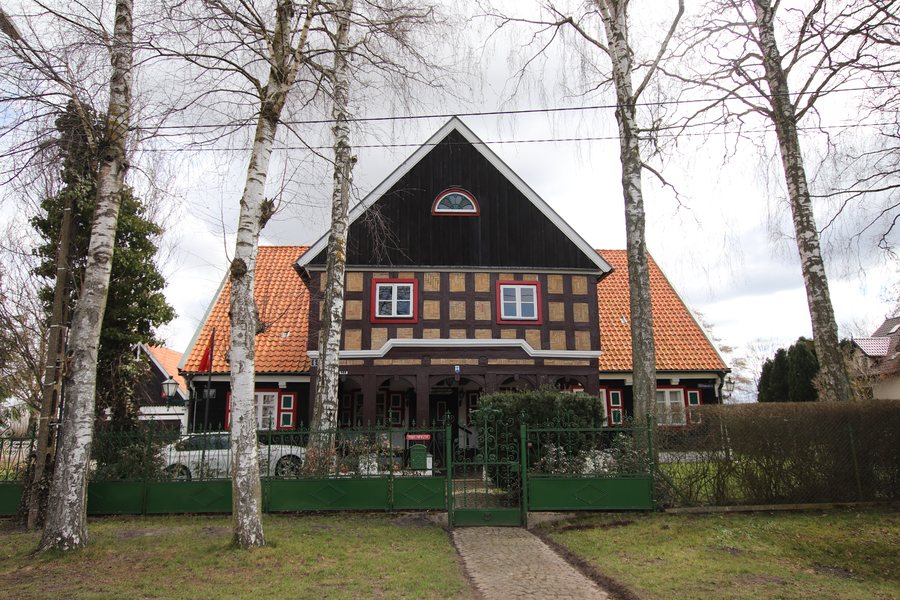
Żuławki and Drewnica have unique groups of historic buildings dating from the 18th and 19th centuries. Several arcaded houses have been preserved in Żuławki, including two that have been restored. According to Wikipedia, the arcaded house in the village is described as a Baroque-Classical building from the 18th century; it underwent extensive alterations in 1825. These groups offer a glimpse of the architectural heritage of both villages, while the arcaded house has a specific building history tied to a precisely dated year of renovation.
Żuławki’s religious history can also be explored through various landmarks. In the 16th century, the village had three places of worship: a Catholic, a Lutheran and a Mennonite one. The buildings and sites now found in Żuławki include a Neo-Gothic Catholic church dedicated to the Nativity of the Blessed Virgin Mary, a chapel and a Protestant cemetery. Together, these places point to the religious coexistence that shaped the village’s history.
A walk and finding your bearings by the water
One practical way to get to know the rural village layout is to take a two-kilometre walk along a road parallel to the riverbank. Along the way, you can see eight noteworthy sites. The walk focuses on the village and its surroundings; the Szkarpawa and the marina offer a different connection to the area. This lets you decide whether you would rather spend your time exploring the village layout or enjoying the water.
When looking for a holiday apartment in Żuławki, this distinction can be a useful starting point: are the historic buildings and the walk your main focus, or are you particularly drawn to the Szkarpawa? Both offer concrete points of interest in the village and can help you choose how to explore Żuławki according to your own travel interests.
Discover more destinations
Stegna, Jazowa, Myszewko, Sztutowo, Drewnica, Jantar, Krynica Morska, Mikoszewo
For the main travel overview: Nowy Dwór Gdański.

