
Stare Pole: Churches, sugar factory history and cycling routes
Accommodation in Stare Pole
Stare Pole combines a rich local history with cycling routes and an agricultural tradition that continues to shape the area. Sacred buildings, the development of a sugar factory complex and the history of village life offer different ways to explore the town. If you are considering a holiday apartment in Stare Pole for your trip, these topics can help you decide whether cultural history, cycling or agriculture will be of particular interest during your stay.
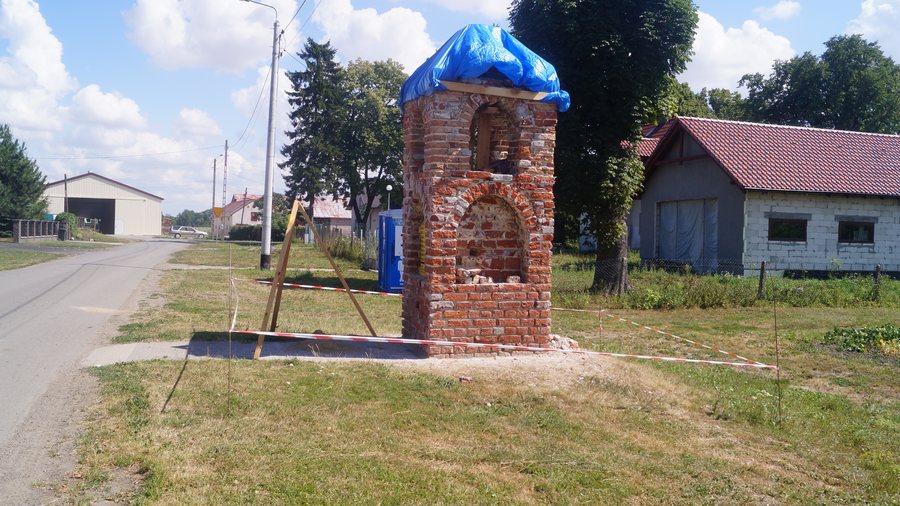
Church, cemetery and local history
Among the best-preserved historic monuments in Stare Pole are the filial Church of Matki Boskiej Królowej Polski and its cemetery. The ensemble includes a chapel and a bell tower; its surviving mature trees are also part of it. The trees in the parish cemetery are protected as a historic monument. The trees and their connection to the cemetery, as well as the individual buildings, are therefore defining features of this historic site.
The filial Church of Matki Bożej Królowej Polski was formerly Protestant and is now Roman Catholic. It was built in 1879. Its former and current religious affiliations, along with its year of construction, offer a specific insight into the history of the church building. Several trees in Stare Pole, mainly pedunculate oaks, are designated natural monuments.
How the sugar factory shaped the town
The sugar factory complex began to take shape in 1880 as an investment by a joint-stock company. Its history is closely linked to the development of the town’s layout: in the 19th century, Stare Pole first expanded westwards, with production and auxiliary buildings added there. The town then expanded northwards, where housing was built for workers employed on a permanent or seasonal basis.
The history of the sugar factory can therefore be seen as more than the story of a business. It also shows how production and work changed the shape of the town and led to housing being built for people with different employment arrangements. Visitors interested in historic buildings and industrial history can explore Stare Pole from this perspective. Another place of interest is the post office at ul. Sienkiewicza 3. It was built in the last quarter of the 19th century, after the Ostbahn railway line had been routed through the town.
Cycling routes and agricultural tradition
Three cycling routes connect Stare Pole with Ząbrowo and Kraszewo. Together, the routes are 6.5 km long and serve both as connections and for recreation and tourism. If you would like to include cycling in your trip, the combined distance is a useful point of reference for planning. It refers to all three routes together, not to a single route.
Another special feature is the Żuławskie Targi Rolne. For years, it has been celebrated as a festival of agriculture and village life in the region. The event, held on 20 and 21 June 2026, included a livestock exhibition. The specialist exhibition Ogólnopolski Młodzieżowy Czempionat Koni Sztumskich was also held there for the tenth time. Breeding horses of this breed from six voivodeships were presented. For families and other travellers interested in animals, horse breeding or regional agriculture, the event offers a clear picture of the subjects brought together by the festival.
Getting there and finding the right fit for your trip
Since 15 December 2024, the “Taryfa Pomorska” fare offer has also applied to the railway section between Stare Pole and Elbląg, towards the Warmian-Masurian Voivodeship. If you are planning to travel by train, you can take this fare information into account.
Different interests can guide your choice of destination: church and architectural history, the development of the sugar factory complex, cycling routes or the region’s agricultural tradition. If you are considering Stare Pole as a holiday destination, think about which of these is most important to your trip.
For more places to explore, you can also see Malbork and Ząbrowo.
Back to the main travel overview: Malbork.

