
Borucino: Lakes Route and Waterway Knowledge
Accommodation in Borucino
Borucino lies along the Kółko Jezior Raduńskich route. This brings the town into focus as part of a journey whose connecting thread is its lakes: both as a geographical reference point and as a subject of questions about observation and protection. A larger lake system defines the wider travel area. If you are looking for a holiday rental, you can first consider whether you want your stay to focus on Borucino itself or on the wider lake landscape. This frames the choice in terms of scale: a specific place on a named route or a broader landscape context. For a family trip in particular, this distinction can help you sort out interests for spending time together without committing to a specific daily itinerary.
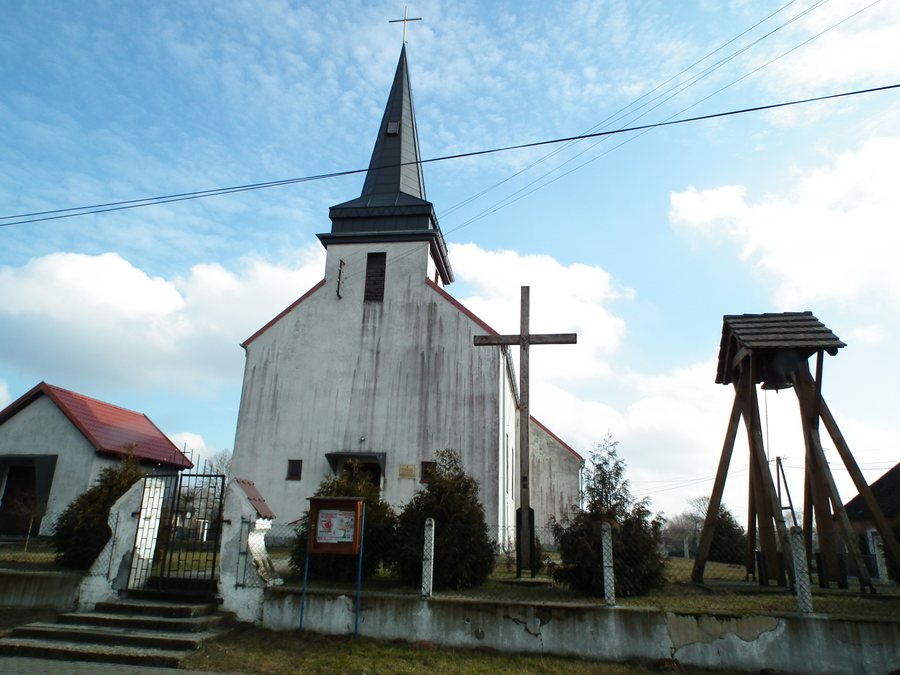 File:MOs810, WG 2015 54 Okonecczyzna (Borucino church) (front).JPG
Photo: MOs810 via Wikimedia Commons, CC BY-SA 4.0
File:MOs810, WG 2015 54 Okonecczyzna (Borucino church) (front).JPG
Photo: MOs810 via Wikimedia Commons, CC BY-SA 4.0
The lake landscape on a broader scale
The Kółko Raduńskie in the wider travel area is a water route about 40 km long. A kayaking trip is estimated to take around two days. The system also consists of more than 25 interconnected lakes that form an irregular circle resembling a necklace. Length, duration and shape each answer a different question: the approximate length conveys the route’s spatial extent, the estimated duration provides a time reference for the kayaking trip, and the necklace image makes the arrangement of the lakes easier to picture. This can help you gauge whether you would rather focus on a multi-day water route or on the structure of the lake landscape. This regional perspective offers a broader scale than the location of Borucino on the route.
Water research as a subject
The town’s focus on knowledge was also evident at the III Festiwal Czystych Jezior, held in Borucino on 29 July 2026. The programme included expert talks on limnology, environmental monitoring and citizen science. There were also presentations of modern lake-monitoring methods, demonstrations of technologies for identifying sources of pollution, and discussions of water-protection challenges. Limnology is the science of inland waters; environmental monitoring means the systematic observation of environmental conditions, while citizen science involves members of the public in scientific projects. These terms help explain why the programme went beyond a general interest in lakes: it brought research perspectives together with questions about observation and protection. For travellers who want to explore nature not only as a landscape but also from a scientific perspective, this combination of themes offers a specific point of connection.
What these perspectives mean for your trip
The two perspectives differ in their timeframe. The kayaking trip is estimated to take around two days; the festival took place on 29 July 2026. The first figure gives an approximate duration for an activity, while the second places a water-protection topic on a date in the past. If you are planning a trip with children, this can help you distinguish between an active, longer-term travel interest and curiosity about water research and protection. Each offers a different way of thinking about the lake region.
This gives you a clear distinction in scale when choosing a location: Borucino lies on a named route, while the length, shape and approximate kayaking duration refer to the wider travel area. The festival programme adds a knowledge-focused subject, anchored to a specific date, to this geographical orientation. As a holiday-rental destination, Borucino may therefore be particularly worth considering if you are planning a stay centred on the lakes route and water-related questions.
Discover more destinations: Mezowo, Kamienicki Mlyn, Puzdrowo, Egiertowo, Somonino, Suleczyno, Kartuzy, Dzierzazno.
Go to the wider travel overview: Karthaus.

_(front).JPG)