
Ugoszcz: Churches, Village History and Cycle Route
Accommodation in Ugoszcz
Ugoszcz combines two historic churches with a reconstructable medieval village layout and a cycle route through the village. St. Mary Magdalene Church draws attention to its construction and furnishings, while the oval village layout offers a glimpse into the history of the place. Anyone wishing to include cycling in their holiday plans will also find the 7.0-kilometre Ugoszcz–Czarna Dąbrowa cycle route. This makes it possible to discover Ugoszcz through specific cultural and outdoor themes.
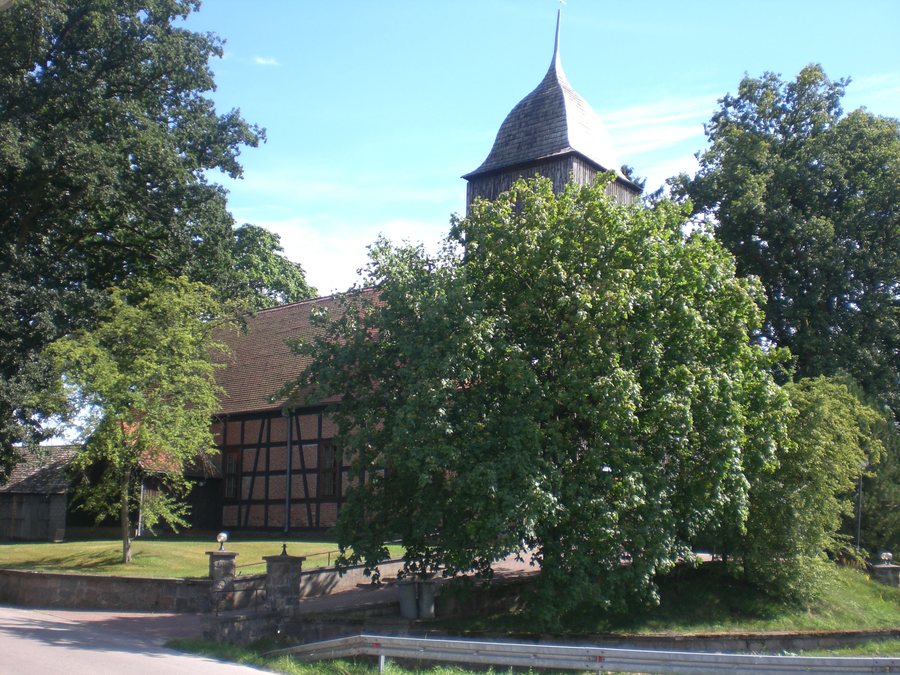
Churches, Construction and Furnishings
St. Mary Magdalene Church was built in 1822 and stands on a small hill. It is an oriented half-timbered church with brick infill and a stone foundation; its floor plan is rectangular, with the chancel on the east side. The timber frame forms the wooden structure, the bricks fill the spaces between the timbers, and the foundation provides the stone base. The building makes its construction, materials and spatial arrangement tangible on different levels. Those interested in architecture can therefore understand the church not only through its year of construction, but also through its form and components.
The furnishings include a Rococo altar from the second half of the 18th century. T. Render painted the image of the Virgin Mary with the Child Jesus in 1868. The year dates the image, while the altar itself belongs to an earlier period. Two side altars also date from the second half of the 18th century and are designed in the Folk Baroque style. Different stylistic designations and a later-dated image thus come together in the same building.
The second church, Our Lady of the Scapular, was built in 1897—75 years after St. Mary Magdalene. The two construction dates make a chronological comparison possible. St. Mary Magdalene also shares traditions of regional architecture with the church in Sominy. This offers two points of comparison: the construction dates of the churches in Ugoszcz and their links to regional building traditions.
The Medieval Village Layout
Ugoszcz is one of the villages founded in the Middle Ages whose heavily blurred and altered oval layout can still be reconstructed. A layout describes the shape of the village as a whole, giving it a different scale from an individual church building or its furnishings. The village form has not been preserved unchanged, but it can still be reconstructed. For travellers interested in historic village layouts, this aspect offers a distinct way to explore Ugoszcz’s history: alongside construction dates and church architecture, it brings the settlement pattern into focus.
Cycle Route and Travel Planning
The Ugoszcz–Czarna Dąbrowa cycle route is 7.0 kilometres long and runs through Ugoszcz. Its length provides a specific reference point if you wish to include cycling in your travel plans. This gives the village a different focus from its churches and village layout: the route represents a named cycling trail, while the buildings and settlement form offer cultural and historical themes. When looking for a holiday apartment in Ugoszcz, you can weigh up these interests according to your plans: what role would you like local history and cycling to play during your stay?
More Destinations
Also discover: Rekowo, Wojsk, Czarna Dąbrówka, Frydrychowo, Piaszczyna, Sominy, Osieki, Łupawsko.
For the broader travel overview: Bytów.

.jpg)