
Ciechanowiec: Agricultural Museum, City History and the Nurzec
Accommodation in Ciechanowiec
Ciechanowiec combines a medieval market-square layout in its older district with museum culture and the Nurzec River. The Nurzec flows through the town; its lower, approximately eight-kilometre stretch lies within the Dolina Bugu i Nurca Protected Landscape Area and meanders along its course. The town’s history, agricultural heritage and protected lower river stretch offer different perspectives on the area.
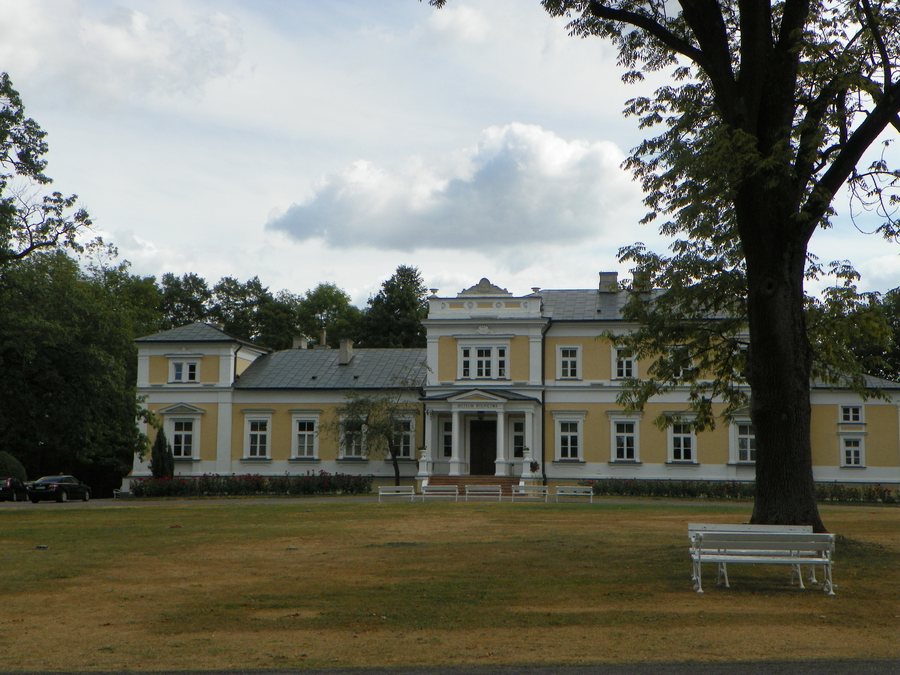
An Agricultural Museum with Many Perspectives
The Muzeum Rolnictwa im. ks. Krzysztofa Kluka is a particular highlight. Its ethnographic department is the museum’s oldest and contains more than 10,000 exhibits. The agricultural technology department includes more than 700 machines, tools and documents relating to agricultural technology.
The Muzeum Rolnictwa grounds are also home to the Muzeum Weterynarii, the Muzeum Pisanki and the Muzeum Leśne. The department dedicated to herbal traditions maintains a medicinal plant garden laid out according to Krzysztof Kluk’s “Dykcjonarz roślinny.” The collections on agriculture thus sit alongside a garden inspired by a botanical work.
Festivals and Living Traditions
The Muzeum Rolnictwa describes an annual events programme featuring various festivals and demonstrations. These include Niedziela Palmowa, with a competition for the most beautiful Easter palm, Jarmark św. Wojciecha, Zajazd Wysokomazowiecki with historical reenactments, Podlaskie Święto Chleba and Wykopki pod Wiatrakiem. Podlaskie Święto Chleba includes demonstrations of traditional Podlachian harvest and harvest thanksgiving customs. If you plan to attend an event, check the date of that year’s edition in advance.
Another festival to note is Jarmark Świętojański. The Ciechanowiecki Ośrodek Kultury i Sportu organises it as part of the Dni Ciechanowca celebrations; the event is considered a long-standing tradition. Checking the dates is especially useful if you want a festival to shape the rhythm of your stay.
Market Square, Synagogue and Churches
The older part of Ciechanowiec has a medieval market-square layout. The religious buildings also tell the story of the town: the surviving brick synagogue building has a ground floor dating from the 18th century. In 2012, the Ciechanowiecki Ośrodek Kultury i Sportu moved into the converted former synagogue on Mostowa Street.
The present-day brick parish church, Kościół pw. Trójcy Przenajświętszej, was built between 1736 and 1739, funded by ks. Franciszek Ossoliński. The church contains a tomb epitaph with a marble bust of Krzysztof Kluk. His name also appears in connection with the Muzeum Rolnictwa and its medicinal plant garden, laid out according to Kluk’s “Dykcjonarz roślinny.” This provides a specific botanical connection to the town’s history.
River Landscape and Cycling Route
The Nurzec adds a landscape perspective to the historical and museum themes. Its lower, approximately eight-kilometre stretch lies within the Dolina Bugu i Nurca Protected Landscape Area and meanders along its course.
Cyclists also have a named point of interest: in the Ciechanowiec section, the Szlak Rowerowy Pogranicza Mazowiecko-Podlaskiego passes the Muzeum Rolnictwa im. ks. Krzysztofa Kluka at kilometre 66.3. If you plan to follow the route, check its status before setting off.
When choosing a holiday apartment, your interests can help guide you: the museum brings together agriculture, collections, a garden and events; the older district and churches represent the town’s history and architecture, while the Nurzec puts the river landscape centre stage. These different highlights can help you shape your stay around what you most want to discover in Ciechanowiec.
Discover More Destinations
Discover more destinations: Nowe Garbowo, Krzyżewo, Mazury, Wysokie Mazowieckie.
Back to the main travel overview: Wysokie Mazowieckie.

