
Bialowieza: Palace Park, Forest History and Remarkable Buildings
Accommodation in Bialowieza
A palace park from the era of the tsars, a museum with forest sounds and an Orthodox church with an iconostasis made of Chinese porcelain: Bialowieza offers unusual ways to explore natural and cultural history. If you are considering a holiday apartment in Bialowieza, you can first decide whether the forest landscape, historic buildings or the church’s distinctive features should shape your discoveries.
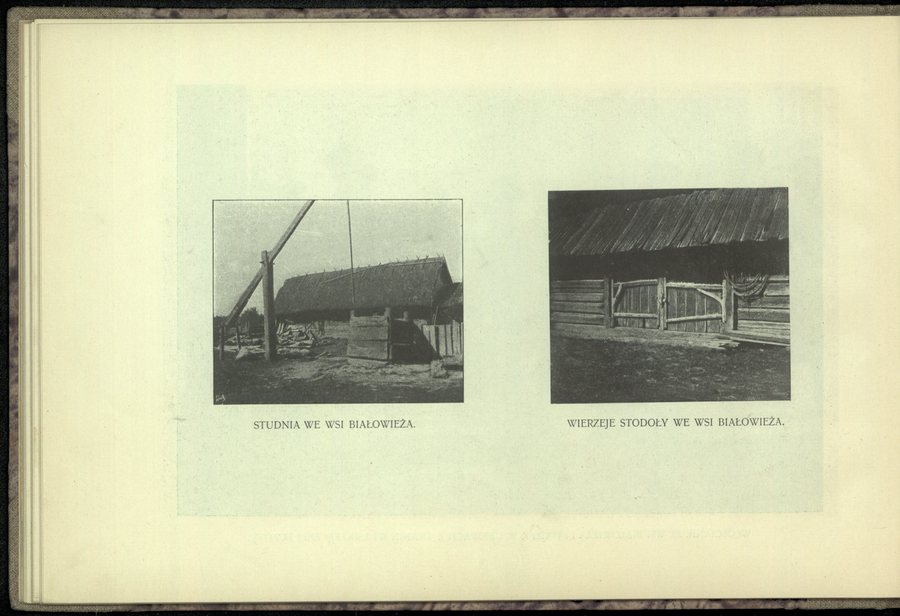 File:Bialowieza w albumie 1903 (72991765).jpg
Photo: Zygmunt Gloger via Wikimedia Commons, Public domain
File:Bialowieza w albumie 1903 (72991765).jpg
Photo: Zygmunt Gloger via Wikimedia Commons, Public domain
Palace Park and Imperial History
The palace park was laid out around the hunting residence of the Russian tsars, built between 1889 and 1894. The grounds were created around the turn of the 20th century and are protected as a historic monument. Here, the history of the imperial residence meets a landscaped park. For your travel plans, the palace park can provide a historical focus; the Nature and Forestry Museum offers a different perspective on the area.
Forest Landscapes and Earlier Forestry Work
The Nature and Forestry Museum presents, across two floors, the natural history and history of the Białowieża Forest, as well as centuries of human activity in the area. The forest communities on display include oak-hornbeam, swamp, riparian and pine forests, as well as boreal spruce bog forests. Visitors encounter a variety of forest types, rather than seeing the primeval forest as one uniform landscape.
Another part of the exhibition focuses on activities associated with living and working in the forest: beekeeping, haymaking, processing wood into turpentine and the narrow-gauge forest railway. Natural history and human use are presented as distinct themes. The displays complement the exhibits with a modelled forest floor, subdued lighting, day-and-night effects and forest sounds. This design is intended to create the impression of being right in the middle of the forest.
The Church and Railway Station as Distinctive Architectural Landmarks
The Orthodox Church of St Nicholas the Wonderworker is particularly notable for its iconostasis made of coloured Chinese porcelain. It was consecrated on 22 January 1895 according to the old calendar. Construction and furnishing work was completed in 1897, before Tsar Nicholas II’s visit to Białowieża. At the time, the church was considered the most beautiful in the entire Grodno Governorate. Its furnishings and documented historical milestones give the building a distinctive place in the history of the town.
The Białowieża Towarowa railway station tells another story of imperial infrastructure: it was built to serve the imperial residence and is one of the few very well-preserved buildings of its kind in Podlaskie Voivodeship. Its artistic qualities draw on the richly decorated Russian railway architecture of the turn of the 20th century. In 2004, the station received an award in the General Monument Conservator’s “Zabytek Zadbany” competition for an exemplary renovation.
What Could Help You Decide on Your Trip
If you would like to explore natural and forestry history in greater depth, the different forest communities and themes related to historical forestry work offer several perspectives for a museum visit. Those more interested in architectural and cultural history can view the palace park, church and railway station as distinct examples: a protected historic park, an Orthodox church with an unusual iconostasis, and a historic railway station linked to the residence. These points of interest can help you choose Bialowieza as a destination based on your interests, without reducing the town’s history to a single theme.
Visiting hours for the Orthodox Church of St Nicholas at ul. Sportowa 9 are 9 a.m. to 12 p.m. and 2 p.m. to 4 p.m. Outside these set hours, the church can be visited by prior telephone arrangement. If you are looking for a holiday apartment, you can factor these visiting arrangements into your choice of accommodation in Bialowieza, alongside your cultural and natural-history interests.
More places to discover: Kleszczele, Tarnopol, Siemianówka, Krynica, Gruzka, Trześcianka, Lewkowo Stare, Kruhlik.
For the broader travel overview: Hajnowski.

.jpg)