
Tykocin: Jewish Culture, Architectural History and Routes
Accommodation in Tykocin
Tykocin brings together Jewish culture, architectural history and riverside routes in a multifaceted picture of the town. The Museum of Jewish Culture in Tykocin is housed in the Great Synagogue; exhibits include a reconstructed Aron ha-Kodesh and historic furnishings. The blue Królowej Bony hiking trail also starts in Tykocin. The educational trail along the Narew runs alongside almost the entire riverbank. This gives you cultural and nature-related themes, as well as very different routes, to consider when planning your trip.
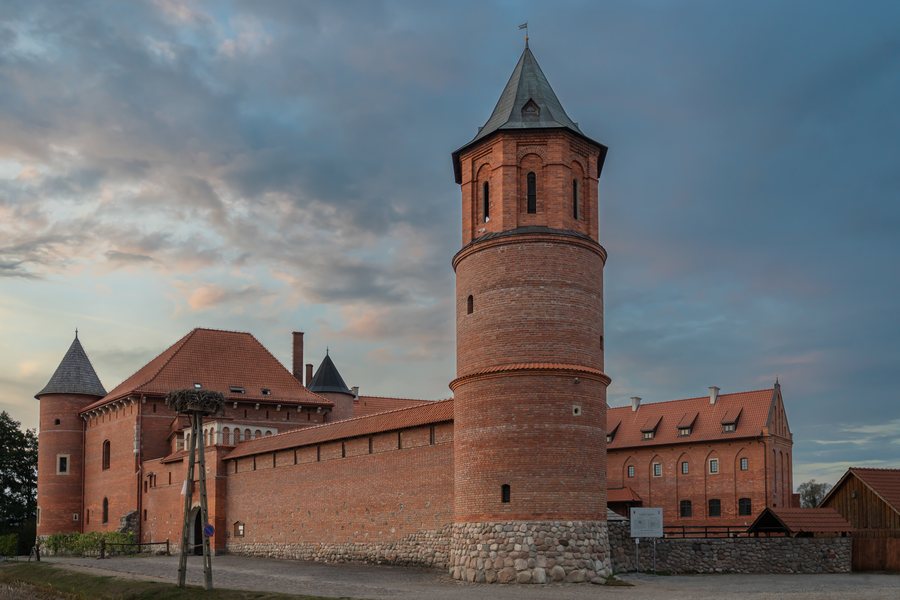 File:Tykocin, Zespół zamku, przed 1469, KsP.jpg
Photo: Krzysztof Popławski via Wikimedia Commons, CC BY 4.0
File:Tykocin, Zespół zamku, przed 1469, KsP.jpg
Photo: Krzysztof Popławski via Wikimedia Commons, CC BY 4.0
Jewish Culture in the Great Synagogue
Since 1977, the Great Synagogue has housed the Museum of Jewish Culture in Tykocin. Exhibits include a reconstructed Aron ha-Kodesh with carved doors, a parochet and a lambrequin. There are also movable historic furnishings such as benches, reading desks and wall stands. The exhibition therefore offers two distinct points of interest: a reconstructed sacred furnishing and movable historic pieces. When viewing them, pay particular attention to the carved doors, as well as the parochet and lambrequin; this will draw your eye to several elements of the furnishings.
Routes with Different Highlights
The blue Królowej Bony hiking trail is 75 kilometres long and starts in Tykocin. Its length and starting point are clear features to consider when planning your trip; you can think of the route as a longer hiking option. Check local trail conditions before setting out.
The educational trail along the Narew in Tykocin runs alongside almost the entire riverbank. Along the route, there are benches for resting and information boards about the town’s history, sights and nature. You can also observe life in the valley of Podlachia’s great river. The trail therefore brings several themes into focus: the town and its sights, nature, and life in the river valley.
The planning features described here differ: for the hiking trail, its length and starting point in Tykocin are specified; for the educational trail, its course along almost the entire riverbank and its themes are highlighted. This can help you decide whether to plan a longer hiking option or choose a route with information about the town’s history, sights and nature.
Castle and Monastery Complex: Architectural History with Key Dates
Tykocin Castle was expanded from 1549 to 1575 on the orders of King Sigismund Augustus, by the royal master builder Hiob Pretfus. The Bernardine monastery complex in Tykocin was built from 1771 to 1791. For the castle, both the person who commissioned the work and the master builder are named; for the monastery complex, the focus is on its construction period. This distinction is useful when placing the sites in their historical context: the period given for the castle refers to an expansion, while the one given for the monastery complex refers to its construction.
The date 1977 serves a different purpose: it marks when the Great Synagogue began housing the museum, whereas the other two periods refer to construction work. This helps distinguish three different historical reference points in Tykocin: a 16th-century expansion, the construction of a monastery complex in the late 18th century, and the museum’s use of the synagogue since 1977.
Discover more destinations: Niewodnica Kościelna, Białystok, Szymki, Oliszki, Łaźnie, Choroszcz, Jeżewo Stare, Klewinowo.
Return to the regional travel overview: Białostocki.

