
Rybno: Church, Manor House and Estate History
Accommodation in Rybno
Rybno brings together a parish church with medieval connections and a Neoclassical architectural history, a preserved manor house, a historic park listed in the heritage register, and destroyed production facilities belonging to the Zabłocki estate. For culturally minded travellers, this offers a layered perspective on religious, architectural and economic history. The contrast between preserved heritage and lost facilities is particularly revealing.
The Parish Church and Its Architectural History
The parish church in Rybno, dedicated to Saint Bartholomew, already existed in 1368. The present parish church, also dedicated to Saint Bartholomew, was built between 1804 and 1806 through the efforts of Father Antoni Żochowski. The church’s history therefore reaches far back, while the present church building dates from a much later period. The church is Neoclassical and has undergone later alterations. Neoclassicism draws on forms from antiquity and is often associated with a clear, balanced design. Those interested in architecture can therefore consider the construction period, style and later alterations as distinct aspects of the church’s history.
The Manor House and Historic Park
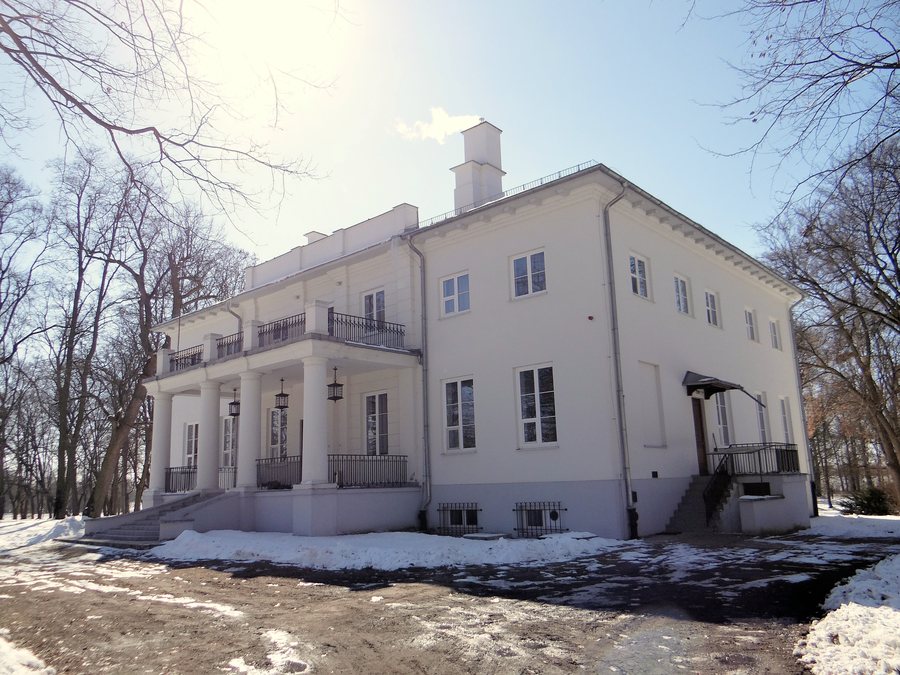
The manor house in Rybno is one of the surviving manor houses on former noble estates. The historic park in Rybno is listed in the heritage register. Both complement the history of the church, but represent different types of cultural heritage: the manor house is one of the surviving houses on former noble estates, while the park’s listing in the heritage register is an important historical reference point. If you like to plan your trip around cultural themes, you can consider these two aspects separately.
The Former Estate Economy
The history of the Zabłocki estate in Rybno offers another perspective. The estate’s former steam distillery, its distillery for vodka, liqueurs and arrack, and its vinegar factory were destroyed. This chapter therefore differs from that of the surviving manor house: it concerns lost production facilities and the economic side of the estate’s history. The products mentioned add a different facet to local history than the church and architecture. For travellers interested in former production methods as well as architecture, this offers an additional cultural and historical comparison.
Cultural Interests and Choosing Where to Stay
If you are looking for a holiday apartment for a cultural trip, these themes can help shape your choice of destination. The parish church leads to religious and architectural history; the manor house and park point to different aspects of historic heritage; and the destroyed facilities of the Zabłocki estate add a perspective on former production. Consider which focus interests you most, and include Rybno among your options if you would like to explore these historical layers. This lets you choose accommodation based on the kind of local history you want to focus on during your trip.
Discover more destinations: Sochaczew, Teresin, Brochów, Nowe Gnatowice
Return to the main travel overview: Sochaczewski.

