
Jedlnia-Letnisko: Reservoir, Forest and Wooden Architecture
Accommodation in Jedlnia-Letnisko
Jedlnia-Letnisko offers several distinct reasons to visit: the waterside landscape along the Gzówka, the protected old-growth trees on the right bank, and a local history in which wooden architecture plays an important role. This also includes Święto Polskiej Niezapominajki, held annually in mid-May. When looking for a holiday apartment, these options can help you decide what matters most: are you mainly drawn to the landscape, interested in architectural history, or hoping to plan your stay around the festival?
Reservoir and Nature Reserve
The artificial reservoir on the Gzówka was created in 1976 and covers 40 ha. There are sandy and grassy beaches at the reservoir. On the right bank, the “Jedlnia” nature reserve protects natural old-growth trees.
The 40 ha give the waterside landscape a tangible scale; sandy and grassy beaches describe two distinct types of shore. The nature reserve adds another distinct natural feature. For families, the contrast between the artificially created body of water and the natural old-growth trees can be an accessible conversation starter. The landscape can thus be explored through different features: how the lake was formed, the types of beach, and the protected trees.
Wooden Architecture and Local History
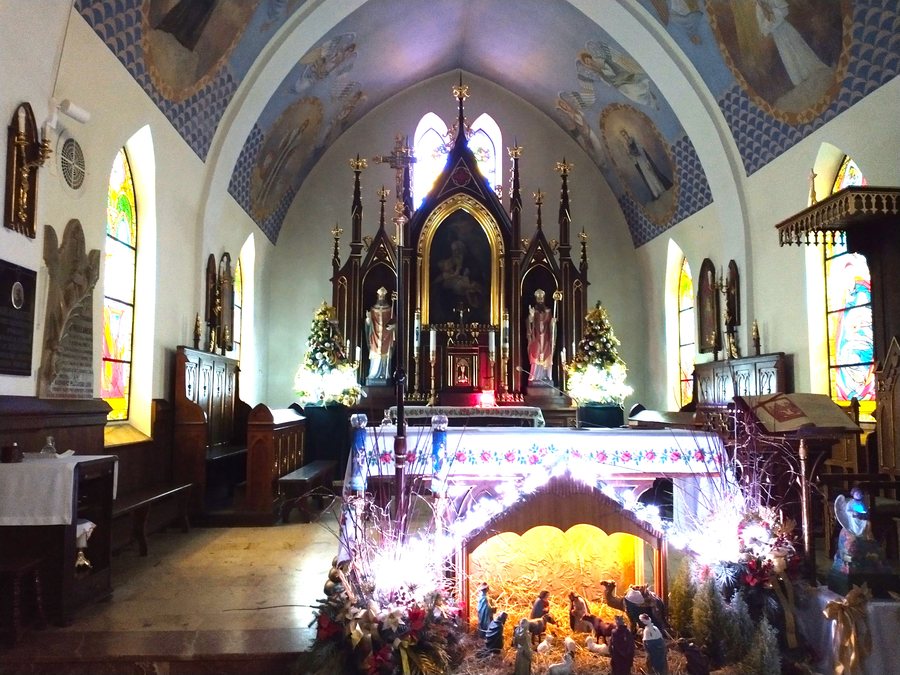
Wooden architecture offers another way to explore local history. The Church of St Joseph in Jedlnia-Letnisko is a wooden church in the Zakopane style. The first summer houses, modelled on the Świdermajer villas from the Warsaw area, were built on what is now Ulica Nadrzeczna around the turn of the 20th century. One of the more than 100-year-old villas in Jedlnia-Letnisko that still survives was built by Czesław Golczewski in 1898.
These examples offer different points of interest: the church is identified by its Zakopane style, the summer houses by their model from the Warsaw area, and the villa by its builder and year of construction. The villa dates to 1898, the first summer houses to the turn of the 20th century, and the reservoir to 1976. The subjects therefore range from wooden construction and local history to a waterside landscape created later. If you are travelling with children, this contrast between architectural styles and periods can prompt a discussion about how a place changes across generations.
The Festival in Mid-May
Święto Polskiej Niezapominajki is held annually in mid-May on the grounds of the Leśny Ośrodek Edukacyjny im. red. Andrzeja Zalewskiego in Jedlnia-Letnisko. The 23rd edition was held on 12 May. If you would like to plan your stay around the festival, check the specific date of the relevant edition. Mid-May offers a seasonal point of reference; for your planning, the date for the year in question matters. The festival adds an annual travel occasion to the enduring themes of landscape and architectural history.
Discover more destinations: Jedlanka Stara, Podgóra, Pionki, Jedlińsk, Iłża, Mleczków, Skaryszew, Waliny
For the broader travel overview: Radom.

_(12).jpg)