
Komorów: Garden City and Historic Villas
Accommodation in Komorów
Komorów combines its location on the Utrata with the heritage of a garden city. Protected avenues, a historic park and several villas built at different times give the place a distinctive character. Natural and architectural history stand as separate themes and offer different perspectives on Komorów. If you choose a destination not only for its location but also for its distinctive features, you will find specific points of interest here—from old tree species to individual villa names.
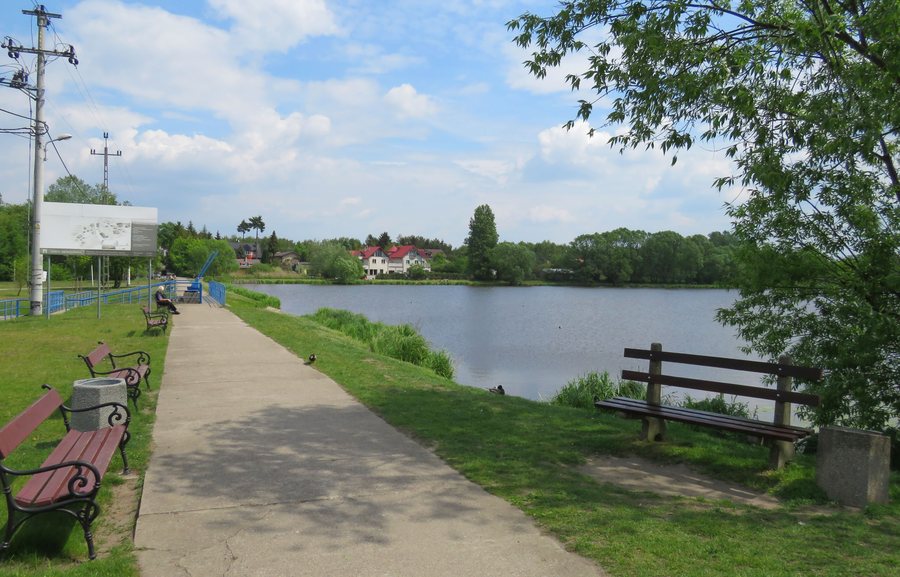
Location on the Utrata
Komorów lies on the Utrata, about 20 kilometres from the centre of Warsaw. This establishes two points of reference: the river anchors the description geographically, while the approximate distance places Komorów in relation to the city. This provides an initial geographical framework for choosing your accommodation. You can consider Komorów as a destination in its own right while also bearing in mind its location relative to central Warsaw. Which aspect matters more for your trip depends on whether you mainly want to explore local attractions or also consider how the place relates to Warsaw.
Garden city and green local history
Komorów was laid out as a garden city in the 1920s. This historical context gives the area’s defining features a timeframe. Its green character can also be seen in specific details: nearly 300 trees in Komorów are protected, including two historic avenues consisting mainly of lime trees. The Komorów forest settlement area also has a historic park with old ash, maple, chestnut and sycamore trees.
Two distinct green features therefore stand side by side: the avenues, with their predominance of lime trees, and the park, with several old tree species. If you are interested in the landscape, you can distinguish between these features rather than simply looking for green spaces in general. The avenues give the tree population a clearly defined focus; the park offers a view of a wider variety of species. Both make the area’s green history tangible through specific details.
Villas built at different times
The architecture can also be explored through individual names and dates. Villa “Irusin” at Kolejowa 3 in Komorów Osiedle dates from 1913. It therefore predates the development of Komorów as a garden city in the 1920s. Villa “Marysieńka” at Klonowa 18 in Komorów Osiedle was built between 1927 and 1929. The villas “Malutka Zachodnia i Wschodnia” at Lipowa 8 and 8A in Komorów Osiedle date from 1929. “Złocienie” at Kolejowa 13 in Komorów Osiedle was built between 1931 and 1933.
For those interested in history, these villas offer a concrete comparison across time: the earlier example from 1913 is followed by buildings from the late 1920s and early 1930s. The street names and dates make local history tangible without reducing it to a single historical moment. If you are interested in architecture, you can consider the villas individually and compare their different dates.
Which aspect of the area suits your trip?
Your interests may also influence your choice of holiday apartment in Komorów. If architecture and local history are the deciding factors, the villa names and dates provide a common thread. If you are more interested in the landscape, the avenues and the park, with their distinct tree profiles, take centre stage. These are different focuses for your stay, both rooted in the area.
Discover more destinations:
Młochów, Nadarzyn, Pęcice Małe, Sękocin-Las, Wolica, Parzniew, Piastów, Otrębusy
For the overview of the wider region: Pruszkowski.

