
Discover Tarczyn: Fruit Growing and History
Accommodation in Tarczyn
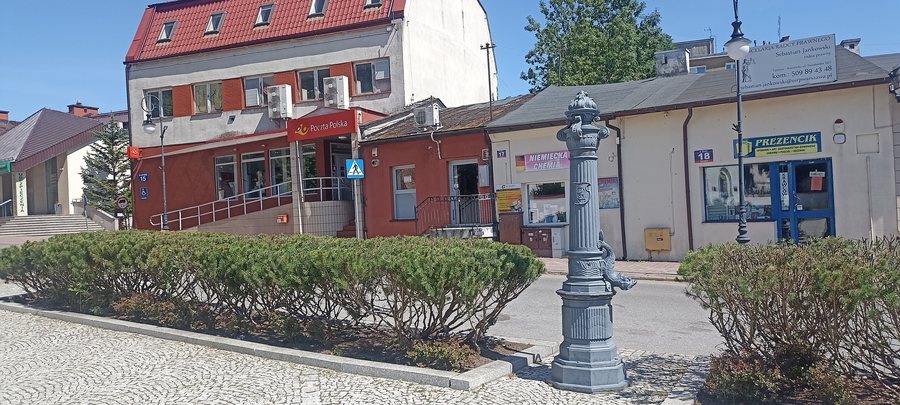
Tarczyn combines its character as an important fruit-growing center with a rich history. In the market square stands a fountain topped with a stone apple, a symbol of the fruit-growing region. The square’s location is also part of its character: it slopes gently down toward the Tarczynka valley. A monument in the market square commemorates the soldiers from Tarczyn who fell in 1920. Fruit growing, public space, and remembrance come together here in a place with a rich history.
Church History and Architectural Styles
The parish of St. Nicholas was founded in the 14th century; the exact year the Church of St. Nicholas was built is unknown. The church was destroyed in the town fire of 1704. Ten years later, its then parish priest, Kazimierz Szczuka, rebuilt it from the ruins. Szczuka later became Bishop of Kulm. The church’s long history can also be seen in its chapels: an Anna Chapel donated by Jan and Marianna Mokronowski in the 16th century was later converted into a vestibule. The Stanislaus Chapel, donated by parish priest Adam Chełkowski, was demolished.
The church has five altars. The Neo-Gothic high altar features an image of the Immaculate Conception; the other four altars are Baroque. Different styles thus stand side by side within the same church. The Neoclassical bell tower also dates from a distinct period: it was built in the 19th century and contains three bells. “Św. Trójca” dates from 1841, while “Maria” and “Mikołaj” date from 1974. For anyone interested in architectural history, Tarczyn offers several specific details, from the church’s eventful history to its altars and bells.
Memorial Sites and Personal Stories
The parish cemetery contains a mass grave for the insurgents who fell in 1863. The Jewish cemetery lies on the outskirts of the town and was destroyed by the Nazis. Volunteers later spent several years cleaning it and arranged for a fence to be built; only a few matzevot remain. The mass grave commemorates the insurgents who fell in 1863, while the Jewish cemetery’s history is marked by its destruction and the volunteers’ later efforts.
A personal connection to the town is Irena Sendlerowa (1910–2008), who lived in Tarczyn during the interwar period. During the Second World War, she rescued around 2,500 Jewish children from the Warsaw Ghetto. Another historical distinction is Tarczyn’s post office: it was among the first post offices in the Kingdom of Poland and bore the number 11. Together, these stories bring Tarczyn’s history to life beyond its church architecture.
Considering Tarczyn as a Travel Destination
If you want to combine cultural history with a connection to fruit growing on your trip, Tarczyn offers several points of interest: the stone apple on the fountain, the history of the Church of St. Nicholas, and the memorial sites. Even when a trip includes several interests, you can focus on one of them without losing sight of the town’s fruit-growing character. When choosing a holiday apartment, consider whether a stay in a town whose market square symbolizes the fruit-growing region and whose history spans everything from church architecture to personal stories fits your travel plans. If so, you could consider Tarczyn as a destination in your search for a holiday apartment.
Discover more destinations: Nowa Wola, Józefosław, Jabłonowo, Chojnów, Łęg, Biały Ług, Mroków, Złotokłos.
For the broader travel overview: Piaseczyński.

