
Zbąszynek: City History at a Railway Junction
Accommodation in Zbąszynek
Zbąszynek can be explored particularly through the connection between urban development and the railway. Its urban layout is that of an urban workers’ settlement, functionally linked to a major railway junction. The town’s history includes the construction of an Expressionist water tower, churches with different denominational affiliations, and a locomotive in the town center. The focus is therefore not just on individual buildings, but also on how they came into being at different times and for different purposes.
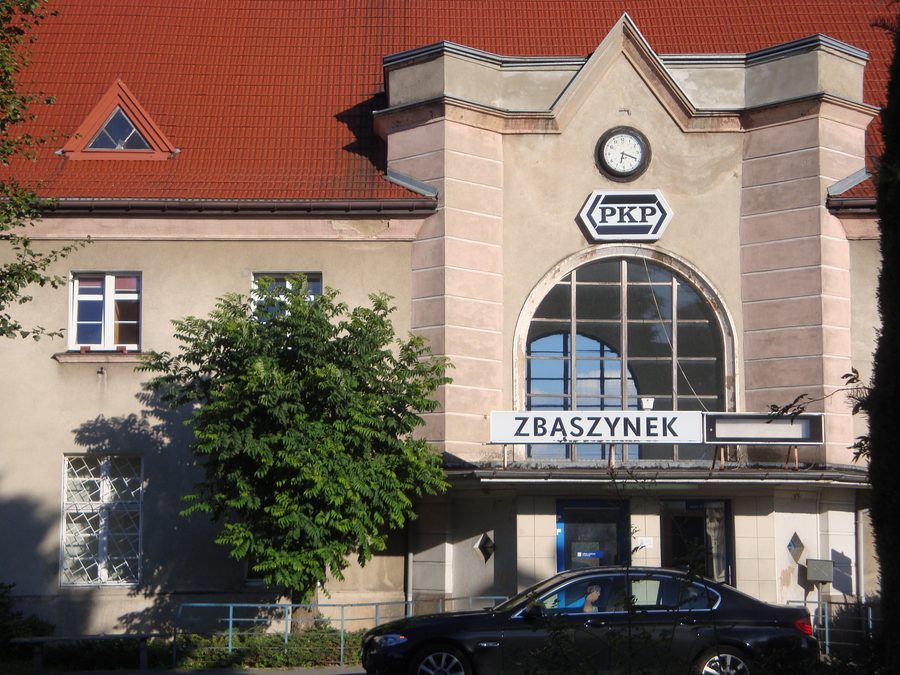
Railway Junction and Urban Layout
The Warsaw–Berlin and Gorzów Wielkopolski–Sulechów railway lines cross in Zbąszynek. Together with its urban classification as an urban workers’ settlement, this reveals a connection between transport and the town’s layout: the junction is functionally linked to the settlement. This may be of particular interest when planning your trip if you want to explore how a place developed, rather than just view individual buildings. A locomotive stands in the town center next to a fountain, symbolizing Zbąszynek’s railway heritage. It gives this broader theme a specific local connection, while the description of the town’s layout provides the wider context.
Early Buildings and Their Construction Dates
Among the early buildings was a 33-meter-high Expressionist water tower. It was built in 1923–1924 to a design by Bruno Möhring, a German architect, urban planner, and engineer. Its height and construction dates give the tower a distinct place in the town’s early history; the stylistic designation and the named designer also offer an architectural perspective. Later, from 1928 to 1930, the East German Railway Directorate had two churches built in Zbąszynek. Their construction dates allow you to compare different building projects: the water tower stands out for its height, design, and Expressionist style, while the churches are notable for the congregations they were intended to serve and their dedications.
Churches, Denominations, and Dedications
One of the two churches was intended for the Lutheran population, and the other, smaller one for the Catholic population; it was dedicated to the Apostles Peter and Paul. The former Protestant church in Zbąszynek was dedicated to the Maternity of the Blessed Virgin Mary on October 21, 1945. In the Church of the Maternity of the Blessed Virgin Mary, the figure on the main altar represents the Maternity of the Blessed Virgin Mary. The dates refer to different events: 1928–1930 marks the construction of the two churches, while October 21, 1945, marks the dedication of the former Protestant church. The congregation, dedication, and altar figure offer different specific points of reference as you explore the town’s architectural and religious history.
Choose the Right Focus for Your Accommodation Search
When looking for a holiday apartment, you can start by deciding which aspect of the town’s history you want to shape your stay: the connection between the railway and the urban layout, early architecture, or the churches’ denominational affiliations. Then compare the location of a specific offer with your travel plans. For those traveling together, the clear dates and different dedications provide concrete themes for exploring the town’s history, without limiting your stay to a single building.
Discover More Destinations
Discover more destinations: Kłodnica, Rokitnica, Schwiebus, Łagów, Zawisze, Szczaniec, Niedźwiedź, Mostki.
For the broader travel overview: Świebodziński.

