
Discover Gmina Ryki
Accommodation in Gmina Ryki
Ryki offers several ways to explore its cultural history: the memorial room for Major Marian Bernaciak “Orlik” and his soldiers, the Neo-Gothic church complex of Najświętszego Zbawiciela with an altarpiece by Leon Wyczółkowski, and the history of the former Poniatowski Palace. Together, these bring remembrance, sacred architecture and art, as well as a family history connected with Polish royalty, into focus. This makes the town interesting for travellers who want to explore more than a single cultural theme when planning their trip. You can give each topic as much weight as your interests warrant.
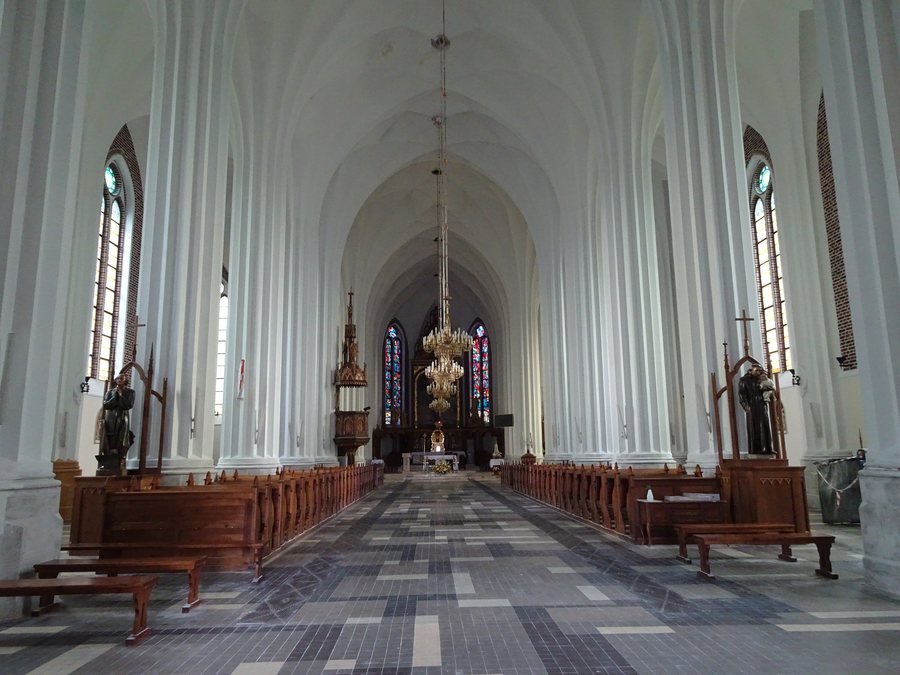 File:Ryki, kościół Najświętszego Zbawiciela, wnętrze.jpg
Photo: Bartek z Polski via Wikimedia Commons, CC0
File:Ryki, kościół Najświętszego Zbawiciela, wnętrze.jpg
Photo: Bartek z Polski via Wikimedia Commons, CC0
Remembrance and culture in Ryki
The memorial room for Major Marian Bernaciak “Orlik” and his soldiers is located in the Pałac, home of the Centrum Kultury i Sportu in Ryki, ul. Warszawska 11. Its dedication gives the site a clear focus on remembrance. For your travel plans, this offers a different perspective from exploring church architecture or art: the focus is on a military figure and the soldiers commemorated in the room. If you are interested in this subject, you can make it one of the cultural highlights of your stay in Ryki.
Church complex and altarpiece
The church complex of Najświętszego Zbawiciela comprises a Neo-Gothic parish church, a rectory and the surrounding churchyard enclosure. Józef Pius Dziekoński designed the church and rectory. The architectural ensemble therefore extends beyond the church building alone: the rectory and enclosure are also part of it. Neo-Gothic refers to a style that draws on Gothic forms; the term briefly describes the architectural style of the parish church without requiring any specialist knowledge.
Art history is also closely linked to the parish church. In 1915, Leon Wyczółkowski completed the painting “Chrystus na krzyżu w adoracji świętych i królów polskich” for the church and donated it to the church that same year. The painting was placed on the high altar. The donation and its intended place on the altar make the connection between the artist and the church tangible: this is not just a building, but also a specific named work and its history. You can therefore consider architecture and art as two related but distinct aspects of the church complex.
The Poniatowski complex and the town’s history
The castle and park complex in Ryki is also part of the town’s history. In the 18th century, it belonged to Stanisław Poniatowski, castellan of Kraków and a member of the Ciołek coat-of-arms family. He was the father of King Stanisław August Poniatowski, who was buried in Ryki. The former Poniatowski Palace is one of the town’s most important historic buildings. The connection between father, son and burial offers a dynastic perspective, while the palace’s status as a historic building adds an architectural one.
Using cultural interests to guide your holiday rental search
If you are looking for a holiday rental in Gmina Ryki, you can start by considering what kind of cultural stay appeals to you: church architecture and the altarpiece, the memorial room, or the history of the Poniatowski complex. These themes make it easier to compare your travel options without allowing any one perspective to define the whole town. If you want to explore several topics, you will find different historical layers: the artwork dated 1915, the remembrance of Major Bernaciak and his soldiers, and the history of the castle and park complex in the 18th century. Your cultural interests can therefore serve as a useful first guide when choosing a holiday rental.
Discover more destinations: Zaryte, Brzeźce, Dęblin, Białki Dolne
For the broader travel overview: Ryki.

